REVIEW · MARRAKESH
Marrakech: Bahia Palace, Saadian Tombs, & Koutoubia Mosque
Book on GetYourGuide →Operated by Marrakech Guided Experience · Bookable on GetYourGuide
Marrakech’s royal secrets start in a palace courtyard. This 3-hour walking tour ties together Bahia Palace and the Koutoubia Mosque area with real architectural context, not just postcard stops. You’ll also hit the Mellah (Jewish Quarter) and end at Jemaa el-Fna, so the day feels like history plus street-level Marrakech.
I especially love how the guide turns details into meaning. Between mosaic courtyards at Bahia Palace and the Hispano-Moorish craftsmanship at the Saadian Tombs, I found it much easier to spot what I was looking at. I also like the pace: short walking links, plus free time at monuments so you can actually pause and look around instead of sprinting.
The main catch is cost and access. Entrance fees for Bahia Palace and Saadian Tombs are not included (100 MAD each per adult), and Koutoubia Mosque is outside-only since entry is restricted to Muslims. If you’re the type who hates queues, the Saadian Tombs can still take time once you’re there.
In This Review
- Key highlights worth your attention
- Bahia Palace: where Marrakesh design tells a story
- Saadian Tombs: quiet courtyards and serious tilework
- Koutoubia Mosque: the big minaret stop (outside only)
- The Jewish Quarter (Mellah): short walk, meaningful context
- Kasba and Bab Agnaou: small stops that sharpen your mental map
- Jemaa el-Fna at the end: street energy with a history filter
- Price and value: what $19 really means in Marrakech
- Guides matter here: Ahmed, Abdul, and the storytelling style
- Timing, crowds, and what to bring so it feels easy
- Should you book this Bahia Palace, Saadian Tombs, and Koutoubia walk?
- FAQ
- Are entrance fees included for Bahia Palace and the Saadian Tombs?
- Can I enter Koutoubia Mosque during the tour?
- What’s the total length of the tour?
- Is transportation included?
- What languages are guides available in?
- Do I need cash?
Key highlights worth your attention
- Bahia Palace interiors you can really take in with mosaic-covered rooms and grand-vizier stories
- Saadian Tombs craftsmanship tied to Sultan Ahmad al-Mansur and rediscovery in the early 20th century
- Koutoubia Mosque views from the outside with Almohad architecture explained by your guide
- Mellah (Jewish Quarter) walk-through including synagogue context and a short cultural stop
- Jemaa el-Fna finish for storytellers and market energy right when the tour ends
Bahia Palace: where Marrakesh design tells a story
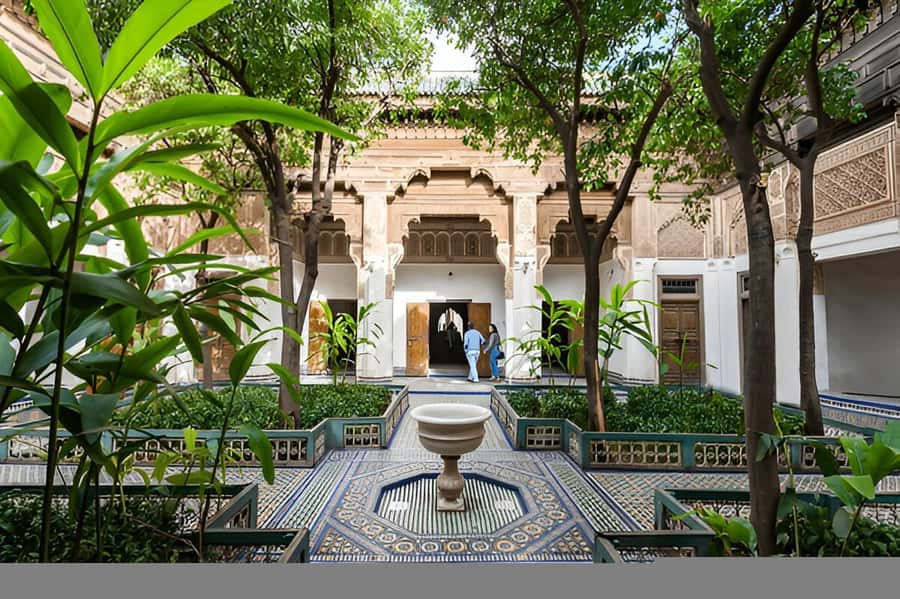
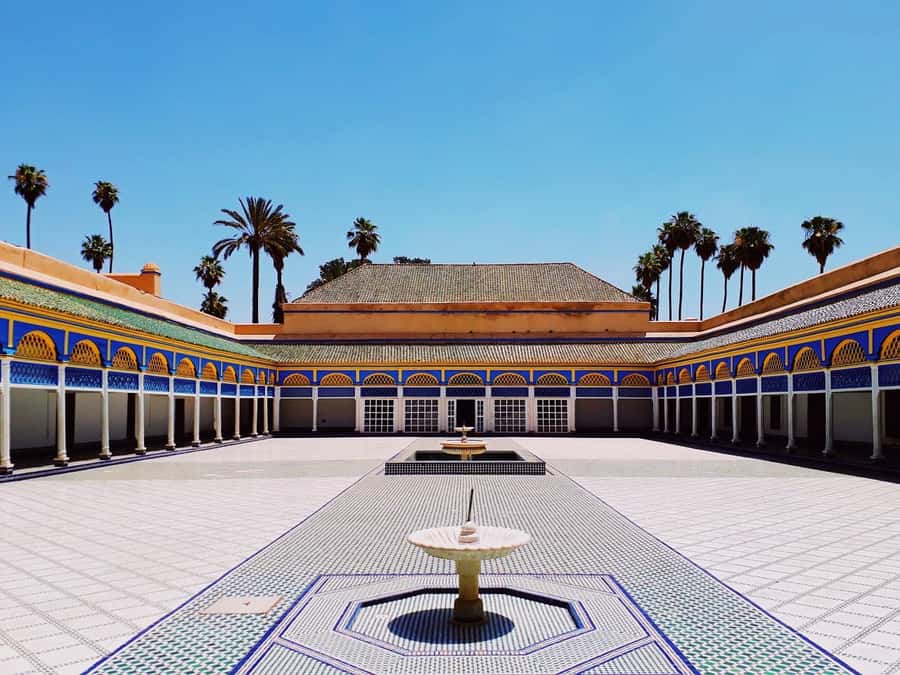
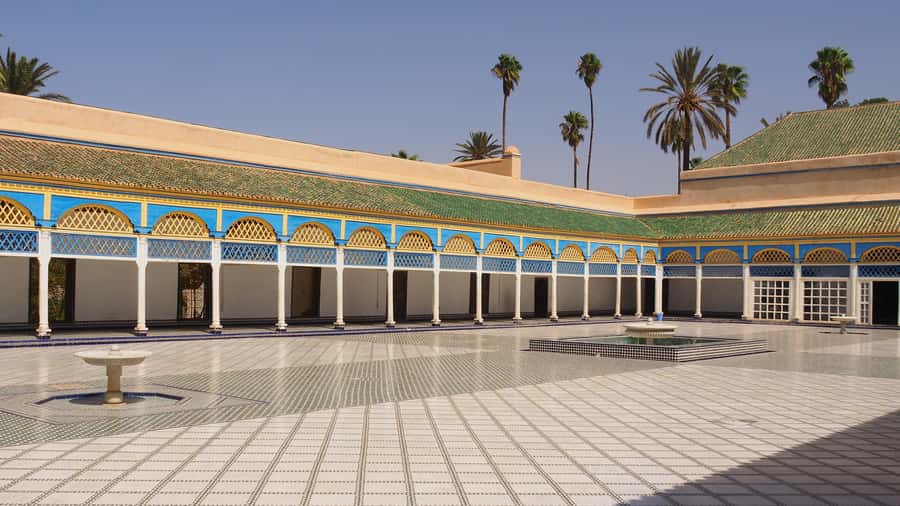
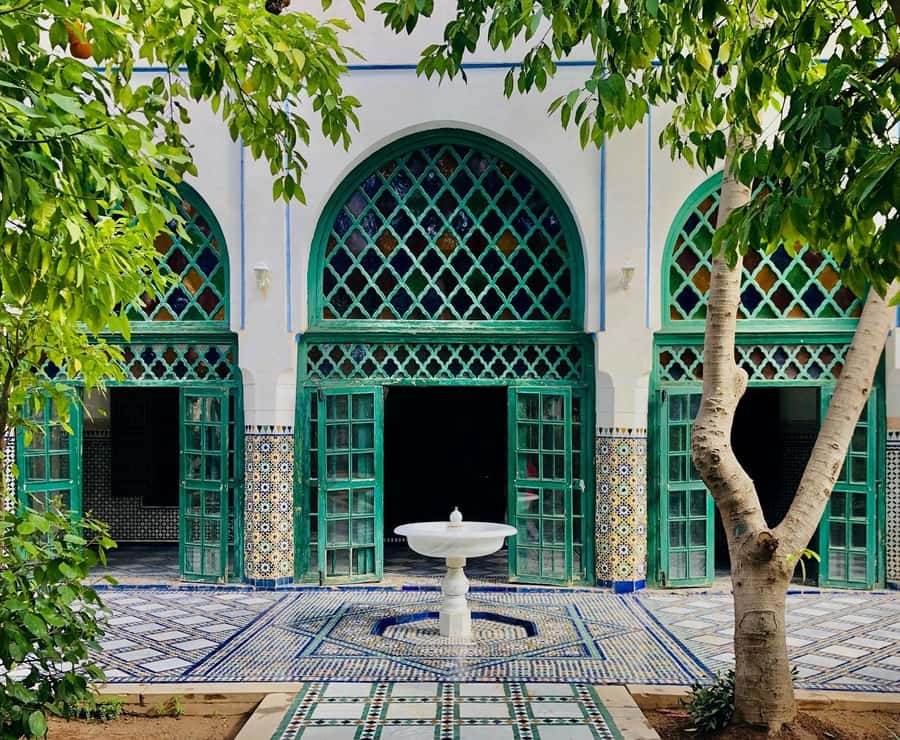
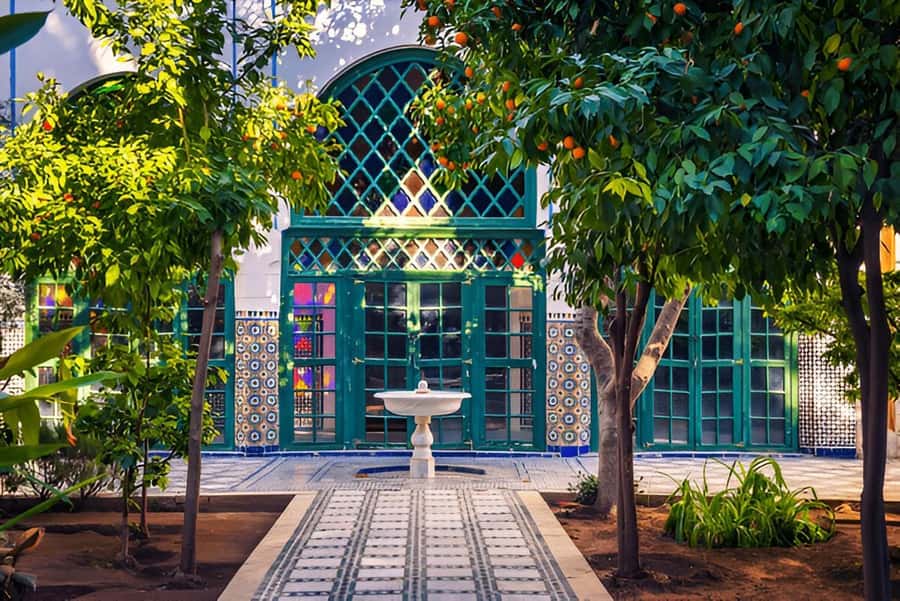
Starting with Bahia Palace is a smart move. The palace is all about space, light, and ornament. You’ll walk into serene courtyards, then move through decorated chambers where mosaics and plasterwork do more than look pretty—they explain how power wanted to be seen.
What I like about Bahia Palace on a guided walk is that you’re not just staring at walls. Your guide’s job is to connect the visual details to the political world of the grand viziers who lived there. That small shift makes the place feel less like a museum and more like an old machine for impressing visitors—cool shade when it’s hot, grand scale when you want respect.
You also get time to wander at a comfortable rhythm. The tour includes free time, not just a drive-by photo moment. In practice, that means you can step back, find the best angles for photos, and read a bit with your own eyes before the group moves on.
Quick reality check: Bahia Palace is one of the stops where entrance fees apply, so bring cash and be ready to pay on-site.
You can also read our reviews of more tours and experiences in Marrakesh.

Saadian Tombs: quiet courtyards and serious tilework
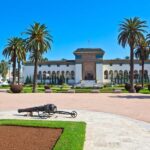
The Saadian Tombs are the kind of stop that makes you slow down even if you didn’t plan to. This is a sacred site where Sultan Ahmad al-Mansur and his lineage are laid to rest, and the design reflects a careful blend of style and devotion.
The highlights here are the courtyards and the Hispano-Moorish craftsmanship. Expect intricate tilework and an atmosphere that feels separate from the louder streets outside. Your guide will help you see those details as intentional choices, not random decoration. Once you know what to look for, patterns start telling you a story: where the eye should rest, how space shapes movement, and how artistry supports reverence.
One thing to keep in mind: lines happen. Even with line-skipping help for the initial ticket process, you might still face queues inside once you’re there. A few guide-led groups have had to adjust on the spot when waiting takes longer than expected—so go with flexibility. If your group gets stretched by lines, your guide can often suggest ways to make the most of the time you have.
Why this stop is worth it: it’s one of the few places in Marrakech where the architecture feels built for calm. After wandering markets and streets, the Tombs reset your attention.
Koutoubia Mosque: the big minaret stop (outside only)
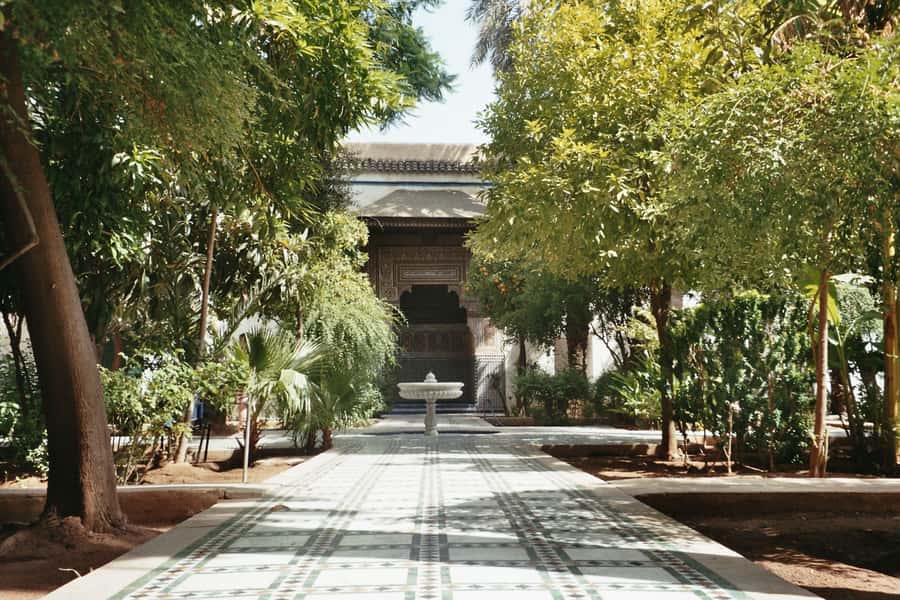
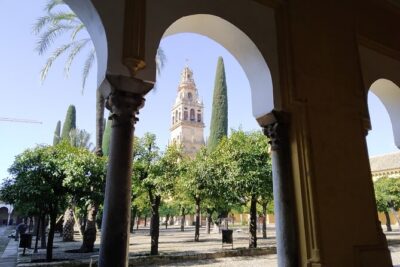
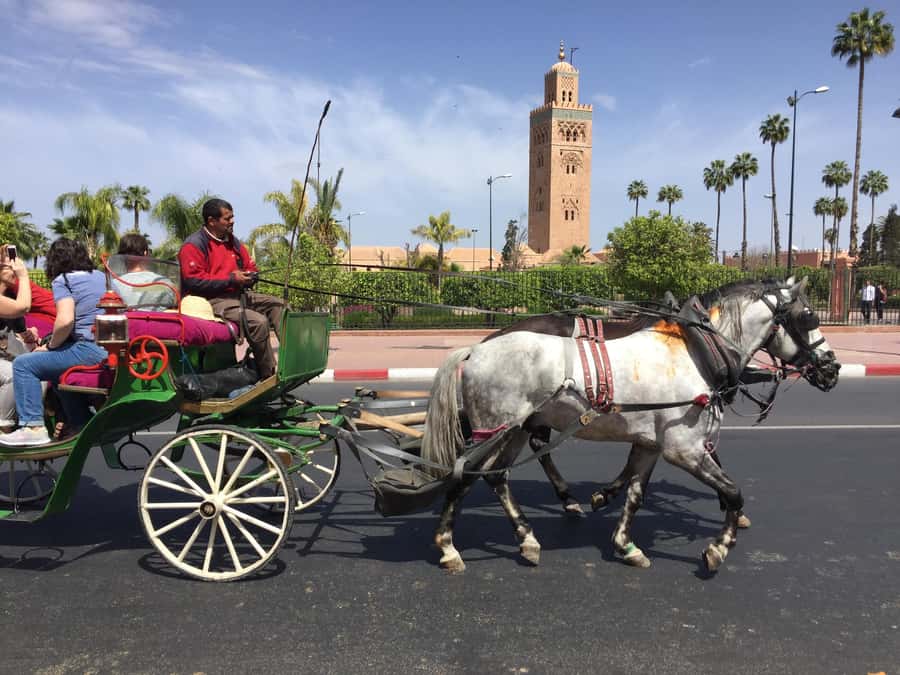
Koutoubia Mosque is the Marrakech landmark you keep seeing from different angles. In this tour, you get a guided photo stop and a short guided look, but you do not enter. That’s not a letdown—it’s the local reality: entry is restricted to Muslims.
So how do you make the most of an outside-only stop? You focus on what you can observe. The tour includes explanation about the mosque’s significance and Almohad architecture. Even from a distance, you can understand why this minaret became an icon: it’s tall, clean-lined, and instantly readable against the surrounding streets.
You’ll also see some classic Marrakech “edge-of-big-landmark” street details nearby, including a sense of how the medina wraps around major religious sites. Your guide helps you place it in the city’s map and history, so it doesn’t stay as just a photo.
Plan to spend about 25 minutes here. That’s long enough to get good angles and short enough that you don’t lose momentum before the quieter sites.
The Jewish Quarter (Mellah): short walk, meaningful context
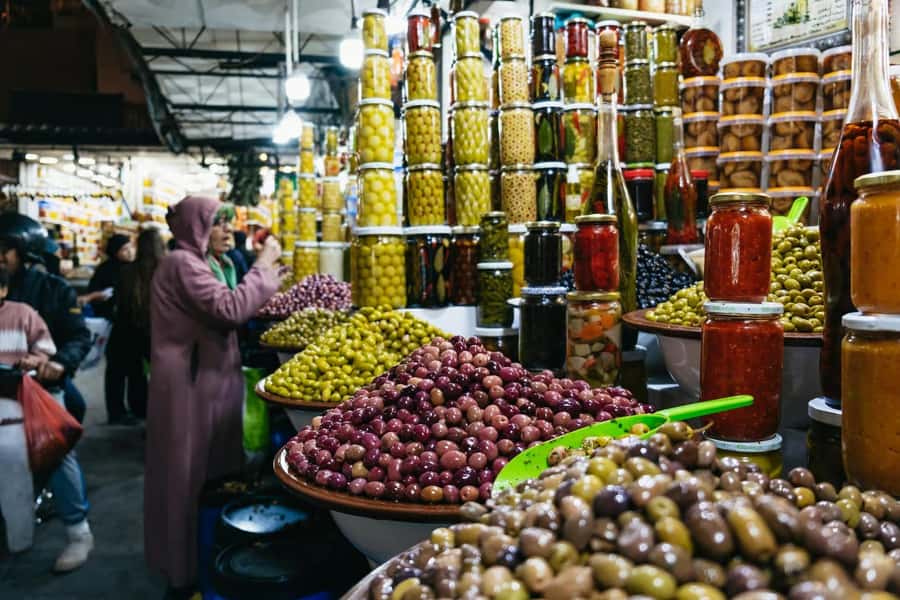
The Mellah stop is brief but useful. You’ll walk through the Jewish Quarter area with a guided explanation, including historic synagogue context and what this neighborhood contributed to Marrakech’s cultural mix.
This is one of those parts of Marrakech where a guide changes your experience fast. Without context, you might see streets and building exteriors. With context, you understand why the quarter matters and how it connects to the city’s larger story.
The tour’s Mellah walk is also a timing-friendly block—enough to learn, not so long that it eats your whole afternoon.
Tip: expect some walking on uneven surfaces. Comfortable shoes aren’t optional here.
Kasba and Bab Agnaou: small stops that sharpen your mental map
Between major sites, the tour makes quick photo-and-walk connections at places like Bab Agnaou and Kasba. These are short blocks (around five minutes each), but they help you stitch together the city.
Why does that matter? Marrakech can feel like a maze on day one. When you get even a small guided reference point—an iconic gate, a recognizable kasbah area—you start navigating with confidence. Instead of guessing, you can build a mental map as you go.
Even if you don’t stop for long, you’ll learn how those areas relate to the larger medina layout. That makes the rest of your day—wandering for mint tea, finding a snack stall, or heading to Jemaa el-Fna—less stressful.
Jemaa el-Fna at the end: street energy with a history filter
Jemaa el-Fna is the finishing touch, and it hits differently after palace and tomb visits. Instead of arriving with your head full of crowds only, you end with a better sense of what you’re looking at: a public square that gathers people, stories, and commerce in one place.
Your tour concludes here, where you’ll find storytellers and market stalls. It’s also a UNESCO-listed space, so there’s a reason it remains a center of attention year after year.
What’s nice is timing. You’re done with the timed monument stops, so you can linger at your own pace. If you want photos, you can take them. If you want a snack, you can grab it without feeling rushed back to the next doorway.
Price and value: what $19 really means in Marrakech
On paper, this tour is $19 per person for a 3-hour walking experience. That sounds simple—until you check what’s included versus what’s paid on-site.
Here’s the practical breakdown:
- Included: your tour guide, walking tour, free time at monuments, and transportation only if you select the hotel pickup/drop-off option
- Not included: entrance fees for Bahia Palace (100 MAD per adult) and Saadian Tombs (100 MAD per adult)
So the value depends on whether you were already going to pay those monument fees anyway. If you want the Bahia Palace interiors and the Saadian Tombs as part of your first Marrakech day, the $19 feels like a fair “guide and logistics” cost. You’re essentially paying for a guided route through key sites plus help with skipping the initial ticket lines.
Also, since Koutoubia is outside-only, you’re not paying for entry there in this tour anyway. That makes sense: you get the landmark experience without adding a restricted-access ticket problem.
Bottom line: this is best value if you show up ready to pay on-site for Bahia and Tombs and you’ll use the guide for context.
Guides matter here: Ahmed, Abdul, and the storytelling style
One of the most praised elements of this tour is the guide’s delivery. Many groups mention guides like Ahmed, Abdul, Aoud, Charif, Abu, and Rachid—and what they have in common is storytelling with structure. The best guides don’t just recite dates. They connect what you’re seeing to how Marrakech developed and why these monuments look the way they do.
Another recurring win: guides who manage the walk for real people. A few examples include guides waiting for a slow walker, maintaining a steady pace, and answering questions without turning it into a lecture. I also like when the guide helps with photos—because in a crowded medina, getting the right angle is half the battle.
If you care about architecture and city history, this tour’s guide style is a big part of the payoff. If you’re worried you’ll get a dry script, this one is set up to avoid that.
Timing, crowds, and what to bring so it feels easy
This tour is about 3 hours, so it’s not trying to solve all of Marrakech. It’s a focused introduction. The route is designed with short walking segments between stops, plus guided time and free time at key monuments.
Crowds are the wildcard. Peak seasons can mean longer queues at monuments, and the Saadian Tombs in particular can stretch waiting times even if the initial ticket line is helped. Your guide is the tool for handling it, but you should still stay patient and flexible.
What to bring:
- Comfortable shoes (medina walking adds up fast)
- Cash for the entrance fees you’ll pay on-site
Weather matters too. If it’s sunny, sunscreen and a hat make a huge difference. In cooler seasons, a light jacket helps you stay comfortable while you’re waiting in the open around photo stops.
Should you book this Bahia Palace, Saadian Tombs, and Koutoubia walk?
I’d book it if you want a first-time Marrakech route that covers the big architecture hits in a single afternoon—without turning your day into a maze of ticket counters and wrong turns. The mix of Bahia Palace, the Saadian Tombs, and the exterior view of Koutoubia gives you a clear sense of Moroccan design and power.
Skip it—or adjust expectations—if you hate additional on-site costs or if you need guaranteed entry flow with zero waiting. Entrance fees are extra, and Koutoubia entry is not part of the plan.
If your priority is context, good pacing, and a guided sense of where things fit, this one delivers.
FAQ
Are entrance fees included for Bahia Palace and the Saadian Tombs?
No. Entrance fees are not included. Bahia Palace is 100 MAD per adult, and the Saadian Tombs are also 100 MAD per adult, paid on-site.
Can I enter Koutoubia Mosque during the tour?
No. Koutoubia Mosque is viewed from the outside only, because entry is restricted to Muslims.
What’s the total length of the tour?
The tour runs for about 3 hours, with planned stops and time for you to explore each monument area.
Is transportation included?
Transportation is included only if you choose the option with hotel pickup and drop-off. Otherwise, you meet at the designated meeting point.
What languages are guides available in?
Guides are available in English, French, German, and Arabic.
Do I need cash?
Yes. You should bring cash for the monument entrance fees.