REVIEW · SEVILLE
Cordoba, Mosque-Cathedral and Jewish Quarter
Book on Viator →Operated by Sevilla Moving · Bookable on Viator
Córdoba feels like two cities in one day. This trip pairs Córdoba’s Mosque-Cathedral with a guided walk through La Judería, plus stops that connect Roman-era sights to Andalusian life. I like how the day mixes big-ticket monuments with smaller, more characterful streets and corners, including time for bars and patio scenery. One thing to keep in mind: the guide experience can vary, especially for visitors who expect very strong English or deeper time inside every major site.
You’re buying a structured day, not open-ended wandering. That’s great if you like a plan, but it can mean some stops are tighter than you’d hoped, and you may not always get the same level of interior access for every attraction (like the Alcázar).
In This Review
- Key highlights to focus on
- A full-day Córdoba plan that actually works from Seville
- Carmona: a quick white-village breather before the big sights
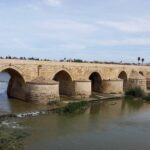
- Roman Bridge and Calahorra Tower: the walk that explains the layers
- La Judería with a history guide: the streets and the people
- Sinagoga de Córdoba: seeing what’s still standing
- Mezquita-Catedral interior: why the audio guides help
- Patios in San Basilio: Córdoba’s homegrown beauty
- Alcázar expectations: why time can affect what you see
- Lunch window: plan to eat like Córdoba, not like a checklist
- Price and value: does $264.85 make sense?
- Guide quality: what to watch for on a history-heavy day
- Who should book this Córdoba day trip
- Should you book Córdoba Mosque-Cathedral and Jewish Quarter with Sevilla Moving?
- FAQ
- How long is the Córdoba tour?
- What time does the tour start in Seville?
- Where is the meeting point in Seville?
- What’s included in the price?
- Is lunch included?
- Do you visit the Jewish quarter and the synagogue?
- What happens if the tour can’t run due to weather or minimum numbers?
Key highlights to focus on
- Mosque-Cathedral entry included with tickets and audio guides in your language
- La Judería guided walk with stories tied to major historical figures like Maimonides and Seneca
- Roman Bridge route to the Mosque, with an explanation that helps you see the layers
- Patios in San Basilio, visited with the local patios association during a short, special window
- Quick Carmona stop to break the long day and reset for photos
A full-day Córdoba plan that actually works from Seville
This is a long day on purpose: roughly 10 hours from Seville. You leave at 9:00 am and the drive takes about an hour and a half each way, so you’ll be spending real time on the road. The payoff is that Córdoba gets compressed into one smooth run of key sights, with a history-focused guide moving you between them.
You also get real comfort for the trip: an air-conditioned vehicle, plus mobile ticketing. It’s a private group setup (just your group), which usually means you don’t have to shout over a huge crowd. There’s also a group-discount vibe, which matters if you’re traveling with friends or family and can split the cost in a smarter way.
The main reason I think this works for many people: the schedule is built around transitions. You get an early reset stop (Carmona), then you move toward the Mosque via the Roman bridge area, then you pivot into the Jewish Quarter before returning to patios and a clean finish back in Seville.
You can also read our reviews of more tours and experiences in Seville.
Carmona: a quick white-village breather before the big sights
Your first stop is Carmona, one of those Andalusian towns that looks postcard-perfect even when you’re only there briefly. The visit is short—about 30 minutes—and it’s mostly practical: you can stretch your legs, take a few photos, and grab a coffee.
What makes this useful isn’t the length. It’s the timing. You’re fresh enough to enjoy the white walls and photogenic streets, but you’re not stuck with a full town itinerary before Córdoba overload sets in. There’s also time to use toilets, which sounds small until you’re hours into a day and grateful someone planned for it.
If you’re the type who likes capturing details (doorways, balconies, street corners), Carmona is a nice palate cleanser before Córdoba hits you with the Mosque interior and the dense layers of history.
Roman Bridge and Calahorra Tower: the walk that explains the layers
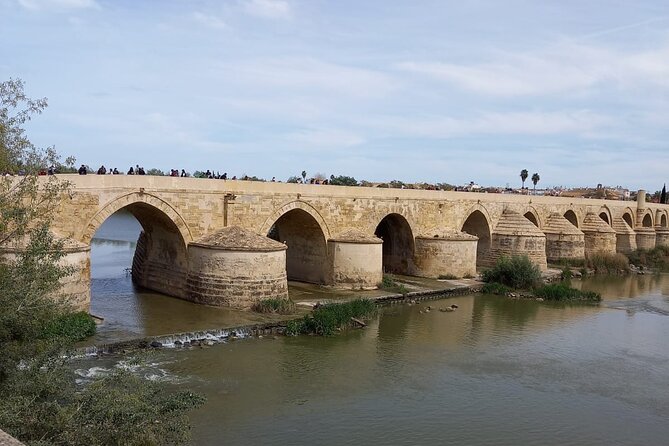
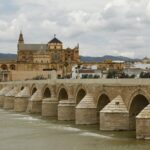
Once you reach Córdoba, you start with the Roman Bridge area. You’ll walk through streets that lead toward the bridge and then the Mosque zone. There’s a guide explanation here, and that’s the point: the bridge isn’t just a scenic backdrop. It helps you understand how Córdoba’s geography shaped where major buildings ended up.
You also pass the Calahorra Tower at the foot of the bridge. It’s a defensive tower, and seeing it from the street is a small but meaningful way to anchor the area in function, not just aesthetics. The stop is brief (about 15 minutes), so you won’t get a long lingering moment—but it gives you enough orientation that the bigger monument ahead lands better.
Practical tip: wear shoes that work for uneven old-stone streets. This is the kind of day where your feet matter more than your itinerary app.
La Judería with a history guide: the streets and the people
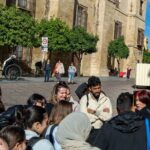
This is one of the strongest parts of the experience. You get a guided tour of La Judería (about 1.5 hours), focused on streets and stories in the Jewish Quarter. The guide’s job here isn’t to toss dates at you. It’s to connect locations to human names, and the tour highlights famous figures like Maimonides and Seneca.
What I like about this approach is that it turns the quarter into more than scenery. When you’re told which corners matter and why, you start noticing patterns: the feeling of narrow lanes, the way the street layout funnels you, the way the neighborhood reads differently when you’re thinking in chapters instead of landmarks.
There’s also a break included while you’re in the area, with time to enjoy gastronomy. The plan is designed so you’re not stuck choosing food after you’re exhausted. You get a moment to regroup and taste local flavors—or at least pick something quick you’ll remember later.
Also, you should expect the atmosphere of popular bars to come up in the story-telling. Even if you don’t turn into a full-on food mission, it helps you experience Córdoba the way locals do: short walks, quick stops, conversation, and snacks that aren’t formal.
Sinagoga de Córdoba: seeing what’s still standing
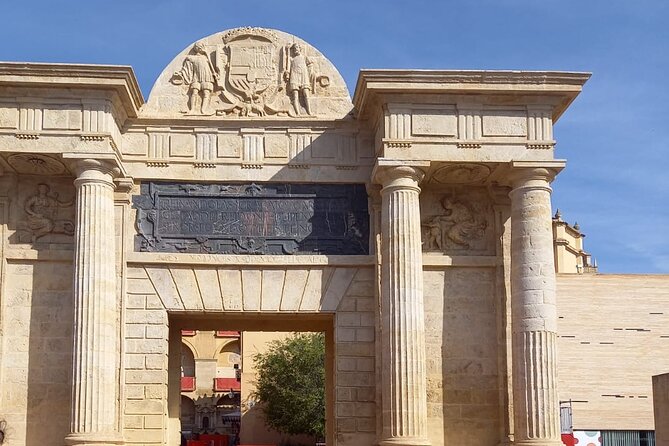
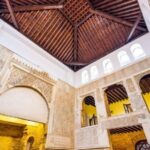
The tour also includes the Synagogue de Córdoba, but it’s a pass-by stop rather than a long sit-down museum-style visit. That means you’ll learn what you can from the guide while you’re near it, and then you move on.
The big value here is simply context: it’s described as one of the few preserved synagogues from that period in Spain. Even if you don’t spend a long time inside, the fact that the structure still exists is the point. You’re not just hearing about history. You’re looking at a surviving piece of it.
If you’re the type who wants to linger, note that your time here may be shorter than you hoped. This is a “see and understand quickly” moment inside a packed day.
Mezquita-Catedral interior: why the audio guides help
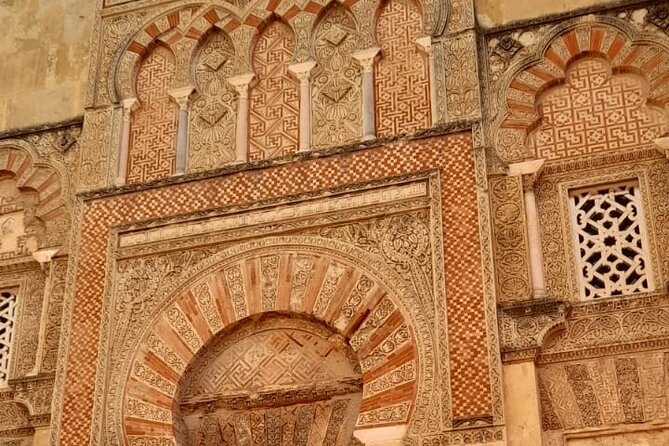
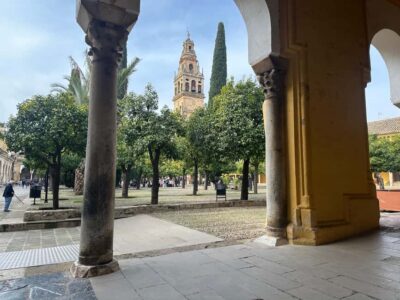
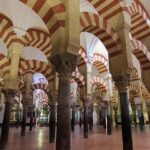
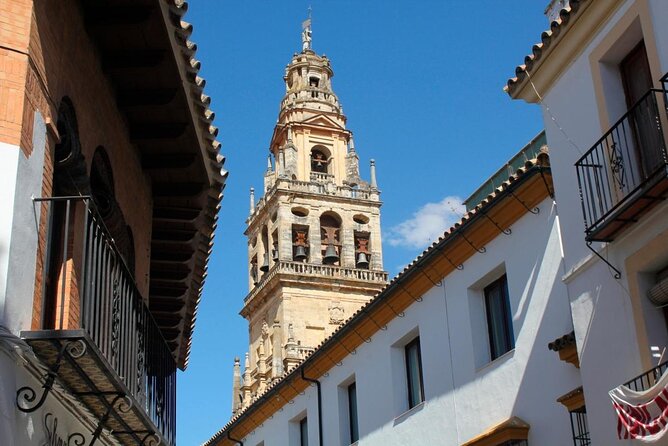
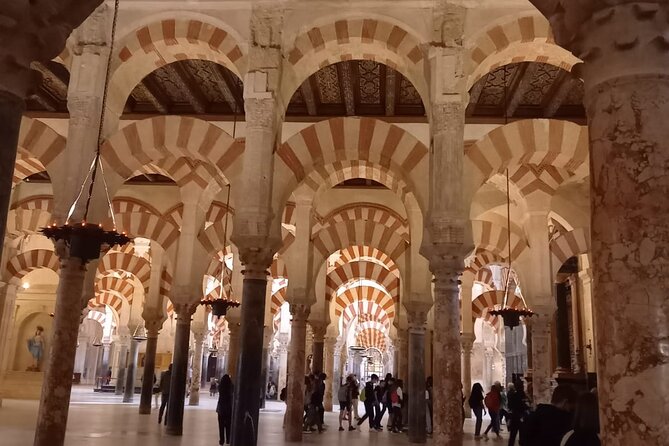
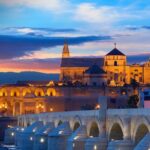
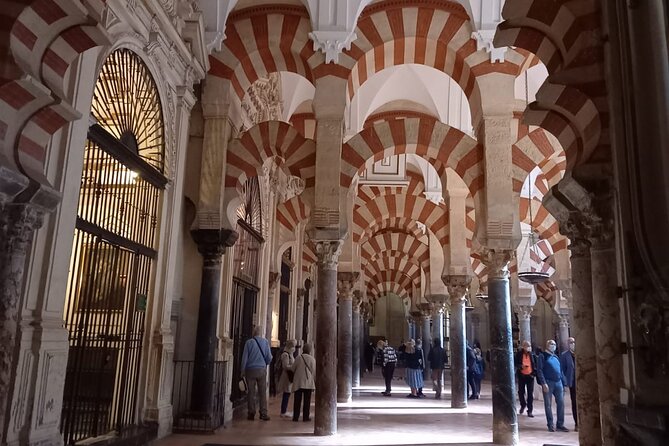
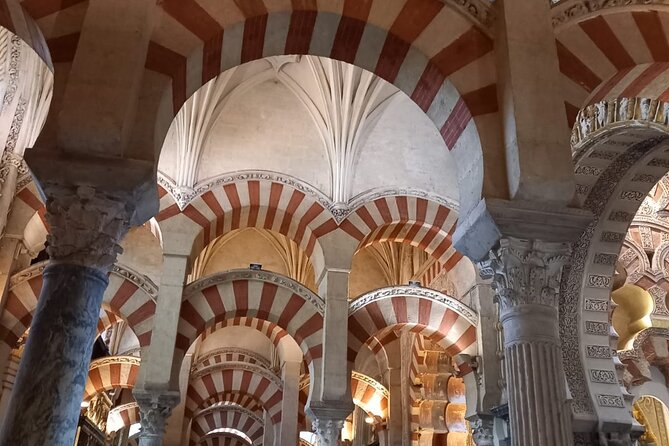
The Mosque-Cathedral (Mezquita-Catedral de Córdoba) is the anchor. You get entry to the interior (about 1.5 hours), and the tour includes tickets plus audio guides in your language.
This inclusion matters for two reasons. First, it saves you the chore of figuring out entry timing and tickets on your own. Second, audio guidance helps you control the pace. You can listen while you walk, and if the architecture overwhelms you (it can), you’re not trying to interpret alone.
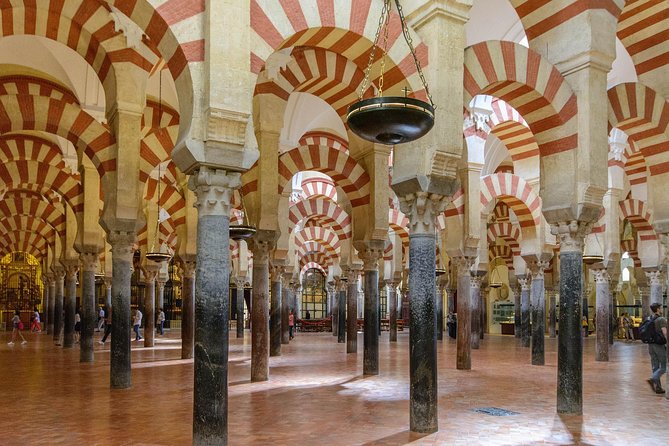
Inside, the key is to slow down just enough to notice patterns. The Mosque is famous for its layered visual rhythm—columns, arches, and repeating forms that create a sense of movement. With an audio guide, you can connect those visual details to the historical evolution of the site.
One reality check: this is a major monument, so expect crowds and foot traffic. The tour includes a fixed block of time, which is useful. If you want lots of quiet, you’ll need to prioritize small moments: stop, listen for a phrase, then move on before you lose your place.
Patios in San Basilio: Córdoba’s homegrown beauty
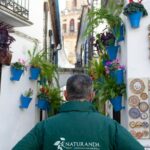
After the big monument moments, you shift into something more local and more human: Córdoba’s patios. You’ll visit some competition patios in the popular neighborhood of San Basilio with the local association of Córdoba’s patios.
This is one of those experiences that changes how you see the city. Instead of focusing only on major structures, you learn how ordinary homes and courtyards create community pride. Patios in Córdoba aren’t just decoration. They’re a tradition people protect, show, and talk about.
The visit is relatively short (about 45 minutes), but it’s timed for maximum impact. You’re likely to see the kinds of courtyard details that make Córdoba photos look so specific: plants, tiles, shaded corners, and those small design choices that make the whole space feel alive.
You also visit Reales Caballerizas as part of this segment. The information provided notes it as a historic place, and it fits the day’s theme: Córdoba’s identity comes from both daily life and major historical institutions.
Alcázar expectations: why time can affect what you see
Córdoba has more than one “must-see,” and the Alcázar comes up as an important part of the picture. In some versions of this day, you may mainly get exterior views rather than a full interior tour, depending on how the group timing shakes out.
So I’d treat Alcázar as a “hopeful extra” rather than a guaranteed full interior experience. If interior access is a must for you, it’s worth planning in advance for an additional stop on your own day—so you’re not relying on the bus schedule to deliver everything.
This is the kind of day where one difference in timing can change what you feel you got. If you want architecture plus deep access, consider pairing this trip with a follow-up self-guided wander where you can slow down where you care most.
Lunch window: plan to eat like Córdoba, not like a checklist
Lunch is not included, but you do get one hour to eat, and the guide accompanies you and gives suggestions for bars and typical foods to try.
I like this structure because it respects real travel energy. A one-hour lunch window forces a practical mindset: don’t try to solve every restaurant decision at the last second. Use the guide’s recommendations, then choose based on what sounds good right now.
If your goal is to try Córdoba flavors, this is your time to do it. And if you’d rather keep it light, you can use the hour to grab something fast and save your appetite for later evening browsing when you’re back in Seville.
Price and value: does $264.85 make sense?
At $264.85 per person, this isn’t a bargain-basement day trip. The value depends on what you want out of Córdoba.
Here’s the math that matters: you’re paying for transport, a history-focused guide, and Mosque-Cathedral tickets plus audio guides. Those two things—especially the Mosque access—often cost more if you arrange them yourself or if you’re trying to match timing. You also get multiple stops: Roman bridge area, Jewish Quarter time, the synagogue pass-by, patios with a local association, plus Carmona.
So I see it as worth it if:
- you want a guided day with clear narrative connections between sites
- you like architecture but also want human stories tied to neighborhoods
- you’d rather spend money to avoid ticket/route stress and focus on the experience
I see it as less worth it if:
- you mainly want long, independent time inside each major site
- you’re very sensitive to guide language quality and pacing (this is the main complaint that shows up)
- you expect every attraction to be fully interior and fully time-rich in one run
The booking pace also suggests people plan ahead: on average it’s booked about 9 days in advance. That’s often a sign the limited seats can move.
Guide quality: what to watch for on a history-heavy day
Because this tour is history-led, guide skill matters. One downside that can affect your day is a weaker command of English and a history explanation that doesn’t land. When that happens, you may feel rushed or under-served on certain stops.
My advice: if English clarity is a priority for you, check what language you’re comfortable with and be realistic about the pace. Also, don’t assume every stop will feel equally detailed. A day like this has to cover a lot, and the quality of interpretation can make the difference between a great day and a merely fine one.
That said, the other side of the coin is strong. When the guide hits the right notes, the quarter stories plus the Mosque context turn the city into something you can understand, not just photograph.
Who should book this Córdoba day trip
This trip is a good match if you:
- enjoy history stories connected to real streets and places
- want a structured day from Seville without juggling tickets and timing
- like the mix: monuments, neighborhood walking, and patios
- want a guided start-to-finish experience with transport and Mosque entry handled
It’s a weaker match if you:
- want lots of free time and long independent museum-style browsing
- expect a guaranteed inside visit for every major site (like the Alcázar)
- need very polished English-level explanations in every segment to enjoy the day
Should you book Córdoba Mosque-Cathedral and Jewish Quarter with Sevilla Moving?
I’d book it if you’re excited by the idea of understanding Córdoba instead of just seeing it. The Mosque-Cathedral entry with audio guides is a solid foundation, and the La Judería storytelling—with named historical figures—gives you a reason to pay attention to the streets, not just buildings.
But go in with the right expectations. This is a full day with tight blocks, so if your dream is slow, quiet, museum-like time everywhere, you may want to build a self-guided day or add extra time in Córdoba on your own.
If you want one day that hits the highlights from Seville and leaves you feeling like you grasp the city’s layers, this is a strong choice.
FAQ
How long is the Córdoba tour?
It’s about 10 hours long.
What time does the tour start in Seville?
The start time is 9:00 am.
Where is the meeting point in Seville?
The meeting point is Sevilla Moving – Alojamientos y experiencias, C. Luis Montoto, 19, Local Bajo, 41003 Sevilla, Spain.
What’s included in the price?
The tour includes an air-conditioned vehicle and tickets to the Mosque-Cathedral, plus audio guides.
Is lunch included?
No. Lunch isn’t included, but you get one hour to eat and the guide will suggest bars and typical foods.
Do you visit the Jewish quarter and the synagogue?
Yes. You get a guided tour of La Judería and you pass by Sinagoga de Córdoba.
What happens if the tour can’t run due to weather or minimum numbers?
If it’s canceled due to poor weather, you’ll be offered a different date or a full refund. If the minimum number of travelers isn’t met, you’ll also be offered a different date/experience or a full refund.