REVIEW · MUSCAT
Guided Walking Tour of Sultan Qaboos Grand Mosque in Muscat
Book on GetYourGuide →Operated by GidOman · Bookable on GetYourGuide
Five minarets, one hour, serious wow. This guided walking tour at the Sultan Qaboos Grand Mosque in Muscat uses your time well, pointing out why the five minarets represent the Five Pillars and how the central 50-meter dome dominates the skyline.
I especially love the visual scale inside the main prayer hall: the floor’s hand-woven carpet spans over 4,000 square meters, and a 14-meter crystal chandelier of Swarovski crystals hangs overhead. Even the women’s prayer hall feels thoughtfully designed, with carved wooden doors and delicate lighting that make the space feel complete.
The main planning point is modest dress: you’ll need long sleeves and long pants or a long skirt, and women must bring a headscarf. It’s a one-hour walk, so if you want to linger for a long, quiet browse, you may wish you had more time.
In This Review
- Key takeaways before you go
- Why this mosque tour is a smart first stop in Muscat
- Where the tour starts at the Sultan Qaboos Grand Mosque
- First impressions: gates, minarets, and the 50-meter dome
- The marble courtyard and floral gardens you’ll actually enjoy
- Inside the main prayer hall: carpet scale and the Swarovski chandelier
- A note on how to behave in the prayer hall
- Women’s prayer hall: smaller, intimate, still stunning
- Open-air corridors, sandstone columns, and garden views
- The Sultan Qaboos legacy woven into the architecture
- What’s the point of a guide here?
- Price and value: $10 for 1 hour of real context
- Logistics that actually matter: dress, shoes, and transport
- Who this tour suits best (and who might want a different plan)
- Should you book the Sultan Qaboos Grand Mosque walking tour?
- FAQ
- How long is the Sultan Qaboos Grand Mosque guided walking tour?
- How much does the tour cost?
- Where do I meet the guide?
- What dress code do I need for the mosque?
- Can I take photos during the tour?
- What’s included, and what should I bring?
Key takeaways before you go
- Five minarets with a meaning: you’ll learn what each one symbolizes as you enter the complex.
- Size you can’t fake: the carpet and chandelier are record-breaking in scale, and the guide explains how.
- Omani design you’ll spot faster with context: Arabic calligraphy, mosaic tilework, and geometric patterns make more sense with a guide.
- You see both main and women’s prayer areas: the tour includes the women’s hall, not just the showpiece.
- Courtyards and gardens cool you off: marble, floral gardens, and quiet open-air corridors make photos and pauses easier.
Why this mosque tour is a smart first stop in Muscat
If you only have one short activity in Muscat that’s both peaceful and instantly memorable, this guided walk is it. Sultan Qaboos Grand Mosque isn’t just pretty. It’s a full-on lesson in how faith, art, and Omani craftsmanship get built into one place.
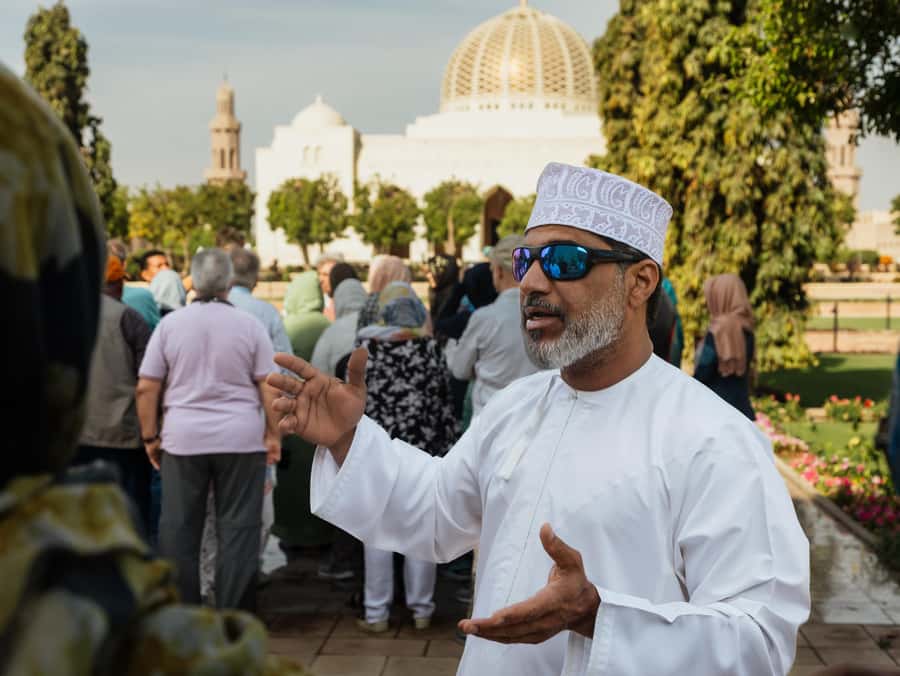
What makes this tour work is simple: you’re not wandering alone, trying to guess what you’re looking at. Your guide walks you through the complex step by step, and the explanations turn the scenery into something you can actually read.
I like that the experience hits the big visual moments without feeling rushed. You get exterior symbols (the minarets and dome), then you move into the main prayer hall, then you finish with quieter spaces like the women’s hall and the open-air corridors.
You can also read our reviews of more tours and experiences in Muscat.

Where the tour starts at the Sultan Qaboos Grand Mosque
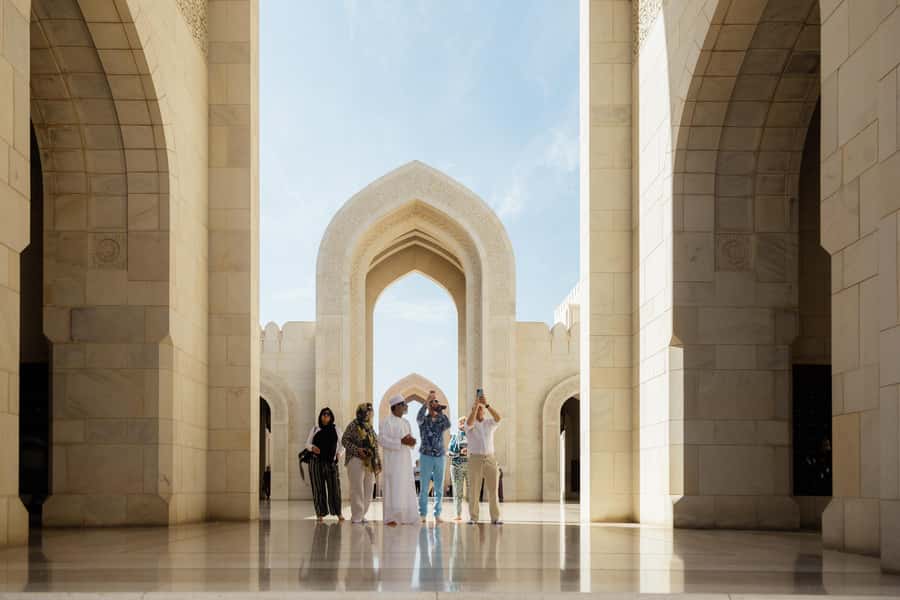
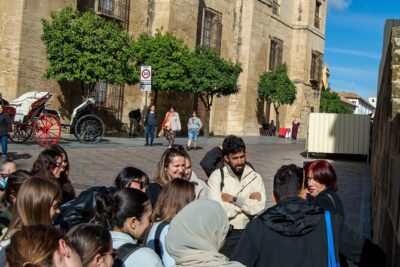
You’ll meet at the main visitor entrance of the Sultan Qaboos Grand Mosque, near the central gate facing the main parking area. Look for your guide holding a GidOman sign, and try to arrive about 10 minutes early so you can start calmly.
This matters more than people think. The mosque has strict dress expectations, and it’s easier if you’re not rushing. Also, comfortable shoes help because it’s a walking tour through courtyards and corridors.
If you’re coming from downtown by taxi, plan extra time for drop-off and finding the group. The meeting point is specific, and the guide won’t be waiting forever once the tour begins.
First impressions: gates, minarets, and the 50-meter dome
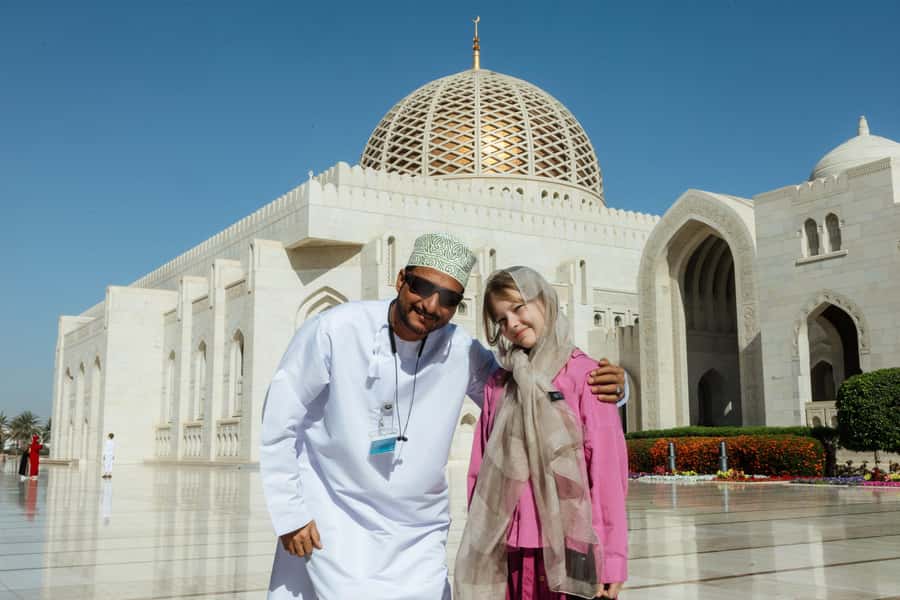
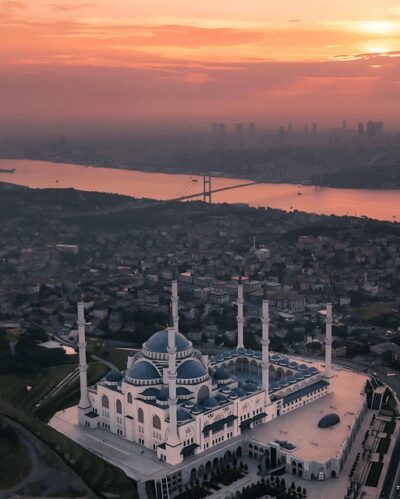
As soon as you step through the gates, you’re met by a bold visual story. Five soaring minarets rise up, and your guide explains that each one represents the Five Pillars of Islam. That’s the kind of detail you’d miss if you were just taking pictures.
Then comes the central dome, reaching about 50 meters high. The dome isn’t only impressive because it’s tall. It anchors everything visually, like the mosque’s idea of order made physical.
You’ll walk across a marble courtyard edged by floral gardens and elegant archways. This part is where the city’s noise starts to fade. It’s also where you get your bearings fast: you understand the layout so the inside spaces feel less confusing later.
The marble courtyard and floral gardens you’ll actually enjoy
Mosque grounds can feel like a single big photo stop. Here, you get a calmer rhythm. As you stroll, the marble courtyard opens into landscaped garden areas around the complex, with cooling greenery and tranquil reflecting pools.
Your guide points out what to notice in the stonework and the archways. You’ll also find photo angles that make the mosque’s exterior stand out—especially the ivory and red-brown marble look.
A key practical point: this is the part of the tour where you can slow down and breathe. If you want a moment to reset before entering the most ornate indoor spaces, use the courtyard.
Inside the main prayer hall: carpet scale and the Swarovski chandelier
The main prayer hall is the headline, and it deserves the hype. But the tour’s value is that it explains why the design is so meaningful, not just how it looks.
The floor is covered by one of the world’s largest hand-woven carpets, spanning over 4,000 square meters. Your guide shares the impressive production story too: it was woven by 600 artisans over four years. That context makes the carpet feel less like a decoration and more like a long, collective act of devotion.
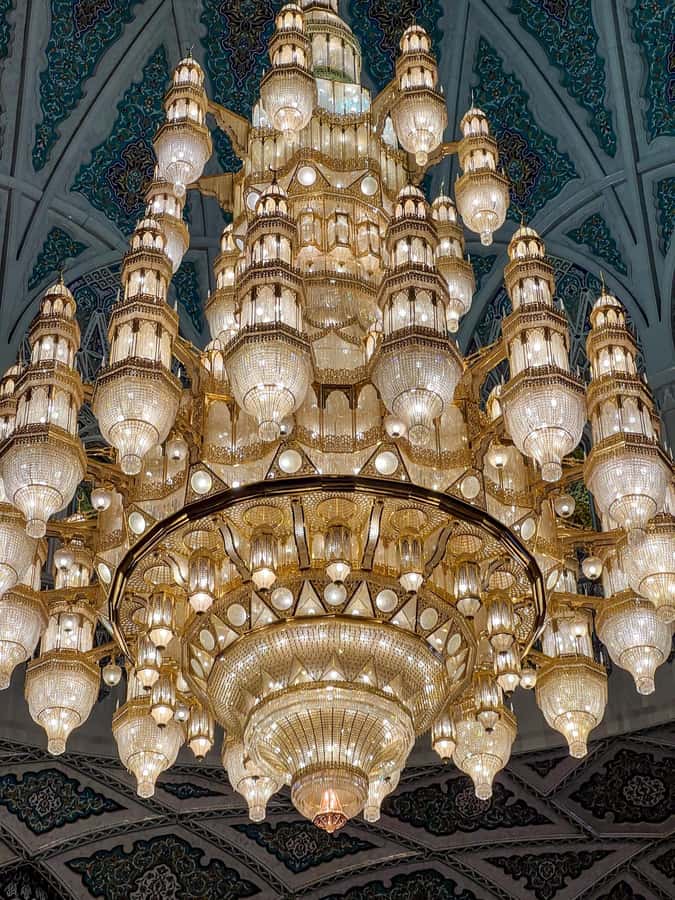
Then look up. A colossal crystal chandelier hangs overhead at about 14 meters. It’s described as sparkling with hundreds of thousands of Swarovski crystals, and seeing it in person is one of those moments where you understand scale with your eyes, not your imagination.
As you take in the ceiling and upper walls, the guide points out Arabic calligraphy and colorful mosaic tilework. The explanations connect Quranic verses and geometric designs to the feeling of harmony you experience in the space.
You’ll also notice how the craftsmanship looks “finished” in a way that feels deliberate from every angle. Even if you’re not a design person, the room teaches you how to look.

A note on how to behave in the prayer hall
Since this is a working place of worship, keep your behavior respectful. Dress correctly, speak quietly, and be mindful with photography where it’s allowed. Your guide will help you understand where you can stand and what to avoid.
If you’re someone who likes to ask questions, this is a good place to do it. The tour format makes room for meanings, not just sightings.
Women’s prayer hall: smaller, intimate, still stunning
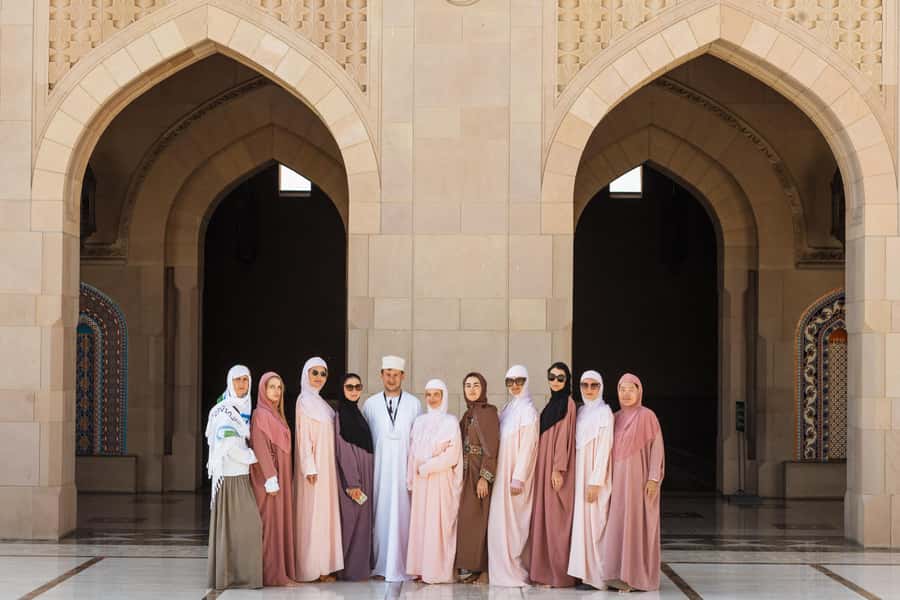
A lot of mosque visits focus only on the main hall. This tour also takes you to the women’s prayer hall, which feels more intimate while still being intensely ornate.
Your guide draws attention to details you might otherwise pass by—like carved wooden doors and the careful choices behind lighting. The overall impression is that the design treats the women’s space as fully considered, not as an afterthought.
This stop is valuable because it changes your perspective. After seeing the massive carpet and chandelier, you start understanding the mosque as a whole system of spaces, each with its own mood and purpose.
If you care about inclusivity in architecture, this is one of the moments where you’ll feel the tour is doing more than sightseeing.
Open-air corridors, sandstone columns, and garden views
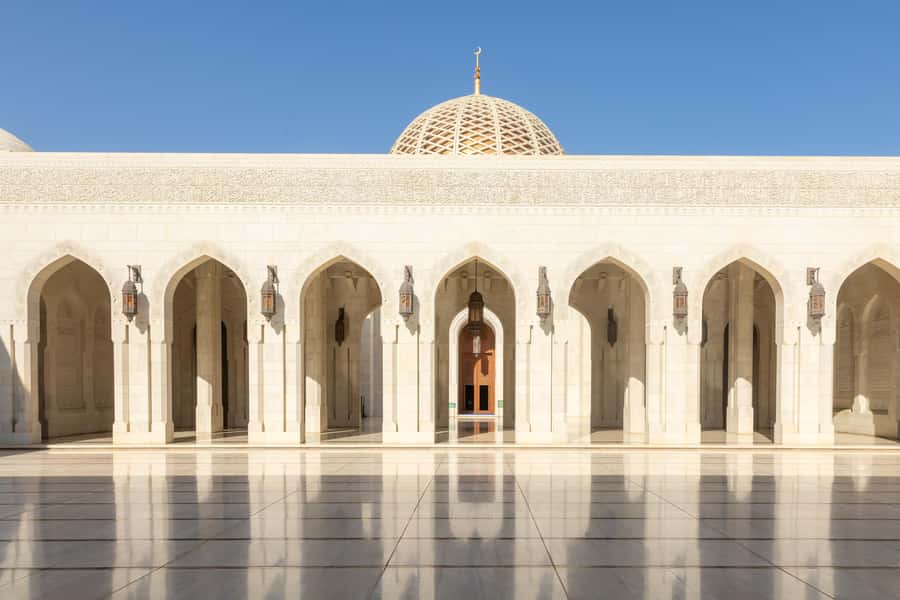
After the indoor highlights, the tour moves you into open-air corridors lined with polished sandstone columns. These spaces are less visually overwhelming than the main hall, which is exactly why they work well for the second half of your visit.
You’ll also encounter informative displays as you walk. Even if you only catch a few details, it helps you connect the artistic motifs to the broader story of the mosque and Oman’s design sensibility.
And yes, the gardens keep showing up in the background. You get views of landscaped greenery that wrap around the complex, giving your eyes a break while still keeping the mosque as the anchor of the scene.
This is also a nice stretch for photos, because the lighting outdoors often gives you softer results than the harshest midday glare.
The Sultan Qaboos legacy woven into the architecture
You don’t just walk through a beautiful building. The tour explains the human story behind it.
Your guide shares that the mosque was inaugurated in 2001, celebrating the 30th year of Sultan Qaboos bin Said’s reign. The idea is that the mosque was envisioned as a gift to the nation—an architectural symbol tied to harmony, education, and faith.
You’ll also hear about the blend of influences that makes the mosque unique in the Islamic world. Traditional Omani design motifs and carved teakwood details show Omani craftsmanship. At the same time, hints of Persian, Ottoman, and Mughal artistry appear in how elements are shaped and combined.
That mix is part of why the mosque feels both local and grand. It doesn’t pretend Oman’s story started at the mosque gates. It treats the mosque as a culmination.
What’s the point of a guide here?
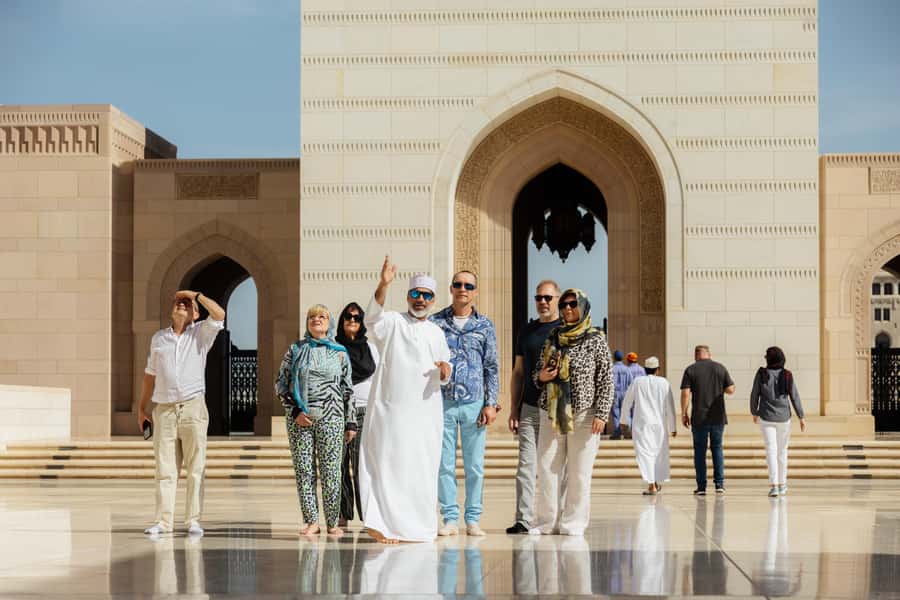
I’ll be blunt: you can take photos without a guide. But you’ll miss the meanings that make the place stick in your mind.
The tour’s best moments are when the guide explains “small” details that carry big symbolism—like the Five Pillars representation from the minarets or the way Arabic calligraphy and geometric patterns create a sense of harmony.
In the experience, you also get time to ask questions. That matters because mosque architecture can feel confusing if you’re trying to decode it alone. With guidance, the patterns stop being just decoration and start becoming a language.
Price and value: $10 for 1 hour of real context
At $10 per person for a one-hour guided walk, this is strong value, especially for first-time visitors. You’re paying for interpretation—someone doing the heavy lifting of explaining the carpet, the chandelier, the calligraphy, and the architectural references while you walk.
You also get bottled water included, which is a small but practical comfort, particularly in Muscat’s sun. The tour is short enough to fit into a tight day, but structured enough that you don’t feel like you’ve just rushed through the highlights.
Is it a “do it all” tour of the entire country? No. But for understanding the mosque itself—what you’re seeing and why it’s designed that way—this price-to-time ratio makes sense.
Logistics that actually matter: dress, shoes, and transport
This is where you need to be prepared, or the experience becomes stressful fast.
Dress code is required. Women must wear long sleeves and long pants or a long skirt, and bring a headscarf. Men must wear long pants and cover shoulders. If you forget a headscarf or bring something too short, you’ll lose time getting sorted.
Footwear matters too. It’s a walking tour, so comfortable shoes are a must.
Transportation isn’t included. The tour covers the guided walking experience inside and around the mosque complex, but you’ll need your own way to reach the meeting point.
Photography is allowed in most areas, but you should be respectful. When you’re in a place of worship, act like every photo is a privilege, not a right.
Who this tour suits best (and who might want a different plan)
This tour is a great fit if you’re:
- Visiting Muscat for the first time and want a fast, meaningful orientation.
- Interested in Islamic art and Omani architecture and want explanations that connect details to belief and design.
- Short on time, but you still want to see the main prayer hall and women’s prayer hall rather than only the most famous view.
You might want to choose something else if:
- You want a long, slow visit with no structure.
- You dislike rules around clothing and behavior in religious spaces.
- You’re hoping for deep technical architecture history beyond what fits into a one-hour walk.
Should you book the Sultan Qaboos Grand Mosque walking tour?
I think you should book this if you want the mosque to feel understandable, not just impressive. The hour is timed well: you get the big exterior symbols, then the indoor records (the carpet and chandelier), then quieter spaces like the women’s prayer hall and open-air corridors.
And if you like questions, this format is especially good. You’ll get more from the visit because the guide helps you connect what you’re seeing—patterns, calligraphy, craftsmanship—to the meaning behind it.
Just do the two preparation basics: pack appropriate clothing (and a headscarf if you need one) and wear comfortable shoes. Then you’ll get the calm, awe-filled experience this mosque was built to give.
FAQ
How long is the Sultan Qaboos Grand Mosque guided walking tour?
The tour lasts 1 hour.
How much does the tour cost?
The price is $10 per person.
Where do I meet the guide?
Meet at the main visitor entrance of the Sultan Qaboos Grand Mosque, near the central gate facing the main parking area. Look for a guide holding a GidOman sign.
What dress code do I need for the mosque?
Modest dress is required. Women must wear long sleeves and long pants or a long skirt, and bring a headscarf. Men must wear long pants and cover shoulders.
Can I take photos during the tour?
Photography is allowed in most areas, but you should be respectful.
What’s included, and what should I bring?
Included: a guided tour and bottled water. Not included: transportation to/from the mosque and a headscarf or appropriate clothing, so you should bring your own.