REVIEW · MUSCAT
Muscat: City Tour of Grand Mosque, Old Souqs, Museum, & Fort
Book on GetYourGuide →Operated by OceanAir Travels · Bookable on GetYourGuide
Muscat feels best when you walk its landmarks. This half-day private tour strings together the big emotional hits: Sultan Qaboos Grand Mosque and the twisty lanes of Muttrah souk, then ends with cultural context at Bait Al Zubair Museum. I especially like that it’s paced for first-timers: you see the musts without feeling like you’re sprinting from place to place. The one thing to consider is that some stops are mostly short photo moments (forts and palace), so if you’re chasing deep history at every site, you may want extra time elsewhere.
I also like the mix of calm and character: the mosque gives you quiet, light-filled geometry, while Muttrah feels like real Oman—merchant houses, a fish market, and souq streets that reward slow walking. You’ll also get a front-and-center look at the Portuguese forts (Al Jalali and Al-Mirani) and a photo stop at Al Alam Palace, which is a nice change of pace after all the browsing. My only caution is that the quality of the story you get can depend on the guide; some guides lean more into cultural explanation than others.
Because it’s a hotel pickup private group up to 2, you’re in an air-conditioned vehicle with an English-speaking guide and bottled water, which matters in Muscat’s sun. That said, it’s not set up for wheelchair users, and you’ll need to plan for strict dress rules at worship and museum stops.
In This Review
- Key Things You’ll Notice on This Tour
- Sultan Qaboos Grand Mosque: the calm start you’ll remember
- Muttrah Souq, fish market, and the corniche: where Muscat shows its personality
- Portuguese forts and Al Alam Palace: quick photo stops with big storytelling value
- Bait Al Zubair Museum: the culture lesson you’ll carry past sunset
- How the 4.5-hour flow fits a real day in Muscat
- Price and value: is $389 for up to 2 a smart deal?
- Tips so the dress code and photo rules don’t derail you
- Should you book this Muscat tour?
- FAQ
- How long is the Muscat city tour?
- How much does the tour cost?
- What’s included in the tour?
- What should I bring?
- Is there a dress code?
- Can I take photos inside the Bait Al Zubair Museum?
- Where does pickup happen?
Key Things You’ll Notice on This Tour
- Sultan Qaboos Grand Mosque starts the day with a serene reset before you hit the souqs and forts
- Muttrah souk plus the corniche gives you both shopping energy and seaside views
- Fish market + merchant houses are quick, fun visual stops that make the area feel lived-in
- Al Jalali and Al-Mirani are mainly photo stops—great angles, less time to linger
- Bait Al Zubair Museum adds culture you can carry home (and photography is off inside)
- Dress code is real: headscarf for women and long sleeves/long trousers or skirts for everyone
Sultan Qaboos Grand Mosque: the calm start you’ll remember
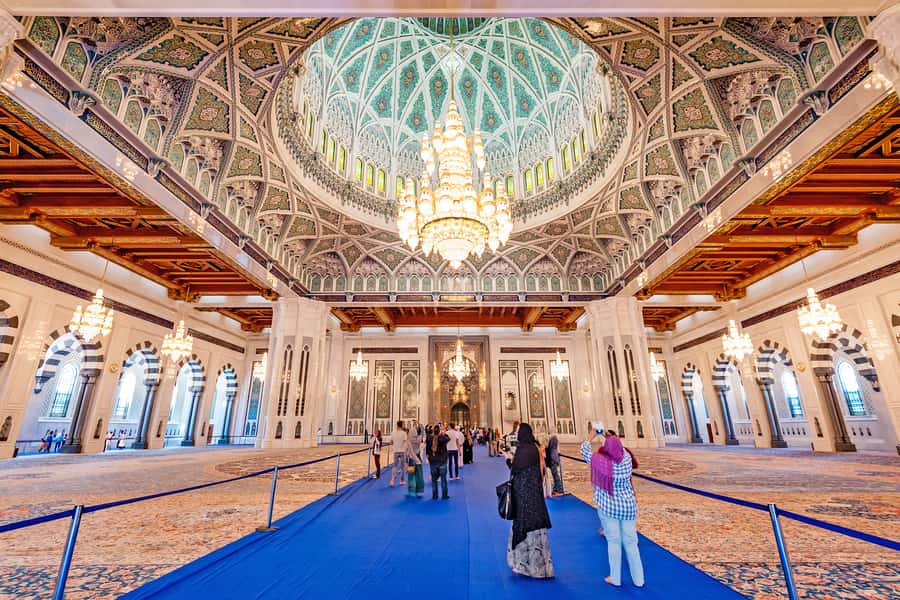
Your day kicks off after hotel pickup in central Muscat, then a drive through the embassy quarter toward the Sultan Qaboos Grand Mosque. The journey matters because the mosque doesn’t just appear—it arrives with big-city context, then shifts into a totally different mood.
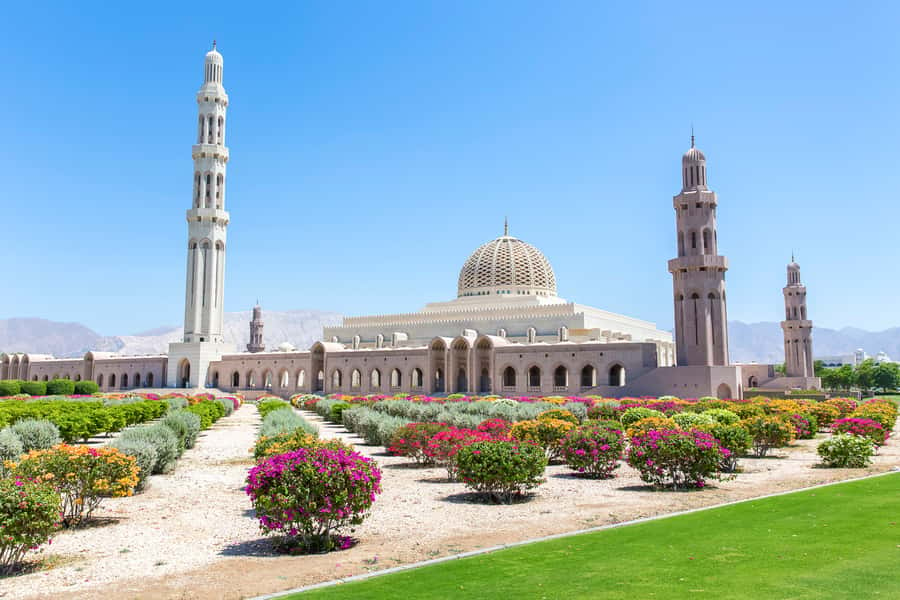
Once you’re there, focus on the details the first time you look around: the sandstone domes, tall minarets, courtyards, and that feeling of space that makes Muscat’s heat seem far away. The tour includes entry to the main prayer hall, so you’re not just doing an outside drive-by. This is one of those places where good photos are possible, but it’s the atmosphere that sticks.
Practical note: the dress code here and at the museum stop is strict—long sleeves and long trousers or skirts for men and women, and women must wear a headscarf. If you show up even a little off-plan, you risk being turned away. I’d treat this as the main “logistics check” of the tour.
If you want one big reason to do this tour, it’s that the mosque sets the tone. You start with a quiet, respectful experience, then move into busier neighborhoods with a better understanding of the culture you’re seeing.
You can also read our reviews of more tours and experiences in Muscat.

Muttrah Souq, fish market, and the corniche: where Muscat shows its personality
After the mosque, you shift gears to Souq Muttrah, one of the older, more traditional market areas in the city. This is not a sterile mall tour. You’ll walk through lanes that feel like they’ve been trading stories for decades—perfume shops, small stalls, and the kind of merchant houses you usually only see from a street-level shuffle.
The itinerary includes a stop at the waterside fish market. Even if you’re not buying anything, it’s a quick way to see daily life and get a sense of how the coast fits into Muscat’s rhythm. Right after that, you’ll stroll along the corniche and spot the elegant merchant houses facing the water. It’s a simple sequence, but it works: activity, then view.
Then you head toward the main souq area, which leans heavily into shopping—especially perfume and clothes. This is where you’ll want comfortable shoes. The tour is half-day, so you’re not meant to spend all afternoon negotiating. But you can still walk away with a few good souvenirs if you keep your pace steady and know what you want.
If you like “see it, touch it, understand it” travel, Muttrah is where you get that. If you hate crowds and standing around waiting for people to finish browsing, you might find this portion a bit more energetic than the mosque.
Portuguese forts and Al Alam Palace: quick photo stops with big storytelling value

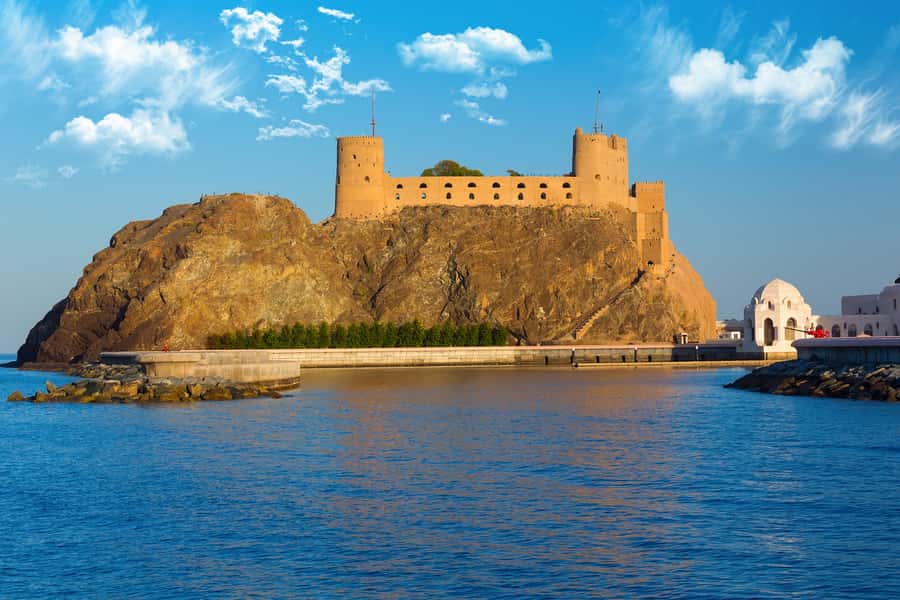
Next come the sights that most people recognize from pictures: the twin Portuguese forts, Al Jalali and Al-Mirani. You’ll get a photo stop in front of them, which means you’ll have time to take your shots and orient yourself, but you’re not in the forts long enough for a full exploration.
Still, this photo-stop format is smart for a half-day tour. The forts visually connect Muscat to its older, international past—Portuguese influence is literally built into the skyline here. Even from a short stop, you can appreciate the shapes and positions that make these forts so recognizable.
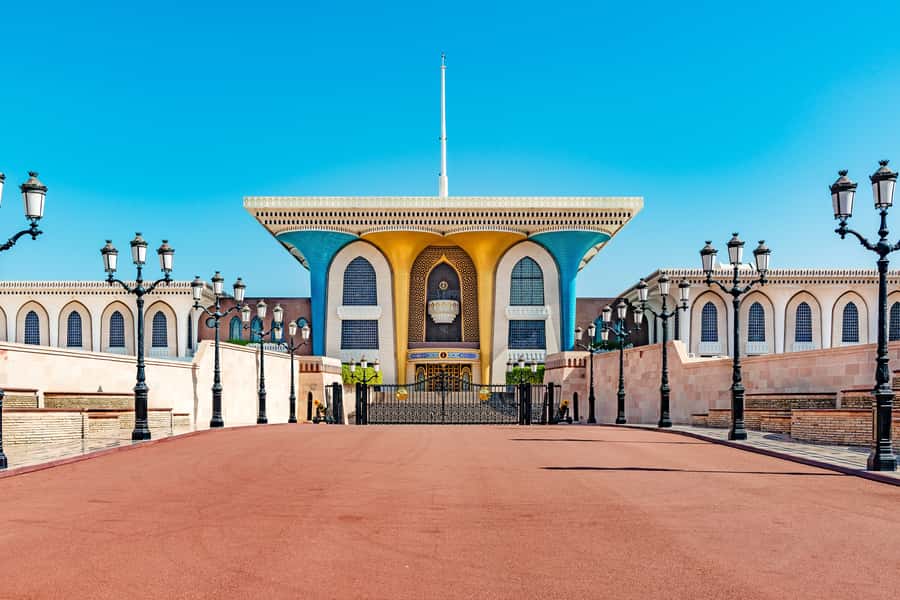
After that, you’ll also have a photo stop at Al Alam Palace. This is the official palace of His Majesty Sultan Qaboos. Again: it’s mostly for seeing and photographing the exterior rather than walking around. The value is the contrast. You go from fortified history to a current symbol of Oman’s monarchy, all without burning too much time.
One consideration: if your favorite kind of travel is slow wandering with lots of narration, the forts and palace portion may feel slightly brief. If you’re okay with a “here it is, now let’s move” pace, it’s a good fit for a first Muscat overview.
Bait Al Zubair Museum: the culture lesson you’ll carry past sunset
The final stop is Bait Al Zubair Museum, where the tour focuses on Omani culture. This is the part that helps everything else click. When you’ve just walked souq streets and seen forts tied to old maritime power, a museum stop gives you structure: what you’re looking at, why it matters, and how Oman’s identity comes through in everyday life.
The museum is described as beautifully designed, and the experience is built around learning. Do note the rules: photography and videography are prohibited inside the museum. That can be frustrating if you love taking photos, but it also nudges you to pay attention. Instead of building your memory with screenshots, you’ll rely on the guide’s explanation and the exhibit flow.
Dress code also applies here. Long sleeves and long trousers or skirts are required for both men and women, and women must wear a headscarf. Plan this as part of the day, not an afterthought.
When the tour ends, you return to your hotel. It’s a nice way to finish: you’re done with the walking, you’ve seen the headline landmarks, and you’ve added meaning to the photos.
How the 4.5-hour flow fits a real day in Muscat
The tour runs for about 270 minutes—roughly four and a half hours. That length is a sweet spot if you’re trying to cover the highlights without losing your whole day to logistics.
You’re picked up from your hotel or a selected location in central Muscat, then transported by an air-conditioned vehicle. Bottled water is included, which is exactly the kind of small detail that matters when you’re going from shaded vehicle to bright outdoor stops.
Also, share updates if your schedule depends on cruise arrival time. Smooth pickup is easier when the team knows your timing in advance.
What’s not included is lunch or additional drinks. That doesn’t mean you’ll be starving by the end—you’ll just want to plan for food around the tour window. One guide in a past experience added a personal touch by taking care of lunch and souvenirs, but that shouldn’t be counted on as part of the standard deal. Treat it as a bonus when it happens.
My practical advice: if you’re doing this early in your trip, it helps you “read” Muscat for the rest of your stay. If you’re doing it late, it’s still useful, but you might feel like you’re catching up after already choosing where to wander.

Price and value: is $389 for up to 2 a smart deal?
The price is $389 per group, up to 2 people, for the full half-day tour. Since it’s private, you’re paying for the guide, transportation, and the planned sequence of sights—rather than splitting costs across a big bus.
This can be excellent value if:
- you’re traveling as a couple or small group (you’re not fighting crowds)
- you want hotel pickup and an English-speaking guide without stress
- you’d rather pay once for a structured route than spend hours planning a day yourself
In one case I heard, a solo guest found the price felt comparable to a big-bus style option, especially because the tour felt customized to their timing. That’s the big “private tour” advantage: the day can be adjusted to your preferences when the guide and driver are paying attention.
Where value can drop a little is if you specifically need lots of deep historical detail at every stop. One experience I noted had the feeling of friendly service but less information than expected. To protect yourself, go in with a simple plan: decide what you want to learn (architecture, Islamic culture, Portuguese history, daily life in Muttrah) and ask your guide to lean into those topics.
If you like practical sightseeing with context—and you’re okay with some quick photo stops—this is a reasonable way to cover a lot of ground.
Tips so the dress code and photo rules don’t derail you
This tour has a few non-negotiables, so a little prep saves you time and stress.
- Bring your passport. A copy of your current valid passport is required on the day of travel.
- Wear comfortable shoes. You’ll be walking in souq areas and along the corniche.
- Pack long clothing. Dress code is required at places of worship and the museum: long sleeves and long trousers or skirts for men and women.
- For women, a headscarf is mandatory. If you don’t already travel with one, make that part of your packing list.
- Sunglasses help with outdoor time in Muscat’s sun.
- For the museum: no photography and videography inside.
- Don’t bring pets, and don’t bring large bags or luggage.
- Smoking isn’t allowed during the tour.
One more small thing: if you’re sensitive about heat, treat the bottled water as a real hydration tool. Use it earlier than you think you need to, not after you already feel it.
Should you book this Muscat tour?
Yes, if you want a clean, efficient first look at Muscat with a mix of architecture, coastal life, classic forts, and a culture-focused museum stop. This is especially good for couples or two-person groups who value hotel pickup, a guide who can explain what you’re seeing, and a tight half-day schedule.
I’d pass or add on another activity if you’re the type who wants extended time inside forts or a deeper dive into history at each site. Here, the forts and palace are mainly for photos and orientation, not long exploration. And since the amount of background you get can vary, be ready to ask questions so you get the story you care about.
If you’re aiming for “see the highlights, understand the vibe, go back feeling smarter,” this tour is a strong pick. Muscat’s not small, but this route gives you the right highlights without turning your day into a logistics test.
FAQ
How long is the Muscat city tour?
It lasts about 270 minutes, which is roughly a half-day.
How much does the tour cost?
The price is $389 per group for up to 2 people.
What’s included in the tour?
Hotel pickup and drop-off, a half-day city tour, air-conditioned transportation, an English-speaking guide, and bottled water are included.
What should I bring?
Bring your passport, comfortable shoes, and sunglasses.
Is there a dress code?
Yes. Long sleeves and long trousers or skirts are required for both men and women. For women, a headscarf is mandatory. Dress code applies to places of worship and selected museums.
Can I take photos inside the Bait Al Zubair Museum?
No. Photography and videography are prohibited inside Bait Al Zubair Museum.
Where does pickup happen?
Pickup is included from your hotel or a selected location in central Muscat.