REVIEW · ISTANBUL
Istanbul: Blue Mosque, Hagia Sophia & Basilica Cistern Tour
Book on GetYourGuide →Operated by Walks In Europe · Bookable on GetYourGuide
Three Istanbul icons, one easy plan. In a focused small-group format, you get reserved access and a guide who keeps the day moving through Sultanahmet’s top sites.
I especially like having pre-reserved tickets handled for the big line magnets—Hagia Sophia and the Basilica Cistern—so you spend more time looking and less time waiting. The tour also comes with headsets, which makes the history talks actually useful, not just background noise.
One consideration: this is not the cheapest way to see these landmarks, and it may feel extra spendy if you were already planning to enter some sites on your own.
In This Review
- Key things I’d bank on before you go
- Why this 3-hour Istanbul trio makes sense in Sultanahmet
- Blue Mosque: what the guide helps you notice right away
- Hippodrome stops: the Serpent Column and Obelisk make more sense together
- Hagia Sophia: mosaics, calligraphy, and the dome effect
- Basilica Cistern: how to enjoy the marble forest
- If Basilica Cistern is closed
- Price and value: what your $152 is really buying
- Group size, headsets, and the pacing that keeps you from feeling rushed
- What to wear and bring so you don’t lose time at the checkpoints
- Who this tour fits best (and who should reconsider)
- Should you book this Blue Mosque, Hagia Sophia & Basilica Cistern tour?
- FAQ
- How long is the Istanbul Blue Mosque, Hagia Sophia & Basilica Cistern tour?
- Does the tour include skip-the-line entry?
- Which admissions are pre-reserved?
- What should I bring for the tour?
- What clothing is required inside the mosques?
- What happens if Basilica Cistern is closed?
Key things I’d bank on before you go
- Skip-the-line entry at Hagia Sophia and Basilica Cistern so you don’t lose your momentum
- Headsets included, which helps a lot in large indoor spaces like Hagia Sophia
- Guides with strong on-the-ground explanations, including names like Farkan, Kübra, Murat, and Elif
- Dress-code control matters, especially at the Blue Mosque and Hagia Sophia
- A rare combo stop at the Hippodrome, where the Serpent Column, Theodosius Obelisk, and German Fountain snap into context
Why this 3-hour Istanbul trio makes sense in Sultanahmet
Istanbul’s historic center can feel like a menu where everything sounds amazing and you only have time for one or two dishes. This tour is built for short stays: 3 hours, three headline landmarks, and no time wasted figuring out ticket lines or where to look first.
I also like the pacing. You’re not just herded through rooms—you get stops where the guide explains what you’re seeing, then you get a little time to absorb it and take photos. The ending point at Sultanahmet Square is handy too, because that’s where you can keep exploring with fewer logistics headaches.
The biggest trade-off is value. At $152 per person, you’re paying for guide time plus reserved entry for two paid sites. If your goal is only to look around casually, you might decide you can do some parts independently. But if you want meaning while you stand in the spaces, the math usually lands better.
You can also read our reviews of more tours and experiences in Istanbul.
Blue Mosque: what the guide helps you notice right away
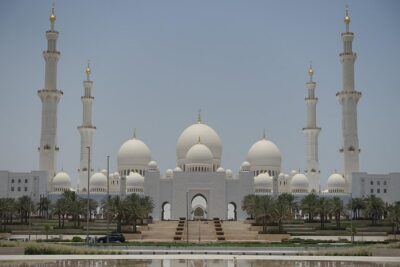
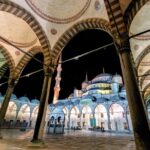
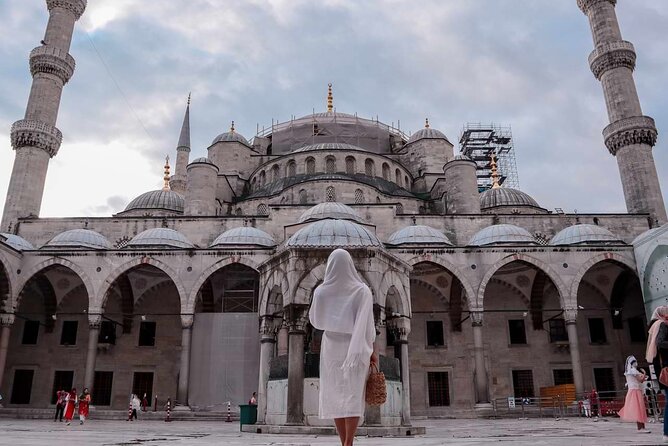
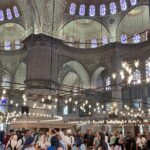
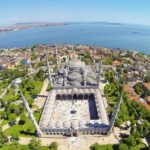
You start at the Blue Mosque, where the famous visuals are easy to spot even before the guide says a word: the İznik blue tiles and the cascade of domes. What makes it more than a pretty stop is the context—this is an Ottoman imperial mosque commissioned by Sultan Ahmet I—and the guide ties that to the design choices inside.
Before you enter, expect the practical stuff to be real. There’s airport-style security, and the tour’s timing assumes you’ll pass that checkpoint without lingering. Then comes the clothing rules, which are not optional.
Here’s what you must plan for:
- Shoulders and knees must be covered for both men and women
- Women must wear a headscarf when entering the mosque (bring one)
- No shorts, no sleeveless shirts, no short skirts
- No sandals or flip-flops
If you’ve traveled light, this tour can still work, but you’ll want to check what you’re wearing before you head over. A pair of shoes that are comfortable and easy to remove helps too—mosque environments can mean extra shoe steps.
One more thing I like: the guide doesn’t just list facts. They point out what to look for in the courtyard views and in the interior details, so you don’t walk out thinking you saw a lot but understood little.
Hippodrome stops: the Serpent Column and Obelisk make more sense together
After the Blue Mosque, you move through the area of the Hippodrome, once a civic heart during Byzantine times. Even if you’re not a big history buff, this stretch is one of the most satisfying “how did they live here?” moments in Sultanahmet.
The guide helps you connect three icons that otherwise feel like random monuments:
- the Serpent Column
- the Obelisk of Theodosius
- the German Fountain
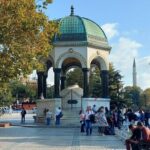
I like this portion because it turns a short walk into a clear story. The Hippodrome wasn’t just for pageantry—it was the stage for public life. And the German Fountain’s backstory as a symbol of late Ottoman–German friendship, gifted by Kaiser Wilhelm II, gives the area a surprising modern link.
Small caution: the Hippodrome is an outdoor area, and you’ll be walking. It’s not an all-day stamina test, but you’ll want sensible shoes and a plan for weather.
Hagia Sophia: mosaics, calligraphy, and the dome effect
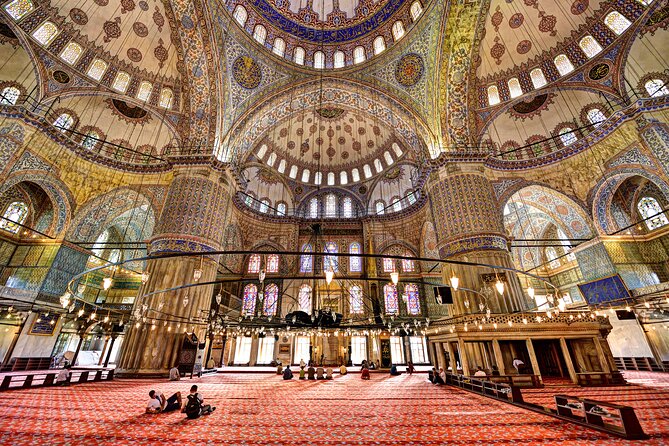
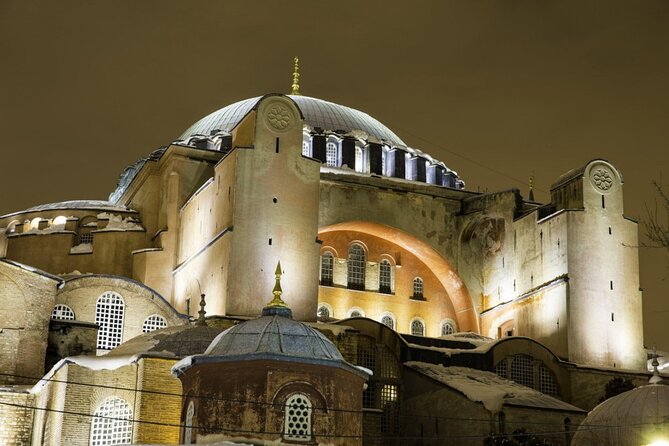
Then comes Hagia Sophia, where the first reaction is usually the same: wow. The second reaction, if you have a good guide, is understanding why it still hits hard centuries later.
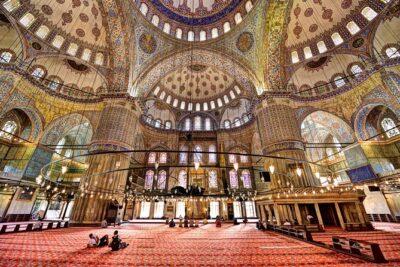
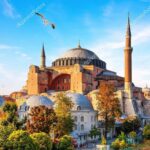
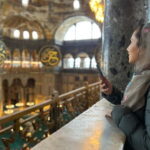
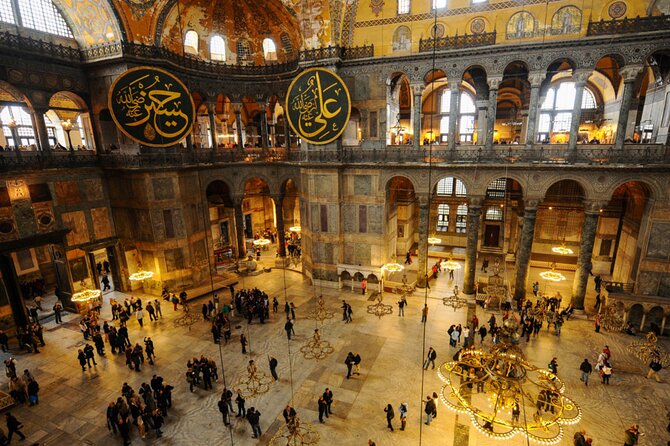
You enter with pre-reserved skip-the-line tickets, which matters here. Hagia Sophia is popular, and long waits can squeeze out the time you need to actually look. The guide takes you in and builds the scene: this building started as a Greek Orthodox cathedral, later became an imperial mosque, and today it’s experienced as a hybrid cultural landmark where Christian mosaics and Islamic calligraphy share the same walls.
What I’d focus on (with the guide’s guidance):
- the Deesis Mosaic
- the Imperial Gate Mosaic
- the image of the Virgin Mary with Child
- the way the central dome dominates the space (the guide explains why that scale mattered)
The dome effect is real, but it’s easy to miss the meaning if you’re only scanning for the biggest photo angles. The guide’s job is to steer your eyes toward the religious and political messaging built into art. That’s where the tour earns its keep: you aren’t just seeing the surface—you’re seeing how power and faith got expressed in stone and color.
Also remember the rules inside. Like the Blue Mosque, clothing coverage and headscarf rules apply for mosque entry expectations, and there’s security screening. If you’re unsure, the safest strategy is to dress conservatively and bring the headscarf even if you think you won’t need it.
Basilica Cistern: how to enjoy the marble forest
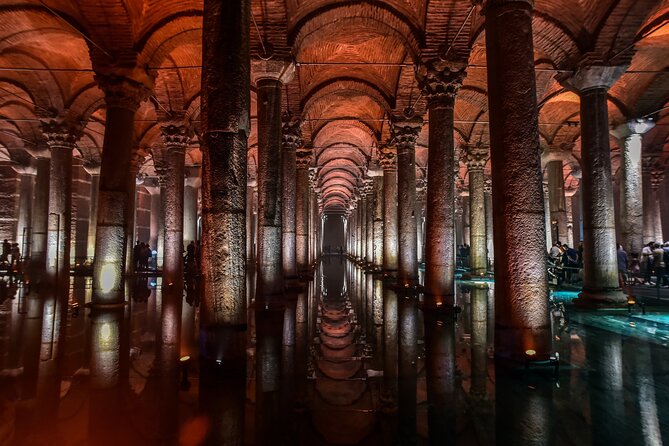
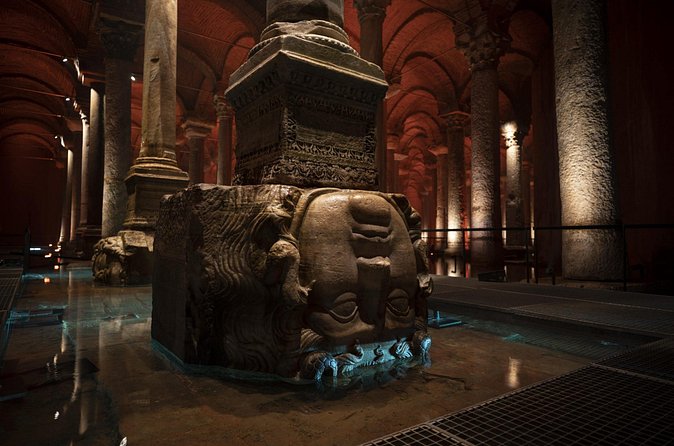
The final major stop is Basilica Cistern, an ancient underground reservoir associated with Emperor Justinian. This place has a different mood from everything above ground—cooler air, dim light, and a surreal feeling of descending into another Istanbul.
The guide sets you up to enjoy the details because Basilica Cistern is easy to treat like a quick photo stop. With the right commentary, it becomes a place you can actually read.
You’ll notice:
- a “forest” of marble columns
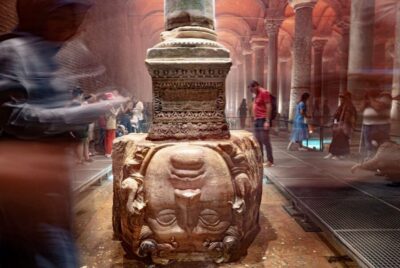
- the mysterious Medusa heads
- the overall atmosphere that makes this one of Istanbul’s most memorable underground experiences
I also appreciate that the tour includes pre-reserved admission tickets here. Basilica Cistern can get busy, and reserved entry reduces that awkward wait that can drain the magic before you even go in.
One practical note: this stop is indoors and feels cooler than street level. Bring a layer even in mild weather if you tend to run cold.

If Basilica Cistern is closed
In case Basilica Cistern isn’t operating, the tour doesn’t leave you empty-handed. You visit either Şerefiye (cistern of Theodosius) or Binbirdirek (Cistern of Philoxenos) instead. That keeps the “ancient cistern underworld” theme intact.
Price and value: what your $152 is really buying
Let’s talk money plainly. At $152 per person for 3 hours, you’re paying for:
- a professional licensed guide
- headsets so you can hear clearly
- small-group handling
- reserved tickets specifically listed for Hagia Sophia and Basilica Cistern
- guided explanations at multiple sites, including the Hippodrome context
If you were going to enter these buildings anyway on your own, the reserved access part is what you can feel immediately—less standing in line at the hardest bottlenecks. And you’re not just buying entry; you’re buying interpretation. Hagia Sophia in particular is hard to “get” without help because the building layers are deep and the art points in multiple directions—literally and culturally.
Where the price can sting is if you’re thinking only in terms of ticket costs. The Blue Mosque is not a paid-entry type of attraction in many travel plans, so the total price can feel high if you expect everything to be strictly cost-based. In that case, I’d decide what you value more: saving time and gaining meaning, or keeping expenses low by going solo.
Group size, headsets, and the pacing that keeps you from feeling rushed
This is a small-group tour, and the difference shows in practical ways. You don’t feel like a number. You can hear your guide, especially with included headsets, and you get a smoother route between stops.
The reviews for this tour type consistently reward guides who can answer questions and adjust to the group. You’ll hear names like Furkan, Kübra, Murat, Emre, Elif, and Kaan pop up often. That matters, because these sites are complicated, and the best guides know how to explain the key Ottoman and Byzantine threads without drowning you in dates.
Pacing is also a selling point. You get enough time to look at each place—then the guide pulls you toward the next moment. The tour ends at Sultanahmet Square, and that’s smart: you’re not stuck wondering where the path splits back to daily life.
What to wear and bring so you don’t lose time at the checkpoints
I’ll be blunt here because it saves frustration. Mosque rules are enforced, and the security process adds time.
Bring:
- a headscarf for women
- comfortable shoes you can walk in and (if needed) remove easily
Wear:
- clothing that covers shoulders and knees
- something that fits mosque expectations
- avoid items you already know are off-limits
Avoid:
- shorts, sleeveless tops, short skirts
- sandals or flip-flops
- baby strollers (not allowed)
Also expect rules around prohibited items. For example, you won’t be allowed to bring political, ideological, or religious-symbol materials into Hagia Sophia.
Who this tour fits best (and who should reconsider)
This tour works best if you:
- want a guided visit to Hagia Sophia and Basilica Cistern rather than wandering without context
- prefer small groups and clear explanations
- like seeing several major landmarks in a short window
It may not suit you if:
- you need wheelchair access or have mobility impairments (it’s listed as not suitable)
- you’re traveling with children under 7
- you hate dress-code constraints and don’t want to adapt your outfit
If you’re fine with walking a bit, staying flexible with security checks, and dressing conservatively, you’ll likely enjoy this as a “smart orientation” to Istanbul’s most famous center.
Should you book this Blue Mosque, Hagia Sophia & Basilica Cistern tour?
I’d book it if you want the easiest way to hit the three big icons around Sultanahmet and you care about understanding what you’re seeing—not just capturing photos. The reserved entry at Hagia Sophia and the Basilica Cistern is the practical win, and the guide explanations are the payoff that makes the art and architecture stick.
I’d skip or compare if you’re budget-first and totally fine navigating ticket lines and figuring out what to look for on your own, especially since Hagia Sophia and Basilica Cistern are the two points where you’re clearly getting skip-the-line benefits.
If you’re deciding today, this is also the kind of tour that’s easy to plan around because it runs about 3 hours and finishes in Sultanahmet Square, where you can keep exploring.
FAQ
How long is the Istanbul Blue Mosque, Hagia Sophia & Basilica Cistern tour?
The tour lasts 3 hours.
Does the tour include skip-the-line entry?
Yes. It includes skip the ticket line access for the major landmarks included in the tour.
Which admissions are pre-reserved?
The tour includes pre-reserved admission tickets to Hagia Sophia and Basilica Cistern.
What should I bring for the tour?
Bring a headscarf.
What clothing is required inside the mosques?
Both men and women must wear clothing that covers shoulders and knees. Shorts, sleeveless shirts, and short skirts are not permitted. Women are required to wear a headscarf when entering the mosque.
What happens if Basilica Cistern is closed?
If Basilica Cistern is closed, the tour visits Şerefiye (cistern of Theodosius) or Binbirdirek (Cistern of Philoxenos) instead.