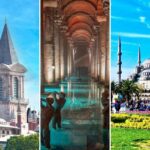
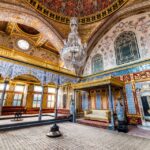
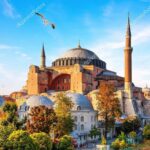
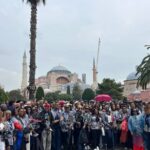
Istanbul can feel like information overload, so I love a tour that gives you a fast, guided path through the big-ticket sights. This one strings together Blue Mosque, Hagia Sophia, the underground Basilica Cistern, and the old Hippodrome, with a licensed guide adding context as you move. The small-group size (max 20) and included headsets make it easier to hear the story without craning your neck.
Two things I really like: first, the tickets are handled in advance with timed entry, which helps you spend less time waiting. Second, the tour keeps the material grounded, from Ottoman details at the mosques to Byzantine civic life at the Hippodrome. One drawback to plan for: it’s strict about timing and entry rules—arrive 15 minutes early, and don’t count on joining once the tour has started.
In This Review
- Key things I’d circle before you go
- A 3-hour Istanbul sampler that actually makes sense
- Price and value: what your $116.43 is buying
- Blue Mosque stop: tiles, courtyard calm, and the rules you must follow
- Hagia Sophia Grand Mosque: mosaics, the dome, and what you can bring
- Basilica Cistern: stepping underground into Justinian’s world
- Hippodrome walk: monuments that explain Byzantine public life
- How the guide and small-group setup changes the experience
- Timing, punctuality, and dress code: your must-follow checklist
- Who this tour suits best
- Should you book this Istanbul Blue Mosque, Hagia Sophia, Basilica Cistern, and Hippodrome tour?
- FAQ
- How long is the tour?
- What does the ticket include?
- Is this a small-group tour?
- Are headsets provided?
- Do I need to arrive early?
- What are the dress and entry rules for the mosques?
- Do I need to remove my shoes?
- What if Basilica Cistern is closed?
- Are children allowed?
- Does transportation to the meeting point cost extra?
Key things I’d circle before you go
- Timed tickets that reduce waiting at timed-entry sights (you still may queue, but you avoid the worst delays)
- Small group up to 20 with a licensed guide and headsets, so you’re not lost in a crowd
- Ottoman + Byzantine story thread across four major landmarks
- Basilica Cistern on the cool, quiet side with major photo-worthy details like the Medusa heads
- Hippodrome adds the missing context with monuments tied to emperors and even Kaiser Wilhelm II
A 3-hour Istanbul sampler that actually makes sense
This tour is built for your first day in Sultanahmet, when you want the headline sights but also want to understand what you’re looking at. In about 3 hours, you cover four major stops, and the guide keeps the focus on how each place fits into the shift from Byzantine to Ottoman Istanbul.
Istanbul’s big monuments can feel like separate islands unless someone links them. Here, you get that link: the mosques explain Ottoman authority and taste, Hagia Sophia shows layers of faith and art, the cistern reveals Byzantine engineering, and the Hippodrome rounds it out as the civic heartbeat of the old city.
One practical thing: this is a walking schedule. It’s not a museum-only stroll, so comfy shoes are smart. If you’re traveling with a lot of energy, you’ll feel rewarded fast.
You can also read our reviews of more tours and experiences in Istanbul.

Price and value: what your $116.43 is buying
At $116.43 per person, you’re not just paying for entry tickets. You’re paying for timed handling, guided interpretation at multiple stops, and the extra logistics that normally eat your time—especially at Hagia Sophia.
What’s included that matters for value:
- Guided visits at Blue Mosque, Hagia Sophia, and Basilica Cistern
- Pre-reserved tickets for Hagia Sophia and Basilica Cistern
- Admission tickets included for the stops
- A professional, licensed guide
- Headsets so you can hear clearly in busy areas
- Small group size (max 20)
What’s not included:
- Transportation to the meeting spot
If you’re the type who would otherwise stand in line while trying to decode what you’re seeing, this price starts to look like a good trade. You pay to save time and to get the meaning delivered in plain language.
One note to keep you realistic: the info for this tour says that no one can skip the line at the mosques, even with pre-booking. That said, the timed tickets and guide routing typically make the process quicker and less chaotic than going solo.
Blue Mosque stop: tiles, courtyard calm, and the rules you must follow
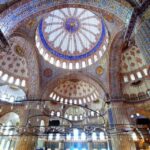
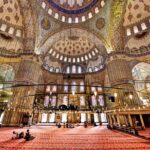
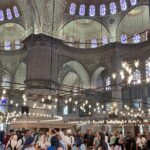
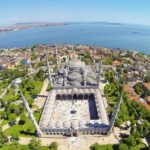
The Blue Mosque is one of those places where your eyes keep moving. From the outside, the domes and minarets announce it. Inside, the big wow is the hand-painted İznik blue tiles and the sense of symmetry from the main prayer space.
This stop is about 1 hour, and the guide’s job is to give it context beyond the photo. You’ll hear about Sultan Ahmet I and why the mosque matters in Ottoman history—so you’re not just reading architecture like a puzzle.
Plan for real-world mosque etiquette. You should expect:
- Women need a headscarf to enter.
- Both men and women should cover shoulders and knees. Shorts and sleeveless tops aren’t permitted.
- Shoes must come off at the Blue Mosque. A review also suggests wearing socks or bringing something comfortable for foot cover.
Because this is a functioning mosque, it can also close to visitors for reasons that have nothing to do with your schedule. The tour warns you about potential closures, so be mentally flexible if you hit an unexpected adjustment.
Hagia Sophia Grand Mosque: mosaics, the dome, and what you can bring
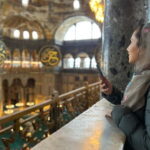
Hagia Sophia is the kind of building that makes you stop talking. Even before you understand anything, the scale of the dome hits you. Then a guide adds the layers: Byzantine mosaics alongside Ottoman details, and specific artworks you can point out as you go.
This stop is also about 1 hour, and it’s a highlight for many people because it’s not just the dome. You’ll get guided attention to standouts such as:
- the Deesis Mosaic
- the Imperial Gate
- the figure of the Virgin Mary with Child
This tour uses pre-reserved, timed entry and includes admission for Hagia Sophia. There’s still the reality of security and on-site procedures, and the tour notes you can’t skip the line at the mosques. The advantage is that the entry process is managed more efficiently than if you’re trying to figure out everything on the fly.
There are also restrictions you should take seriously, because you can’t argue with them at the door. The tour info states that at Hagia Sophia you’re not allowed to bring signs, symbols, banners, flags, documents, drawings, or materials representing political, ideological, or religious beliefs inside.
Also, the tour info notes skip-the-line access is for adults only. If you’re bringing kids, they may still participate in the tour, but younger ones won’t get the same line-bypassing benefit.
Basilica Cistern: stepping underground into Justinian’s world
If Hagia Sophia feels like sky and light, the Basilica Cistern feels like temperature change. You descend into one of Istanbul’s most atmospheric underground spaces and get hit with cool air and quiet.
This stop is about 30 minutes. It’s built from the 6th century under Emperor Justinian, and the experience is all about atmosphere and scale:
- a forest of marble columns
- a mysterious feel shaped by darkness and distance
- famous Medusa head reliefs (a detail people love because it looks slightly mythic even if you’re not a mythology person)
A good guide makes this more than an Instagram setting. You’ll learn how the cistern functioned within the city, so you come away seeing it as infrastructure, not just a spooky room.
A practical comfort tip: wear something that doesn’t mind a cool draft. You’ll be underground, and the temperature difference can be noticeable.
One more planning detail: the tour notes that if the Basilica Cistern is closed, you visit either Şerefiye (cistern of Theodosius) or Binbirdirek (cistern of Philoxenos). That’s a smart backup plan, because it protects your schedule.

Hippodrome walk: monuments that explain Byzantine public life
The Hippodrome stop is short—about 30 minutes—but it adds a big missing piece. If you’ve only focused on churches and mosques, you might not realize how much of Byzantine Istanbul’s energy came from public life: crowds, ceremonies, and political spectacle.
Here’s what you’ll walk through and hear about:
- the Serpent Column
- the Obelisk of Theodosius
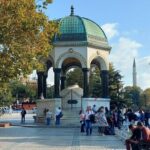
- the German Fountain, gifted by Kaiser Wilhelm II as a symbol of Ottoman–German friendship
That last detail is a good example of why this stop works. It links eras. You start at Byzantine civic life, then your brain has a bridge to modern history because you’re seeing how later powers used older settings to signal relationships.
Even though the stop is brief, it helps you build a mental map. After the Hippodrome, Istanbul’s skyline makes more sense because you understand where political and social life once happened.
How the guide and small-group setup changes the experience
This is a guided tour with a licensed professional, and the tour caps group size at 20. That matters. With this kind of sight line-heavy itinerary, a large group can turn into a shuffle. A smaller group makes it easier to pause, ask a question, and actually hear what you’re being told.
Headsets are included, which is a big quality-of-life upgrade in loud, crowded sites. One review complained that the earplugs/headsets can be hard to keep positioned, so I’d plan on bringing your own comfort backup if you’re picky about fit.
The tone in reviews is consistent: the guide role is storytelling plus context, not just reciting dates. People name guides such as Murat, Kubra, Mahir, Morat, and Hulia, and the thread is that the guides communicate clearly and keep things moving without rushing you.
One practical reason this matters: all four stops have different rules and rhythms. The guide helps you transition between mosque entry expectations, indoor conservation restrictions, and an outdoor monument walk without you feeling like you’re managing logistics mid-sight.
Timing, punctuality, and dress code: your must-follow checklist
This tour runs on timed entry tickets. The instruction is clear: you need to arrive at the meeting point 15 minutes before the start.
After the tour starts, it’s not possible to join late. That’s a hard boundary and it’s tied to the timed entry windows at the mosques.
You’ll also want to treat the dress code as a checklist, not a suggestion:
- shoulders and knees must be covered
- shorts and sleeveless tops are not allowed
- women need a headscarf for mosque entry
And again for the Blue Mosque: expect to take your shoes off. Socks are a practical move.
If you’re traveling with kids, note this tour says children under 7 are not permitted, and skip-the-line access is adults only.
Who this tour suits best
This is a smart fit if:
- you want a first-timer run through Istanbul’s most famous religious sites with context
- you prefer guided interpretation over reading plaques
- you like a tight itinerary that still includes explanation
- you’d rather handle timed entry today than scramble tomorrow
It’s probably not your best choice if:
- you dislike walking and prefer slower, standalone museum time
- you need maximum flexibility and hate fixed entry windows
- you’re likely to arrive late due to uncertain plans
If you’re the person who plans a day around openings and closures, you’ll do well. Istanbul rewards that style of preparation.
Should you book this Istanbul Blue Mosque, Hagia Sophia, Basilica Cistern, and Hippodrome tour?
Yes, if your goal is to see the headline sites in about 3 hours with a guide who ties Ottoman and Byzantine eras together. The included headsets, the small-group cap, and the timed-entry ticket handling are exactly the kind of extras that make a difference in Istanbul, where time and lines can wreck your mood.
I’d book this when you want one day to do serious work: the Blue Mosque for Ottoman tile-and-dome beauty, Hagia Sophia for mosaics and layered meaning, Basilica Cistern for that underground step-back-in-time feeling, and the Hippodrome to understand the city’s older public center.
If you can’t commit to arriving early and dressing appropriately for active mosques, skip it and build your own flexible route.
FAQ
How long is the tour?
The tour is about 3 hours in total, with roughly 1 hour at the Blue Mosque, 1 hour at Hagia Sophia, 30 minutes at Basilica Cistern, and 30 minutes at the Hippodrome.
What does the ticket include?
You get pre-reserved tickets for Hagia Sophia and Basilica Cistern, and admission tickets are included for the stops on the itinerary. The tour also includes guided visits for Blue Mosque, Hagia Sophia, and Basilica Cistern.
Is this a small-group tour?
Yes. The group size is capped at a maximum of 20 travelers.
Are headsets provided?
Yes. Headsets are included so you can hear the guide better during the visit.
Do I need to arrive early?
You must arrive at the meeting point 15 minutes before the tour start because entry is timed.
What are the dress and entry rules for the mosques?
Women need to wear a headscarf. Both men and women should have clothing that covers shoulders and knees. Shorts and sleeveless tops are not permitted.
Do I need to remove my shoes?
At the Blue Mosque, you should expect to take off your shoes. Socks are suggested.
What if Basilica Cistern is closed?
If the Basilica Cistern is closed, the tour visits either Şerefiye (cistern of Theodosius) or Binbirdirek (cistern of Philoxenos).
Are children allowed?
Children under 7 are not permitted on this tour. Skip-the-line access is available for adults only, and children under 7 do not benefit from that access.
Does transportation to the meeting point cost extra?
Transportation to the meeting spot is not included. The tour notes that you’ll be near public transportation.