REVIEW · GIZA
Private Tour: Islamic Cairo including Amr Ibn-AlAs-Ibn Tulun, Sultan Hassa and El Refaa Mosques
Book on Viator →Operated by Egypt Direct Tours · Bookable on Viator
Cairo’s oldest mosques feel close up. This private route through Amr Ibn al-As, Ibn Tulun, Sultan Hassan, and El Rifa’i turns Islamic architecture into a living map of Cairo’s growth. I love the way the day is run with a private guide you can ask questions of, and I love that entrance fees and lunch are included so the schedule stays smooth. One thing to consider: the mosque dress code is strict, and you can get refused entry if you’re not dressed correctly.
If you want a guide who can translate stonework into stories, look for names like Nasir, Mohammad, Naseer, Abdullah, or Ahmed El-Kadi. They’re the kind of guides who keep the focus on what you’re actually seeing, not just dates on a sign, and they tend to make conversations feel easy. Plan for a mostly mosque-based day near the Citadel area, and you’ll get a strong sense of how Cairo’s spiritual life changed over centuries.
In This Review
- Key Highlights at a Glance
- Islamic Cairo, in One Private Day Without the Chaos
- Pickup and Timing: What 6 to 8 Hours Feels Like
- Mosque-Madrasa of Sultan Hassan: When Scale Becomes a Message
- Ibn Tulun Mosque: A Governor’s Legacy in Stone
- El Rifa’i Mosque: Across From Sultan Hassan, with Royal Mausoleum Power
- Amr Ibn al-As Mosque: Fustat’s First Steps, Built for a New Capital
- Dress Code and Mosque Etiquette: Avoid the Entry Problem
- Lunch, Entrance Fees, and the Real Value of $55
- Safety and Hygiene Measures You’ll Notice During the Day
- Who This Tour Is Best For
- Should You Book This Islamic Cairo Private Tour?
- FAQ
- Where is this tour located?
- How long does the tour take?
- What does the tour include?
- Is this a private tour?
- Which mosques are visited?
- What is the dress code for mosque visits?
- Are entrance tickets included?
- Are safety and hygiene measures included?
- What are the cancellation rules?
Key Highlights at a Glance
- Four major mosque stops in one private circuit makes this a smart way to see Islamic Cairo without racing.
- Sultan Hassan’s madrasa design included schools for the four Sunni schools of thought: Shafi’i, Maliki, Hanafi, and Hanbali.
- Ibn Tulun’s timeline is unusually traceable, with start and completion dates tied to commissioning by Ahmad ibn Ţūlūn.
- El Rifa’i complements Sultan Hassan and also works today as the royal mausoleum for Muhammad Ali’s family.
- Amr Ibn al-As connects directly to Fustat and 642 AD, often described as Egypt’s first mosque and the first on the African continent.
- Safety and hygiene steps are built into the day, with sterilized vehicle handling, masks, and sanitizer available.
Islamic Cairo, in One Private Day Without the Chaos
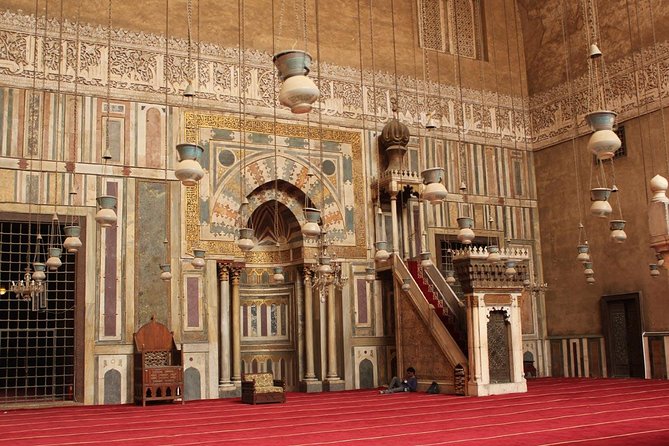
This tour is for you if you want Cairo’s big mosque names with context, not just photo stops. The best part is that the route doesn’t feel random: the stops cluster around Old Cairo and the Citadel zone, so the story keeps tightening as you go. You start with early momentum at Amr Ibn al-As, then move through later architectural power, and end with buildings that sit right across from each other like architectural conversation partners.
I also like that this is private. A shared group can be fine, but a private setup means your guide can pace you through the moments that matter. When mosques are busy, it’s the difference between moving like a checklist and actually understanding what you’re looking at.
And yes, it’s a “mosque day,” so expect a dress-code reality check. If you show up prepared, it’s a non-issue. If you don’t, you’ll lose time and risk missing parts of the visit.
You can also read our reviews of more tours and experiences in Giza.
Pickup and Timing: What 6 to 8 Hours Feels Like
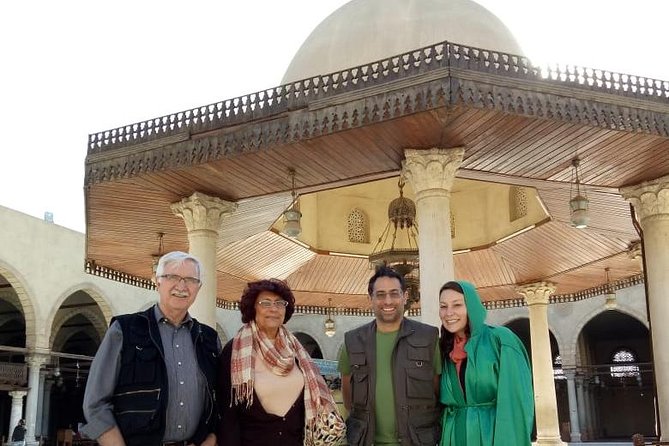
The tour runs about 6 to 8 hours, and that range makes sense. The mosque visits alone total roughly 3 hours 45 minutes (with 1 hour at Sultan Hassan, 1 hour at Ibn Tulun, 45 minutes at El Rifa’i, and 1 hour at Amr Ibn al-As). The rest is real-world time: getting from your hotel, settling in, taking a breath, and having lunch.
You get hotel pickup and drop-off, plus transport by a private vehicle. There’s a bottle of water included, which helps because mosque visits can stretch longer than you think once you’re listening. You’ll also have access to entrance tickets as part of the tour, so you’re not spending time figuring out payment at the gate.
One small practical note: the tour is near public transportation, but you’re not relying on it. The private vehicle is the main convenience here.
Mosque-Madrasa of Sultan Hassan: When Scale Becomes a Message
Sultan Hassan is the stop that tends to make first-time visitors say, wow, without even trying. It’s a massive mosque-madrasa near Cairo’s Citadel, and the scale is part of why it matters. The construction began in 757 AH / 1356 CE, and it finished three years later, with work reportedly halting for not even a day. Even if you don’t treat that detail like a scoreboard, it signals ambition.
This isn’t just about a worship space. The building was designed to include schooling for all four Sunni schools of thought: Shafi’i, Maliki, Hanafi, and Hanbali. That single design choice helps you understand how authority worked in medieval Cairo. Religion and learning weren’t separate boxes. One building could serve devotion and education at the same time.
Your visit here is planned for about 1 hour, with admission ticket included. In that time, you can focus on two things:
- How architecture communicates status and control
- How the idea of multiple legal schools could fit inside one educational complex
Possible drawback: Sultan Hassan is a big magnet. You’ll spend some time negotiating space, not just sightseeing. A private guide helps you keep the visit focused even when crowds make things slower.
Ibn Tulun Mosque: A Governor’s Legacy in Stone
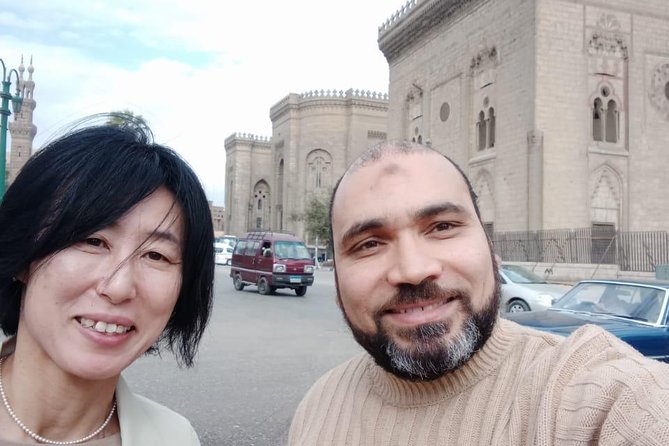
Next comes the Mosque of Ibn Tulun, commissioned by Ahmad ibn Ţūlūn, an Abbassid governor whose rule became de facto independent. That political angle is useful, because it changes how you read the building. You’re not only looking at a masterpiece—you’re looking at a power play expressed through architecture.
The dates are unusually specific. Construction is listed with a start date around 876 AD, and the original inscription slab points to completion in 265 AH or 879 AD. That kind of timeline helps you place the mosque in a larger sequence: early Cairo growth, then later structures that show independence and ambition taking concrete form.
Your visit here is about 1 hour with an admission ticket included. I like this stop because it bridges the feeling between different eras. It’s still clearly “early Islamic Cairo,” but the vibe is different from Amr Ibn al-As—more focused, more self-contained, and very tied to its patron.
El Rifa’i Mosque: Across From Sultan Hassan, with Royal Mausoleum Power
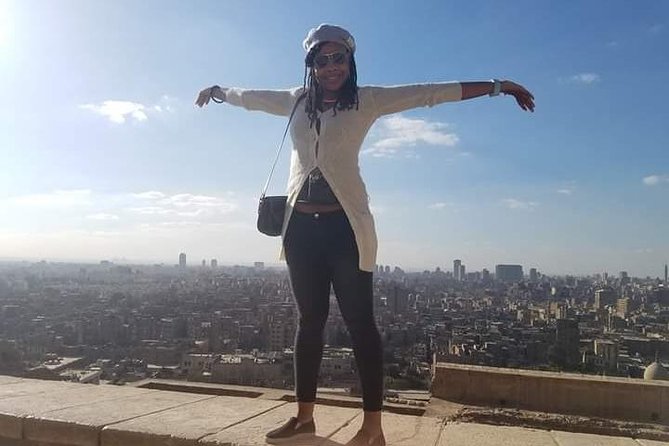
El Rifa’i Mosque sits in Midan al-Qal’a, adjacent to the Cairo Citadel, and it’s opposite the Mosque-Madrasa of Sultan Hassan. That placement matters. The tour experience is set up so the two buildings stay in your mind as you compare them.
El Rifa’i is also known today as the royal mausoleum of Muhammad Ali’s family. The building was architecturally conceived as a complement to the older Sultan Hassan structure. So even though the time periods are different, the message feels intentional: Cairo’s leaders kept shaping the city’s religious skyline long after Sultan Hassan was completed.
You’ll have about 45 minutes here, with admission ticket included. In that shorter window, I suggest you focus on how the mosque balances two roles:
- A public place of worship
- A memorial space with royal associations
Amr Ibn al-As Mosque: Fustat’s First Steps, Built for a New Capital
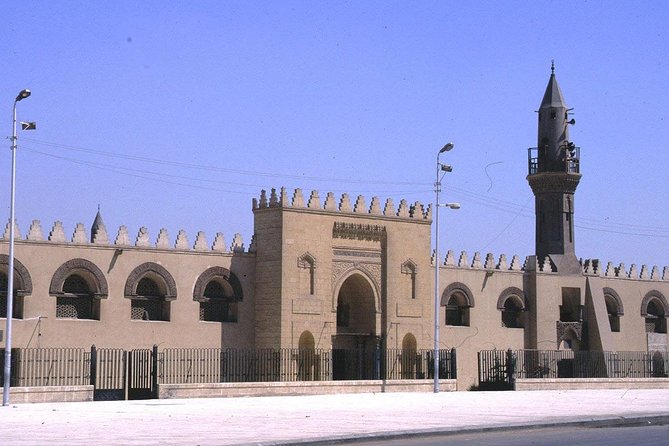
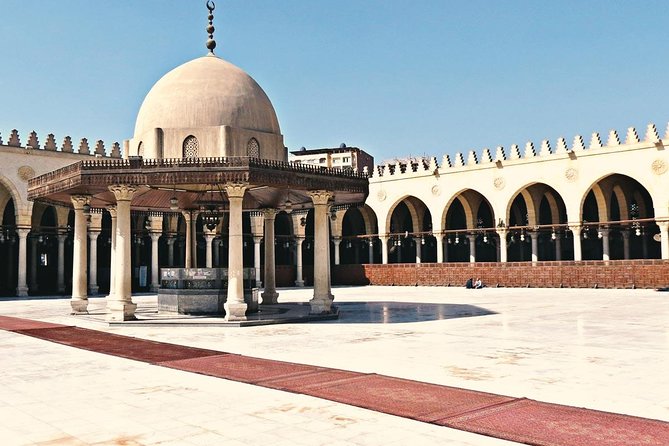
Then you move to Amr Ibn al-As Mosque in Old Cairo. This stop is the anchor of the whole tour, because it connects directly to the founding era. The mosque was originally built in 642 AD, at the time of Cairo’s new capital, Fustat.
This is the kind of fact that changes the mood when you’re standing in the place. The original structure is often described as the first mosque ever built in Egypt—and by extension, the first mosque on the African continent. Whether you focus on the superlative or the founding context, the takeaway is the same: this building marks an early turning point in how this region organized spiritual life.
Your visit is planned for about 1 hour with admission ticket included. I like using this stop to reset your mental timeline. Once you’ve seen Amr Ibn al-As, the later mosques feel less like separate attractions and more like chapters written over time.
Dress Code and Mosque Etiquette: Avoid the Entry Problem
Mosques here have very strict dress codes, and it’s not optional. If you’re planning ahead, you’ll save yourself stress and time.
Women must wear long, loose clothing, and ensure arms and legs are fully covered. They’re also required to cover their heads at all times.
Men must not show above their knees and should cover their shoulders.
Failure to meet these rules can result in refused entry. That’s the single most important “logistics” reality for this type of tour, because it directly affects whether you get to see everything planned for the day.
A private guide helps, because you can get a quick check before you move into a space where rules are enforced. Still, the safest move is to dress to meet the standard before you arrive.
Lunch, Entrance Fees, and the Real Value of $55
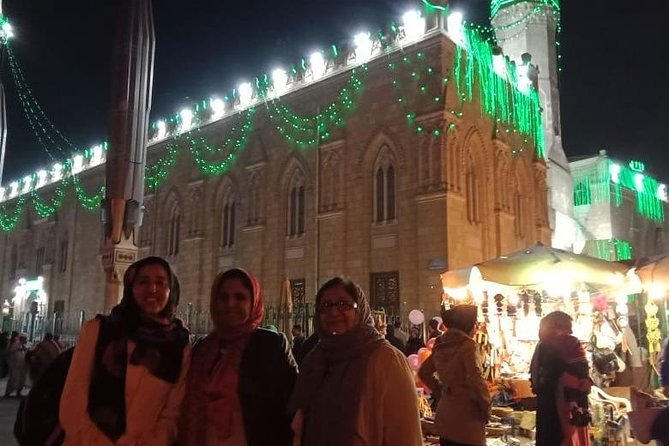
At $55 per person, what you’re really paying for is time and structure. This isn’t just “someone drives you around.” You get a private guide, a private vehicle, lunch, entrance fees for the stops, pickup and drop-off, and even a bottle of water.
That matters because mosques aren’t the kind of attraction where you can speed-run without losing context. A guide helps you connect:
- architectural choices
- historical timeline
- how religious schooling and worship were linked
- and why certain buildings were commissioned by certain rulers
Add in the fact that admission is already covered for each stop, and the day feels less like admin and more like sightseeing with meaning.
There’s also the practical convenience of a mobile ticket. If you’re the kind of traveler who likes to keep things paper-light, you’ll appreciate it.
Safety and Hygiene Measures You’ll Notice During the Day
This tour includes extra hygiene steps based on Ministry of Health instructions. The vehicle is sterilized, and there’s periodic handling after visits. You’ll find hand sanitizer available in the car.
Guides and drivers wear masks, and each customer must wear a mask during the tour, starting from the exit from the meeting place.
If you’re sensitive to health precautions, this is one of the clearer setups in the area. If you’re not, it still won’t ruin the day—it just means you’ll move through spaces with a little more discipline and less lingering.
Who This Tour Is Best For
I’d point this tour at four types of travelers:
- You want a structured intro to Islamic Cairo’s major mosque styles without getting lost.
- You like history that stays tied to real buildings, not just museum timelines.
- You prefer private guiding so your questions don’t get chopped up by a group.
- You want a day that includes lunch and entrance fees so you’re not budgeting on the go.
It’s also a good choice if you’re traveling solo, as long as you’re comfortable with dress-code rules and you can handle a day centered on mosques and their surroundings.
If you hate restrictions or you’re likely to be underdressed, that dress requirement is the biggest reason to reconsider.
Should You Book This Islamic Cairo Private Tour?
Book it if you want a guided, efficient route through four landmark mosques—Amr Ibn al-As, Ibn Tulun, Sultan Hassan, and El Rifa’i—tied together by Cairo’s shifting political and spiritual story. The value is strongest when you care about context and want lunch and entrance fees handled for you.
Don’t book it if you’re not ready for strict dress rules or if you’d rather spend your day on your own in fewer places. Also think about timing: since this is a 6 to 8 hour private day with multiple stops, it’s not the choice for an ultra-light itinerary.
If you’re planning this as a first or second day in the region and you want the “big names” with real explanations, this tour is a solid, practical bet.
FAQ
Where is this tour located?
The tour is in Egypt around Giza, with visits focused on historic mosque sites in Cairo’s Old Cairo and Citadel-adjacent area.
How long does the tour take?
The duration is approximately 6 to 8 hours, with planned time at each stop (including about 1 hour at Sultan Hassan, 1 hour at Ibn Tulun, 45 minutes at El Rifa’i, and 1 hour at Amr Ibn al-As).
What does the tour include?
It includes hotel pickup and drop-off, transport by private vehicle, a professional guide, lunch, entrance fees, and a bottle of water. You also receive a mobile ticket.
Is this a private tour?
Yes. It’s a private tour/activity, and only your group participates.
Which mosques are visited?
You visit the Mosque and Madrasa of Sultan Hassan, the Mosque of Ibn Tulun, El Rifa’i Mosque, and the Mosque of Amr Ibn al-As.
What is the dress code for mosque visits?
Women must wear long loose clothing and ensure arms and legs are fully covered, and they must cover their heads at all times. Men must not show above their knees and must cover their shoulders.
Are entrance tickets included?
Yes. Admission tickets are included for each stop listed in the itinerary.
Are safety and hygiene measures included?
Yes. The car is sterilized according to Ministry of Health instructions, sanitizer is available in the car, guides and drivers wear masks, and each customer must wear a mask during the tour.
What are the cancellation rules?
You can cancel for a full refund up to 24 hours in advance of the experience’s start time. If you cancel less than 24 hours before, the amount paid is not refunded.