REVIEW · GIZA
Private Guided Tour to the Mosques of Sultan Hassan, Al-Rifa’i, and Ibn Tulun in Cairo
Book on Viator →Operated by Pyramids Land Private Tours · Bookable on Viator
Three Cairo mosques, one smart comparison. You’ll get a private guide to walk through three very different styles of Islamic architecture, from early forms to Mamluk and Ottoman details. I like that the tour moves efficiently with hotel pickup in Cairo or Giza plus a/c van, and I also like that your Egyptologist guide ties the buildings to meaning, not just dates.
One heads-up: if you’re hunting for very technical architecture talk, you may find the focus more on culture and overall style than deep building-by-building analysis.
In This Review
- Key Points at a Glance
- Why These Three Mosques Tell One Big Cairo Story
- 9:00 Pickup and a Smooth Ride Through Cairo or Giza
- Ibn Tulun Mosque (Completed in 879): Early Islamic Architecture You Can Feel
- Sultan Hassan Mosque and Madrasa (1360): Mamluk Power in Stone
- Al-Rifa’i Mosque (Royal Mosque): Ottoman-Style Details and Royal Tomb Connections
- How Much Architecture You’ll Actually Get
- Photo Timing and Best Angles Inside the Courtyards
- Price and Value at About $42.86 per Person
- Who This Tour Suits (and Who Might Want Something Else)
- Practical Dress Code and Entry Reality Check
- Should You Book This Mosques of Sultan Hassan, Al-Rifa’i, and Ibn Tulun Tour?
- FAQ
- What mosques are included on this tour?
- How long is the tour?
- Is this a private tour?
- What time does the tour start?
- Do I get hotel pickup in Cairo or Giza?
- Is Wi-Fi included?
- What’s the dress code for entering the mosques?
- Is the tour physically demanding?
- Is bottled water included?
- Can I cancel for a full refund?
Key Points at a Glance
- Three signature mosques in 4 hours: Ibn Tulun, Sultan Hassan, and Al-Rifa’i Mosque
- Hotel pickup and drop-off in Cairo or Giza, plus a/c private van with on-board Wi‑Fi
- Early-to-late Islamic style comparisons across very different time periods
- Photo guidance from your guide, including where to frame the best shots
- Strict dress code: knees and shoulders covered for both men and women
Why These Three Mosques Tell One Big Cairo Story
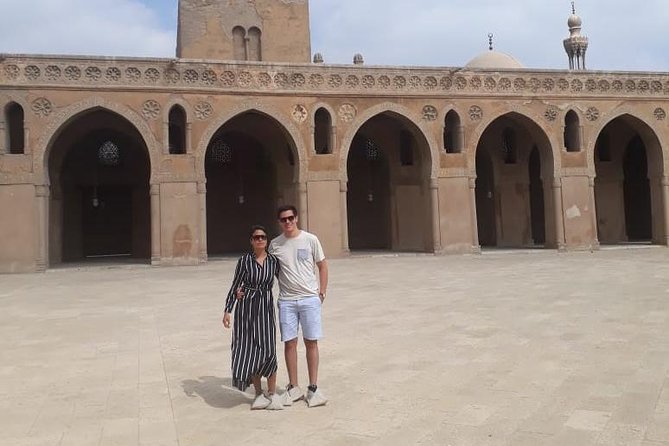
Cairo’s mosque scene isn’t one uniform look. It’s a timeline you can walk through, and this tour is designed for exactly that. You start with Ibn Tulun, known for early Islamic architecture, then you move to the height of Mamluk-era power at Sultan Hassan, and finish with the later Ottoman-influenced royal story at Al-Rifa’i.
What I like most about the setup is the comparison angle. Instead of treating each mosque like a separate stop, your guide helps you see how materials, layouts, and decorative choices shift over centuries. You get context you can actually use while you’re standing in front of the walls.
You can also read our reviews of more tours and experiences in Giza.
9:00 Pickup and a Smooth Ride Through Cairo or Giza
This starts at 9:00 am with pickup from your hotel in either Cairo or Giza. You’ll ride in a private, air-conditioned van with on-board Wi‑Fi, and bottled water is included. For a four-hour format, that transportation comfort matters more than you’d think. It keeps your energy for the mosques, especially when the day outside gets warm.
The tour is private, meaning it’s just your group. That helps a lot when you have questions about what you’re seeing, or when you want a slower pace for photos and details. And since it’s guided, you’re not spending time trying to decode what you’re looking at on your own.
Ibn Tulun Mosque (Completed in 879): Early Islamic Architecture You Can Feel
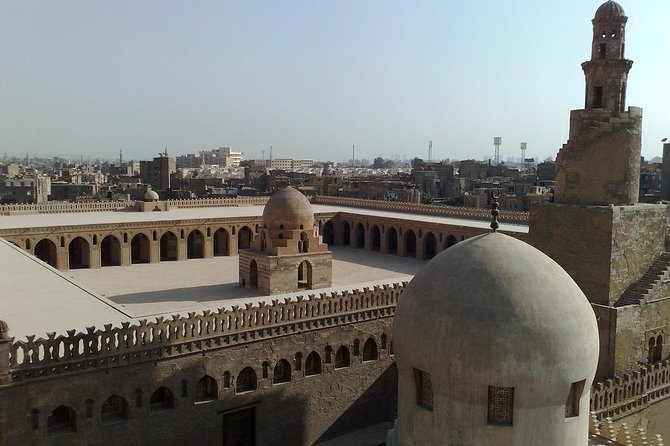
The tour begins with the Mosque of Ibn Tulun, completed in 879 and considered the oldest still-intact mosque in Egypt. That date isn’t just a trivia point. When you’re there, it helps you understand why the building can feel foundational—like an early draft of styles that later got more elaborate.
One feature people remember is the minaret with an external staircase. It’s a visual reminder that form and function were part of the design, not just decoration. Your guide will point out early architectural characteristics so you’re not just looking at an old building—you’re learning why it looks the way it does.
Practical note: this part of the day sets the tone. If you’re the type who likes to get your bearings early, going first is a win. You’ll compare what you see here later against the more visually intense styles you’ll get at the next two mosques.
Sultan Hassan Mosque and Madrasa (1360): Mamluk Power in Stone
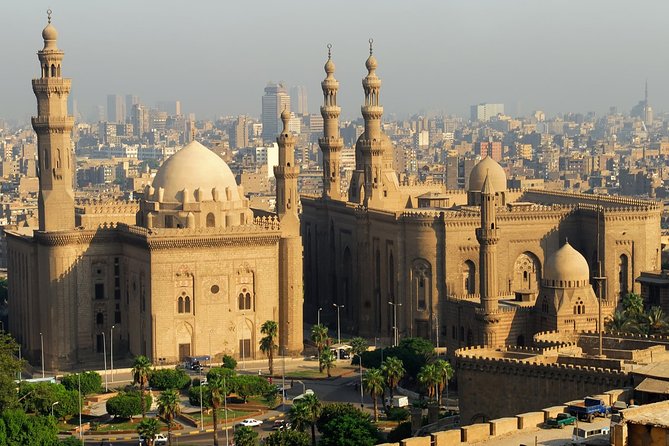
After Ibn Tulun, you head to the Mosque and Madrasa of Sultan Hassan, dating back to 1360. This is where the tour’s style contrast really sharpens, because Sultan Hassan represents a Mamluk approach to Islamic architecture.
The big ideas to watch for are the mosque’s role as a religious center and the presence of madrasas, or religious schools. You’re not just looking at worship space; you’re seeing a place built to educate and govern religious life. There’s also a mausoleum, which adds another layer to the complex’s meaning and design.
What I appreciate here is that Sultan Hassan acts like a bridge between eras. You get a sense of how mosque architecture can become more structured, more monumental, and more focused on institutions, not only prayer. If you’re paying attention to how spaces feel—scale, symmetry, and overall layout—you’ll start seeing a pattern you can carry to Al-Rifa’i.
Al-Rifa’i Mosque (Royal Mosque): Ottoman-Style Details and Royal Tomb Connections
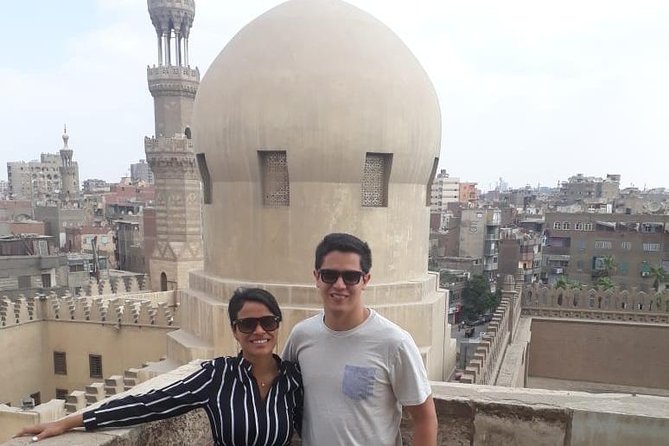
Next comes the Al-Rifa’i Mosque, also called the Royal Mosque. It was constructed in the late 1800s and early 1900s, and the architecture leans Ottoman-style.
This stop is partly about design and partly about who these walls are tied to. The mosque is the final resting place of members of the Egyptian royal family. It also includes the last Shah of Iran, who died in 1980—a detail that gives the visit a modern historical thread, even though the site feels deeply rooted.
When you compare Al-Rifa’i to the earlier mosques, focus on how the visual language shifts. Ottoman influence often brings different proportions and stylistic choices than the earlier Mamluk look. With a guide, you’ll likely get help connecting those visual differences to time and politics, not just aesthetics.
How Much Architecture You’ll Actually Get
This is a private tour with a qualified Egyptologist guide, and that’s a big plus. One thing I found helpful is the guide’s job isn’t limited to reading dates. They’re there to explain the styles and help you notice what matters.
Still, there’s a balancing act. If your priority is strict architecture-for-architecture’s-sake—like very technical structural commentary—your experience may feel more like a strong overview than a deep scholarly session. The upside is that you’ll get enough context to enjoy the buildings without needing a textbook.
The best way to get what you want is simple: ask questions early. If you want more detail on minarets, materials, or layout, say so at the first mosque. Private tours are where that works fastest.
Photo Timing and Best Angles Inside the Courtyards
Cairo mosques can be photogenic, but only if you know where to stand. This tour includes practical help on where to capture the best pictures, and that can save you a lot of wandering.
A good strategy is to treat photos like a second layer of learning. First, take in the overall shape of the mosque and its key elements (like the minaret at Ibn Tulun). Then, after your guide points out a viewpoint, go for the shot. You’ll end up with photos that match your understanding, not just your camera roll.
Also, plan for the fact that sacred spaces can feel busy at times and you may need to pause for others. A guided pace helps here because the guide can time movement and keep you from rushing through respectfully.
Price and Value at About $42.86 per Person
At around $42.86 per person, you’re not paying for a museum ticket experience. You’re paying for three things that add up fast in Cairo: a qualified Egyptologist, private transportation, and the convenience of pickup and drop-off in Cairo or Giza.
You’re also getting a structured “see three, compare three” format in about 4 hours. That matters because Cairo’s traffic and distances can turn a half-day into a frustrating time sink if you’re doing it on your own. The private van keeps your schedule real.
For best value, this tour is strongest when you have at least one person who wants more than surface sightseeing. If everyone in your group wants a quick look only, you might feel the price is higher than the time. If you want context and a guide to interpret what you’re seeing, the value lands much better.
Who This Tour Suits (and Who Might Want Something Else)
This tour fits you if you want a compact route through classic Cairo mosques without the stress of coordinating. It’s also ideal if you care about Islamic architectural styles and enjoy learning in real time while you’re looking at the buildings.
You’ll likely get the most from this if you like guided pacing and clear explanations. The tour’s moderate physical fitness requirement also matters—there’s walking and time on your feet, so go in with that in mind.
If your travel style is extremely technical and you want a very architecture-nerdy, lecture-style walkthrough, you might prefer a more specialized architecture-focused guide. For most visitors, though, this strikes a nice balance: enough detail to make the mosques meaningful, without turning your afternoon into homework.
Practical Dress Code and Entry Reality Check
You must follow a dress code to enter places of worship. That means no shorts and no sleeveless tops for both men and women. Knees and shoulders must be covered, and you may be refused entry if you don’t comply.
This is worth planning for in Cairo. Pack a light scarf or an extra layer that makes it easy to adjust quickly. If you arrive already dressed appropriately, you keep your momentum and avoid last-minute delays that can shrink your mosque time.
Should You Book This Mosques of Sultan Hassan, Al-Rifa’i, and Ibn Tulun Tour?
Book it if you want a private, efficient way to see three major mosques and understand how style changes across centuries. The combination of a/c pickup-and-return, a real Egyptologist guide, and built-in comparison between Ibn Tulun (879), Sultan Hassan (1360), and Al-Rifa’i (late 1800s/early 1900s) is exactly the kind of value that works well in a short timeframe.
Skip it or consider an architecture-first alternative if you’re searching for very technical architectural analysis. Otherwise, this is a solid choice for a memorable Cairo morning where you’ll walk away seeing more than you started with.
FAQ
What mosques are included on this tour?
You’ll visit the Mosque and Madrasa of Sultan Hassan, the Al-Rifa’i Mosque, and the Mosque of Ibn Tulun.
How long is the tour?
The duration is about 4 hours.
Is this a private tour?
Yes. It’s private, and only your group participates.
What time does the tour start?
The start time is 9:00 am.
Do I get hotel pickup in Cairo or Giza?
Yes. Hotel pickup and drop-off are provided in Cairo or Giza.
Is Wi-Fi included?
Yes. Wi-Fi is provided in the van.
What’s the dress code for entering the mosques?
You must cover your knees and shoulders. No shorts or sleeveless tops are allowed for both men and women.
Is the tour physically demanding?
The tour is listed as requiring moderate physical fitness.
Is bottled water included?
Yes. Bottled water is included.
Can I cancel for a full refund?
Yes. Free cancellation is available, and you can cancel up to 24 hours in advance for a full refund.