REVIEW · ISTANBUL
Private Walking Tour: Hippodrome, Blue Mosque, Hagia Sophia
Book on GetYourGuide →Operated by Booking Guide Turkey · Bookable on GetYourGuide
Three icons, one compact walk in Istanbul. This Sultanahmet tour strings together the Blue Mosque and Hagia Sophia with an English guide, so you’re not just collecting photos, you’re getting the story behind them.
I also love the Hippodrome stop, where you stand near the Obelisk of Theodosius and the Serpent Column and start picturing Constantinople’s chariot-race crowds.
The one drawback to watch is that the Blue Mosque can be limited or closed for renovations, meaning you may not see the same interior that the tour description promises.
In This Review
- Key highlights at a glance
- Where this walk works so well in Sultanahmet
- The Blue Mosque (Sultanahmet Mosque): tiles, light, and what to do if it’s under renovation
- A real-world consideration: renovation can change what you see
- Hagia Sophia: Justinian’s dome and the Byzantine mosaics you’ll actually remember
- Ottoman layers add another chapter
- The Roman Hippodrome: standing where chariots once thundered
- The guide is the real value (especially when the story has layers)
- Price and what you’re really paying for in a 4-hour tour
- Timing, pace, and how to make the most of a half-day
- What you should know before you go (and who this tour fits best)
- Should you book this Blue Mosque–Hagia Sophia–Hippodrome tour?
- FAQ
- How long is the tour?
- What’s included in the price?
- Are entrance fees included for Hagia Sophia and the Blue Mosque?
- What group size is this tour?
- Is the tour available on Monday?
- What language is the tour guide?
Key highlights at a glance
- Blue Mosque interior focused on Iznik tiles, calligraphy, and stained glass
- Hagia Sophia and its huge dome—plus Byzantine mosaics inside
- Roman Hippodrome relics like the Obelisk of Theodosius and the Serpent Column
- English guide with real explanations, not just walking from sign to sign
- Small group size (limited to 10), which helps keep the pace comfortable
- 4-hour length that fits well between other Sultanahmet plans
Where this walk works so well in Sultanahmet
Sultanahmet is the part of Istanbul where empires left their calling cards side by side. In one half-day, you hit three heavy-hitters: the Roman Hippodrome, the Ottoman-era Blue Mosque, and the Byzantine giant, Hagia Sophia.
What makes this tour practical is the focus. You’re not trying to see everything in the city. You’re seeing the core landmarks and learning how Constantinople and Istanbul became what they are.
You can also read our reviews of more tours and experiences in Istanbul.
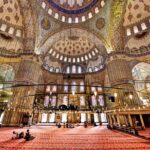
The Blue Mosque (Sultanahmet Mosque): tiles, light, and what to do if it’s under renovation
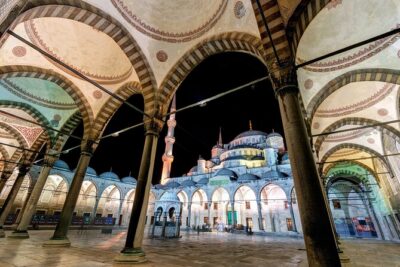
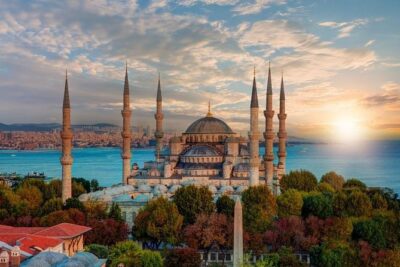
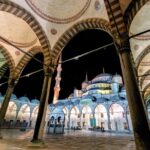
The tour starts at the Blue Mosque, officially the Sultanahmet Mosque, built in the 17th century under Sultan Ahmed I. It’s famous for the Iznik tiles—those rich blues that give the mosque its nickname—but the interior experience is the main event.
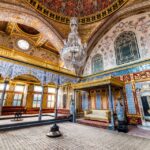
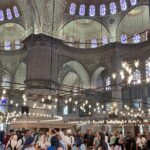
Inside, the big things to look for are the graceful domes, elegant calligraphy, and stained-glass windows that bring in strong light. Even if you’re not a church-or-mosque expert, you’ll feel the design logic: space, symmetry, and color all guide your eyes upward.
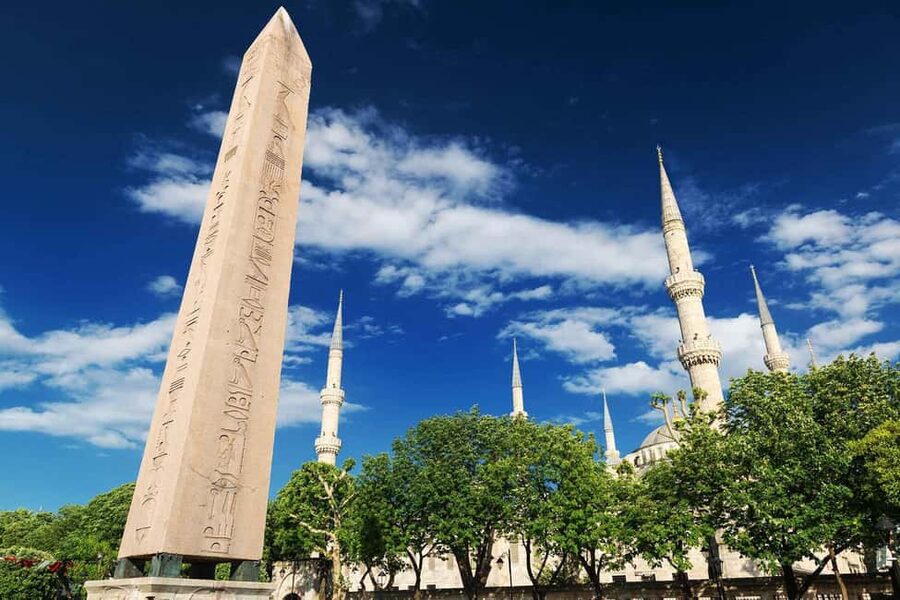
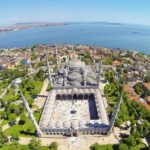
Outside, the mosque’s six minarets and the courtyard are what make it so photogenic. If you want your photos to look like postcards, start here early rather than later in the day when crowds stack up.
A real-world consideration: renovation can change what you see
One important factor with this tour is timing. The Blue Mosque has had periods of renovation, and that can mean reduced access—sometimes just partial visibility from outside, sometimes less interior access than expected.
If your travel dates land during renovations, treat this as a “see the landmark through the lens of its role in history” tour, not only a “guaranteed full interior at all times” tour. The upside: you’ll still get the mosque’s context and design story.
Hagia Sophia: Justinian’s dome and the Byzantine mosaics you’ll actually remember
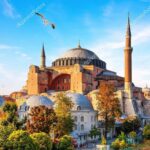
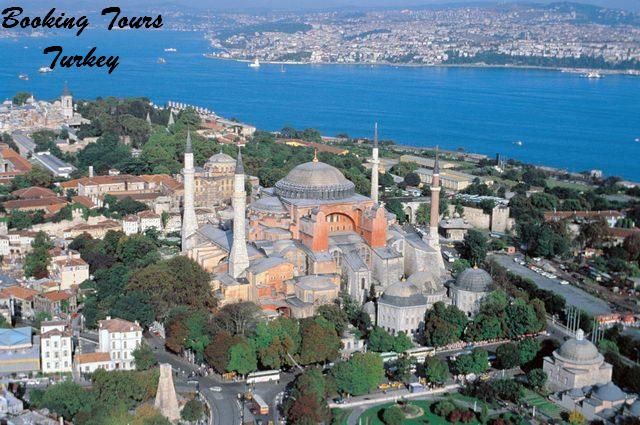
Next up is Hagia Sophia, built in 537 AD under Emperor Justinian. For over a thousand years, it was the world’s largest church, and the dome is why architects kept coming back to study it.
The building’s scale is hard to describe until you’re there. Your eyes naturally move along the central nave, and then—almost against common sense—you look up and see the dome as if it’s hovering.
Inside is where the tour earns its keep. You’ll focus on Byzantine mosaics, plus paintings and sculptures that tell stories of emperors, saints, and the divine. These aren’t random decorations. They’re visual theology, meant to communicate power and belief in a way most visitors could understand.
Ottoman layers add another chapter
After the Ottomans conquered Constantinople in 1453, Hagia Sophia became a mosque. You’ll see how the building carries both identities—Christian origins and Islamic adaptation—without needing a demolition to rewrite its identity.
That blend is part of why Hagia Sophia still feels so alive as a landmark. It didn’t just change hands. It changed meanings.

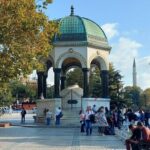
The Roman Hippodrome: standing where chariots once thundered
Between the big showpieces sits the area that once held the Roman Hippodrome of Constantinople—a social hub where people gathered for races and public events. This is one of those “you’re standing in history” places that becomes more fun the moment you know what used to happen there.
The tour helps you connect the physical remnants to the original drama. You’ll see the Obelisk of Theodosius and the Serpent Column, plus other relics tied to the ancient arena.
Here’s the mental trick that makes this stop click: don’t think of it as ruins in a park. Think of it as a venue. The stone objects are anchors for what you’re imagining—crowds, noise, rivalry, spectacle.
Even if you don’t love Roman history, you’ll appreciate the contrast. The Hippodrome connects the city’s Roman/Byzantine public life to the religious and political power you’ll see at the Blue Mosque and Hagia Sophia.
The guide is the real value (especially when the story has layers)
This is a guided walking tour, and that matters in Istanbul’s top sites. Signs can tell you what you’re looking at. A good guide explains why it was built that way and why it mattered in its era.
The tour runs in English, and the format is designed for a small group—limited to 10 participants. That size keeps the questions from getting swallowed by a huge crowd, and it usually means you can move at a comfortable pace.
In the notes from past tours, the guide experience stands out. One guide named Josh was praised for being personable and worldly, not just reciting facts. Another local guide was described as excellent and quick to answer questions.
If you’re the type who likes to ask why something looks the way it does—this is your moment.
Price and what you’re really paying for in a 4-hour tour
The price is $117 per person for a 4-hour tour. Entrance fees are not included, but the included item is the guide.
So how is it good value? You’re not just buying “walk time.” You’re buying interpretation across three of the most important monuments in the city, in a compact window. That’s especially valuable when you consider how long it can take to figure things out on your own in Sultanahmet.
Also, the half-day duration is a big deal. Istanbul’s “major sites” can eat the entire day. This keeps you from losing your schedule while still hitting the core landmarks.
If you’re traveling with limited time, or you’d rather spend money on meaning than on multiple ticketed detours, this price can make sense.
Timing, pace, and how to make the most of a half-day
At 4 hours, the tour is long enough to do real viewing inside Hagia Sophia and the Blue Mosque—when access is available. It’s also short enough that you won’t feel trapped.
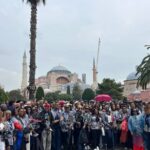
Sultanahmet is a walking area, but you’ll still want to plan for steps, standing in lines (especially inside), and the simple fact that these are popular places. Wear shoes that forgive you after a few hours of city stone.
If you like a relaxed pace, this small-group format helps. If you prefer a strict, clock-driven itinerary with no stops, you might still enjoy it, but keep your expectations realistic: you’ll be pausing for key details and explanations.
What you should know before you go (and who this tour fits best)
This tour is not available on Monday. Plan around that so you don’t end up scrambling for a substitute.
This experience fits best if you want:
- A guided framework for three landmark sites without spending the whole day
- A focus on architecture and art, especially mosaics inside Hagia Sophia
- Clear explanations in English from a guide who can answer questions
It’s also a good choice if you’re the kind of person who gets more out of a building when you understand how it changed over time—Christian to mosque at Hagia Sophia, and Ottoman grandeur at the Blue Mosque.
Should you book this Blue Mosque–Hagia Sophia–Hippodrome tour?
Yes, if you want a smart half-day in Sultanahmet and you like history with architecture and art tied together. The best reason to book is the pairing: Hippodrome relics show the city’s public life, while the Blue Mosque and Hagia Sophia show how faith and power shaped space.
I’d think twice if your dates fall during Blue Mosque renovation and seeing the interior is your top priority. In that case, you may get a more limited experience than the description suggests, even though the guide can still help you understand the site’s importance.
If you can be flexible about the Blue Mosque’s access and you care about context, this tour is a strong use of your time in Istanbul.
FAQ
How long is the tour?
The tour lasts 4 hours.
What’s included in the price?
The tour includes a live English guide. Entrance fees are not included.
Are entrance fees included for Hagia Sophia and the Blue Mosque?
No. Entrance fees to attractions are not included, so you’ll pay those separately.
What group size is this tour?
It’s a small group limited to 10 participants.
Is the tour available on Monday?
No. The tour is not available on Monday.
What language is the tour guide?
The guide provides the tour in English.