REVIEW · CASABLANCA
Casablanca: Religions of Morocco with Hassan II Mosque Visit
Book on GetYourGuide →Operated by Intrepid Urban Adventures - Europe · Bookable on GetYourGuide
Casablanca’s faith story reads like architecture. This private tour maps how Islam, Judaism, Christianity, and more have lived side by side, starting with Hassan II Mosque and its famous scale. I especially like how the day mixes big religious landmarks with quieter, human-scale stops—like the mellah and the museums—so you get both structure and context.
The one real consideration: you’ll be visiting religious sites, so dress conservatively (and women should bring a headscarf for inside the mosque). Also, the Notre Dame de Lourdes Church is closed on Sundays, so you’ll see it from outside that day.
In This Review
- Quick reasons this tour works so well
- Casablanca’s interfaith story starts at Hassan II Mosque
- Entering Hassan II Mosque: what to expect and what to notice
- The mellah: Jewish Casablanca in the old medina
- Moroccan art house visit: stained glass and mint tea
- Notre Dame de Lourdes Church: see it with the right expectation
- Museum of Moroccan Judaism: 2,000 years in one visit
- The private guide advantage (and a guide name to watch for)
- Price and value: is $256 per person fair for Casablanca?
- Who should book this tour?
- Should you book this Casablanca interfaith tour?
- FAQ
- Where do I meet the guide for this tour?
- Where does the tour end?
- What is included in the tour price?
- Is mint tea included?
- Which sites are visited during the tour?
- Do I need a headscarf for the Hassan II Mosque visit?
- Is Notre Dame de Lourdes Church visited inside?
- Does this tour visit the Museum of Moroccan Judaism?
- Is the tour carbon neutral?
- Are children allowed, and do they pay?
Quick reasons this tour works so well
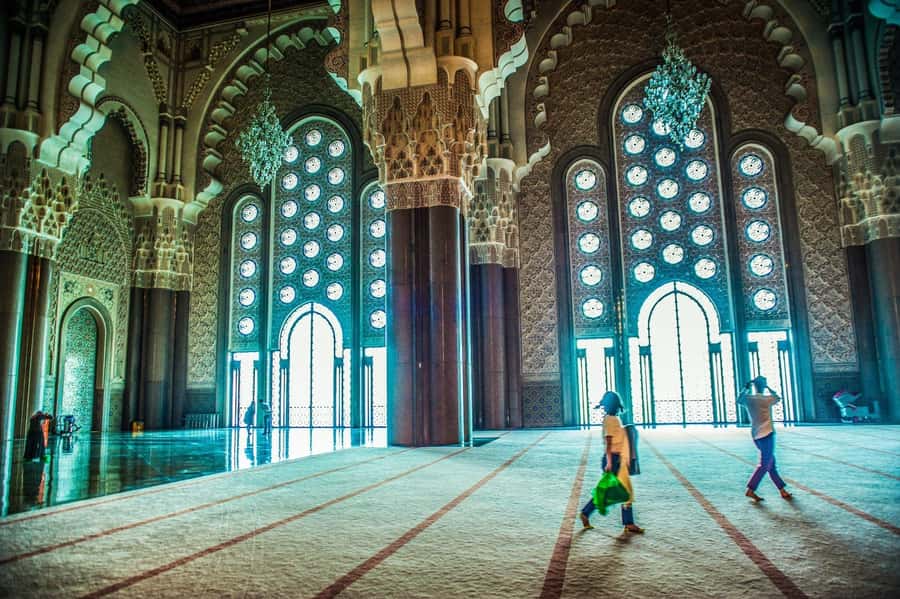
- Hassan II Mosque entry that focuses on what to look for, including its Moroccan and Moorish design influences
- Mellah time in the old medina area, where Casablanca’s Jewish past is still visible
- A private Moroccan art collection visit, with stained glass to slow you down and actually look
- Museum of Moroccan Judaism with exhibits covering about 2,000 years
- Private guide + private transport, which keeps the day flexible and easier on your feet
Casablanca’s interfaith story starts at Hassan II Mosque
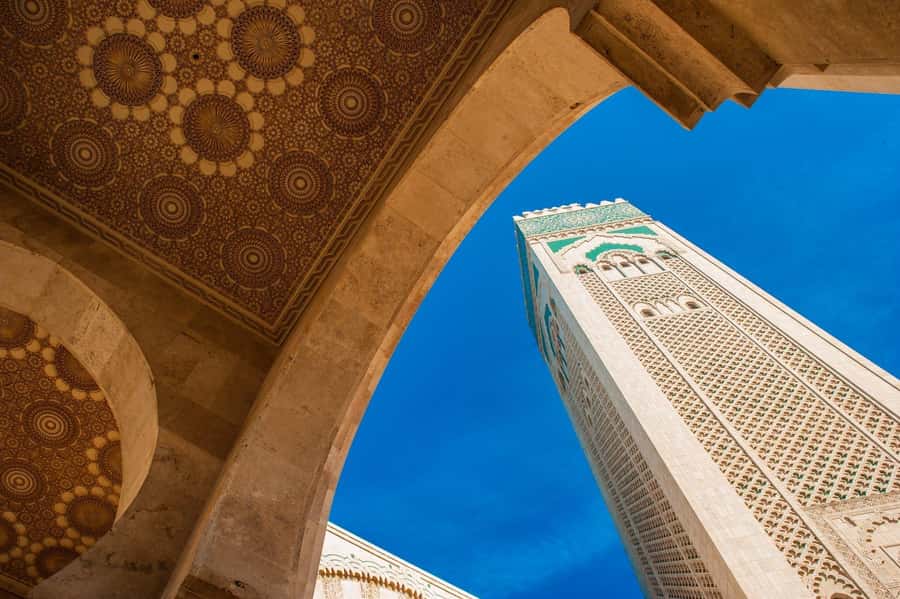
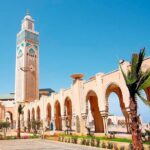
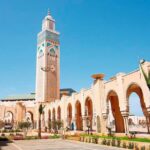
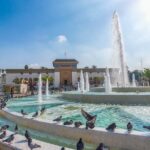
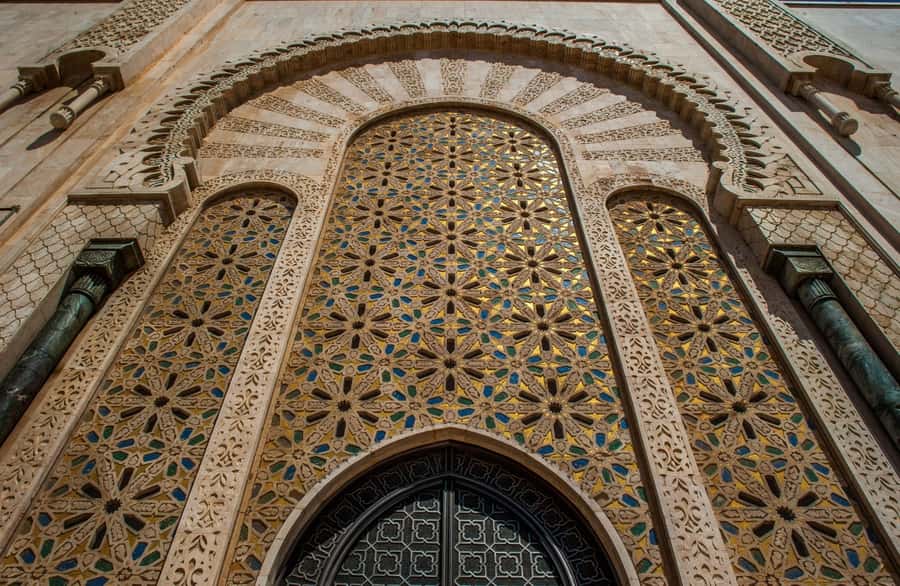
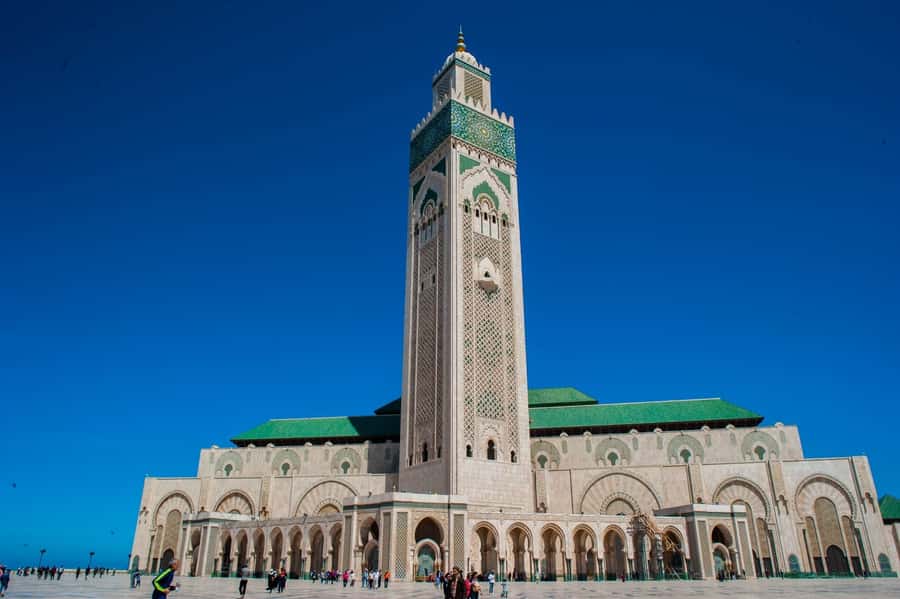
Casablanca can feel like a city of movement—then you step into Hassan II Mosque and everything shifts. The mosque is described as the largest in Morocco and the 3rd largest in the world, with a minaret reaching up to 210 m. Even before you get to details, the building tells you this is meant to be seen from a distance and felt up close.
What I like most is that the tour doesn’t treat religion like a museum label. It starts with a lesson in Islam, then connects the mosque’s design to Moroccan character. That matters because it stops you from reducing Islamic art to “cool patterns” and instead helps you understand why certain forms and shapes exist.
You also get practical reassurance: mosque entry is part of the experience, and the guide will steer you through what to expect so you’re not guessing at etiquette in the moment.
You can also read our reviews of more tours and experiences in Casablanca.
Entering Hassan II Mosque: what to expect and what to notice
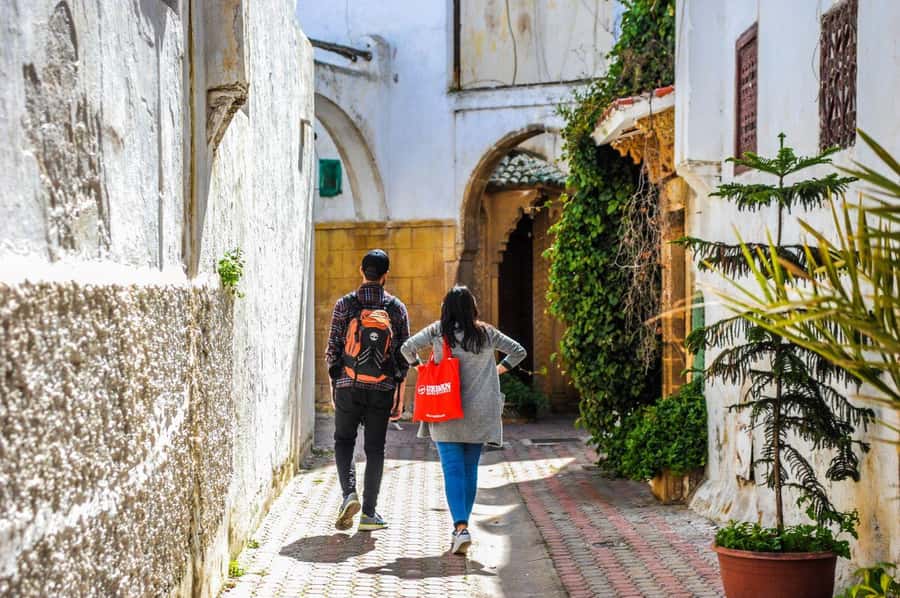
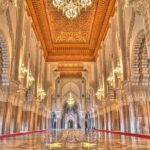
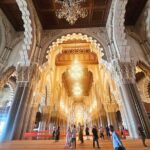
This is the centerpiece stop, and you’ll have entrance included. Plan to spend time inside the mosque’s main spaces, where Islamic architecture meets Moroccan elements, plus Moorish influences and urban design.
Here’s how to get more value from the visit:
- Watch how the structure guides your eye upward, toward light and symmetry rather than just decoration.
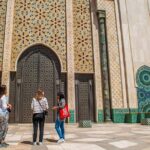
- Pay attention to how the mosque reads from different angles—big monuments often look one way from outside and another once you’re in.
- Bring your best “slow look” attitude. This is a place where small details are part of the experience, not the background noise.
Dress rules are not optional. Because this is a religious site visit, the tour asks for conservative clothing. Women should bring a headscarf for inside. Comfortable shoes help a lot too, since you’re moving between several stops.
One more practical point: this mosque is known for permitting non-Muslim visitors on guided experiences. So if you’re worried you’ll only get a quick exterior look, this itinerary is built to include the interior.
The mellah: Jewish Casablanca in the old medina
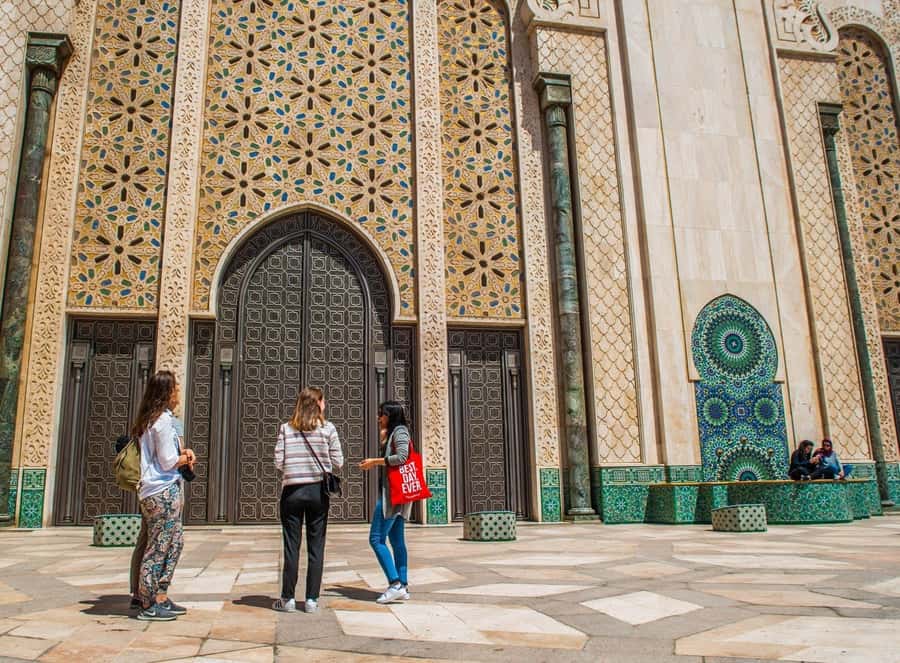
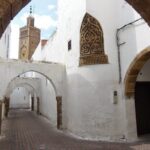
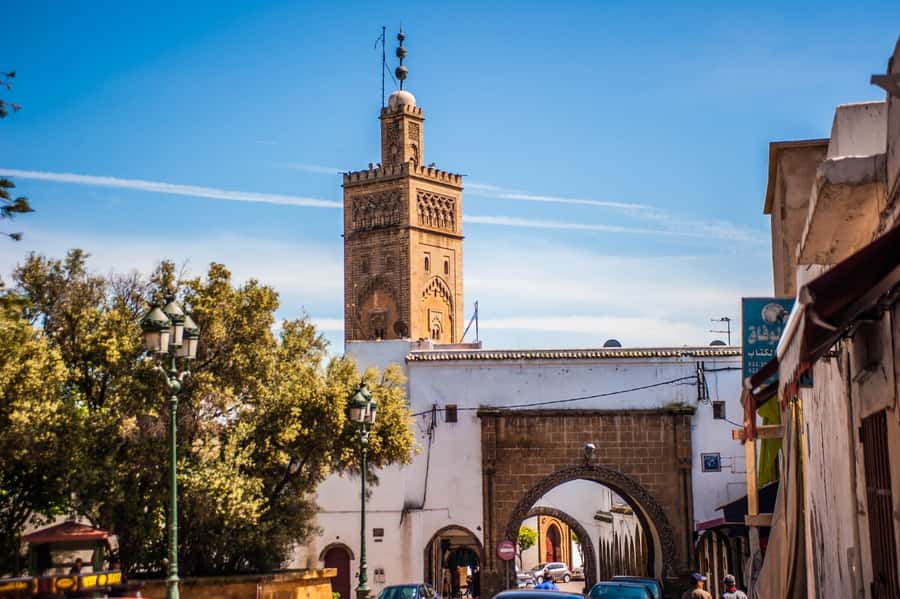
After the mosque, you head to the old medina area’s historic mellah, the city’s Jewish quarter. The tour frames the mellah as one of the places where Casablanca’s Jewish heritage has been best preserved—and it’s also where Jewish life continues today.
This stop works because it changes the scale. Instead of one monumental building, you’re seeing a living neighborhood history. That’s where the day’s interfaith theme stops being abstract. You can start connecting the timeline: how communities shared space, shaped the city, and carried traditions across centuries.
A good guide will help you read what you’re seeing—street layout, the feeling of older Casablanca, and the sense of continuity. You don’t need to memorize dates to get it. You just need the right lens, and the guide provides that through the narrative around the mellah.
Moroccan art house visit: stained glass and mint tea
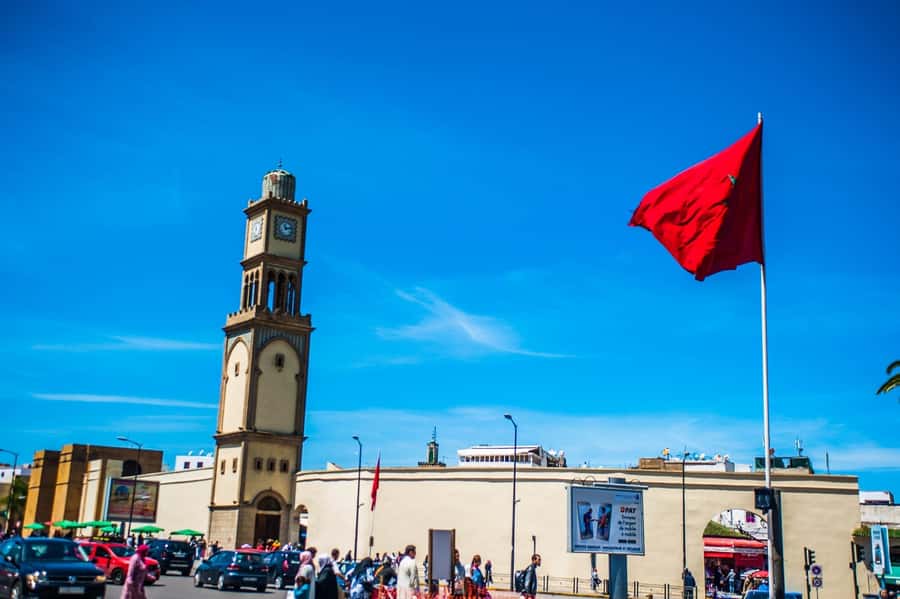
Between major religious sites, the tour takes you to a gorgeous museum set inside a home. This is where I’d bet you’ll have one of those “wait, look closer” moments.
You’ll meet a private collection of Moroccan artwork, and stained glass is called out as a highlight. That matters because stained glass in Morocco isn’t just pretty light—it’s craftsmanship you can understand better when it’s explained in context.
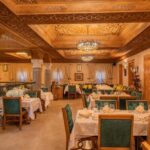
And yes, you get a break that feels like hospitality instead of a time filler: mint tea is included. It’s a small thing, but it helps the pace. You’re going from sacred architecture to street-level heritage to art and glasswork, and that tea moment lets your brain reset before the next stop.
Notre Dame de Lourdes Church: see it with the right expectation
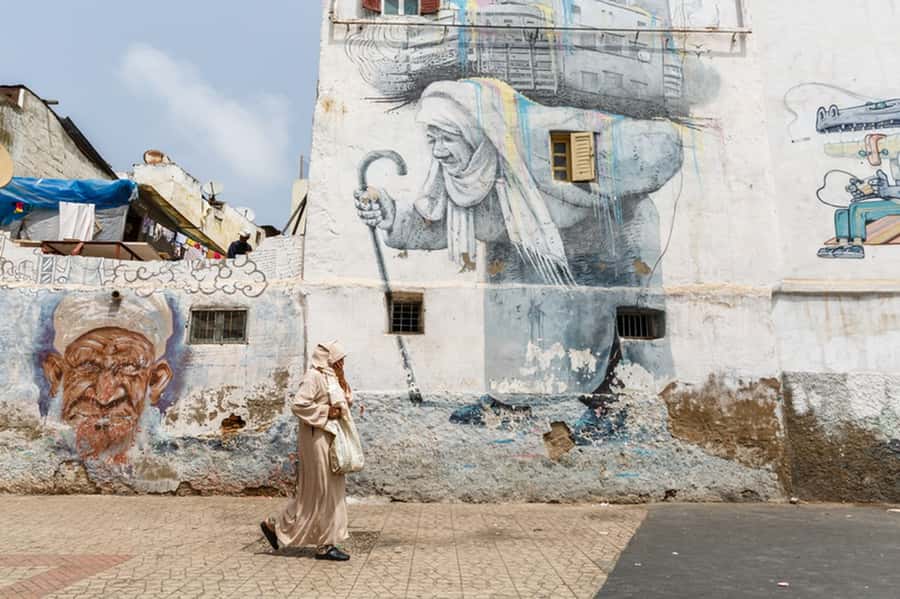
Next comes a stop at Notre Dame de Lourdes Church, described as European-inspired and towering over nearby buildings. The structure gives you a visual contrast to what you’ve already seen—again reinforcing the interfaith theme, not just as history but as physical city design.
Here’s the key consideration: on Sundays, the church is closed. You’ll still stop outside, but you won’t go inside. That’s worth knowing so you don’t arrive expecting full interior access every day.
If you’re visiting on a weekday, you’ll still get the architectural storytelling through the guide, but don’t force it. This stop is a “read the city” moment, not the main act like Hassan II Mosque or the Jewish museum.
Museum of Moroccan Judaism: 2,000 years in one visit
The day’s final learning-heavy stop is the Museum of Moroccan Judaism. It’s presented as featuring collections and exhibits covering 2,000 years of Jewish history in Morocco.
This is where the tour tightens the narrative. You’ve already visited the mellah to see heritage in place, and you’ve learned about faith in architecture. Now you shift into artifacts, exhibits, and a timeline. The museum helps you connect personal stories and community life across long stretches of time without turning the day into a textbook.
If you want to maximize this part, use a simple strategy: pick one thread. For example, look for how Jewish life changed with time, or how communities carried identity through eras. A guide can steer you toward what’s most meaningful in the museum without making you feel lost in the volume of information.
The private guide advantage (and a guide name to watch for)
This is a private tour, and that’s not just a comfort perk—it changes what you get from the stops. With a smaller group and more direct access to a local English-speaking guide, you can ask follow-up questions on the connections between religions, architecture, and community life.
In the feedback you’ll find, a guide named Bennis Hicham stands out as very experienced and open-minded, with explanations that match the way most people actually learn while traveling: clear, friendly, and tailored to what you care about. If your booking assigns him, you can expect strong storytelling and extra context.
Even if you don’t get that specific guide, the tour’s format aims at the same thing: individualized attention. That makes a difference when you’re visiting places where etiquette and context matter.
Price and value: is $256 per person fair for Casablanca?
The price is $256 per person, and for a private, interfaith-focused day in Casablanca, the value comes from what’s actually bundled:
- Local English-speaking guide
- Entrance fee to Hassan II Mosque
- Entrance to a private museum with Moroccan art collection
- Entrance to the Museum of Moroccan Judaism
- Mint tea
- Private transport between stops
That’s a lot of paid access wrapped into one plan, plus guided interpretation. If you were to piece this together on your own, you’d likely spend more on separate tickets, unclear timing, and extra transportation coordination—especially when one site (like the church) has schedule limits.
So I’d treat the price as paying for both access and sense-making. The tour’s main goal isn’t to check boxes. It’s to give you a guided map of how multiple faiths shaped Casablanca.
Who should book this tour?
This tour fits best if you want Casablanca beyond the usual surface version. I’d point you here if:
- You’re interested in the overlap between Abrahamic religions and how that shows up in real places
- You like architecture and museums, but you also want context you can carry home
- You prefer a private experience where questions don’t get squeezed out
- You want a morning-to-afternoon structure that includes both big and smaller stops
It’s also child-friendly, with children under 6 joining free. And if you’re the kind of adult who still enjoys learning how buildings and neighborhoods got their identity, you’ll feel right at home.
Should you book this Casablanca interfaith tour?
I think you should book if you want a guided day that connects sites into one story: Hassan II Mosque, the mellah, Moroccan art and stained glass, then the Museum of Moroccan Judaism. The private format and included entrances reduce friction, so you spend less time organizing and more time understanding.
Skip it only if you’re looking for a purely sightseeing-heavy route with no religious-site instruction, or if you strongly dislike dress-code expectations for mosque visits. Otherwise, this is the kind of tour that gives Casablanca a clearer meaning—fast.
FAQ
Where do I meet the guide for this tour?
You meet your guide in front of Rick’s Cafe at 248 Boulevard Sour Jdid, Casablanca 20250.
Where does the tour end?
The tour ends back at the meeting point.
What is included in the tour price?
The tour includes a local English-speaking guide, entrance fees for Hassan II Mosque and the two museum stops, mint tea, and private transport during the tour.
Is mint tea included?
Yes. Mint tea is included as part of the Moroccan art museum stop.
Which sites are visited during the tour?
You’ll visit Hassan II Mosque, the historic mellah in the old medina area, a private museum with Moroccan artwork, Notre Dame de Lourdes Church (outside only on Sundays), and the Museum of Moroccan Judaism.
Do I need a headscarf for the Hassan II Mosque visit?
Women should bring a headscarf for inside the mosque. The tour also asks for conservative dress because it visits religious sites.
Is Notre Dame de Lourdes Church visited inside?
Not on Sundays. The tour stops outside on Sundays, and the church is closed for interior visits that day.
Does this tour visit the Museum of Moroccan Judaism?
Yes. The Museum of Moroccan Judaism is included, with exhibits covering about 2,000 years of Jewish history in Morocco.
Is the tour carbon neutral?
Yes. The tour is described as carbon neutral and operated by a B Corp certified company committed to using travel as a force for good.
Are children allowed, and do they pay?
Children under 6 can join for free.