REVIEW · CASABLANCA
Private City Tour Casablanca includes Hassan II Mosque
Book on Viator →Operated by Le repère voyage · Bookable on Viator
Casablanca rewards you when you skip guessing. This private tour strings together the big sights in smart time.
You’ll start with Hassan II Mosque, then move through markets, film fame, and sea air without feeling rushed. The plan also works well if your stop in town is short.
What I like most is how you get both awe and street-level life. Hassan II Mosque brings serious wow, and the tour then makes room for everyday Casablanca at Quartier Habous and the Marche Central.
I also appreciate that the route includes famous places, but it doesn’t treat them like museum props.
One thing to consider: inside access at Hassan II Mosque can be limited by prayer time. If you’re hoping for maximum inside time, plan to be flexible.
In This Review
- Key things to know before you go
- A private Casablanca sweep in 3–4 hours
- Hassan II Mosque: the sea-side landmark you’ll remember
- Quartier Habous: shops, Moorish-French style, and a planned neighborhood feel
- Marche Central Casablanca: fish, spices, and leftover protectorate echoes
- Rick’s Café: film fame with time to sit and look
- Square of Mohammed V and the French-Art-Deco meets Morocco look
- The Corniche: Atlantic air, royal portraits, and a lighthouse moment
- Church of Notre Dame of Lourdes: stained glass, a cave, and calm contrast
- Price and what you’re really paying for
- Choosing the right kind of day: photos, pacing, and your guide
- Who this tour suits best
- Should you book this Casablanca private city tour?
- FAQ
- How long is the private Casablanca city tour?
- What sites are included on the itinerary?
- Is pick-up included?
- What’s included in the price?
- Is this a private tour or a shared group?
- What is the cancellation policy?
Key things to know before you go
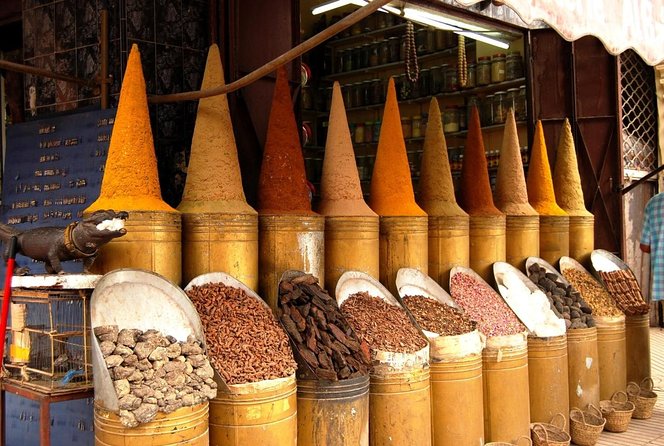
- Hassan II Mosque is built on the sea and can host huge numbers of worshipers, so it’s a landmark even before you step inside.
- Most stops are admission-free, so the money focus is mainly on the mosque ticket and your guide + private transport.
- Your schedule is tight but adjustable, and guides can tailor how long you linger at photo stops like Rick’s Café.
- You’ll cover both old-meets-new areas (Habous and its French-Moorish vibe) and Casablanca’s modern coastal edge.
- You get a mobile ticket plus private transport and bottled water, keeping the day simple.
A private Casablanca sweep in 3–4 hours
This tour is designed for people who want the highlights without turning your day into a scavenger hunt. You’ll be out for about 3 to 4 hours, with a series of focused stops rather than one long lecture.
Because it’s private, you’re not squeezed into a crowd schedule. Pick-up is offered, and you’ll travel by private transport between sites, which matters in a big city where time can disappear fast. It’s also the kind of outing that fits nicely if you’re in Casablanca as part of a cruise stop.
One more practical note: this experience is commonly booked about 58 days in advance. If you’re traveling in a busy season or you have fixed timings, booking earlier reduces stress.
You can also read our reviews of more tours and experiences in Casablanca.
Hassan II Mosque: the sea-side landmark you’ll remember
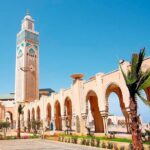
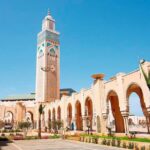
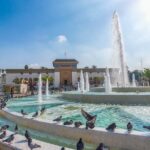
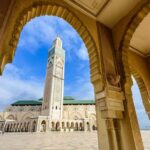
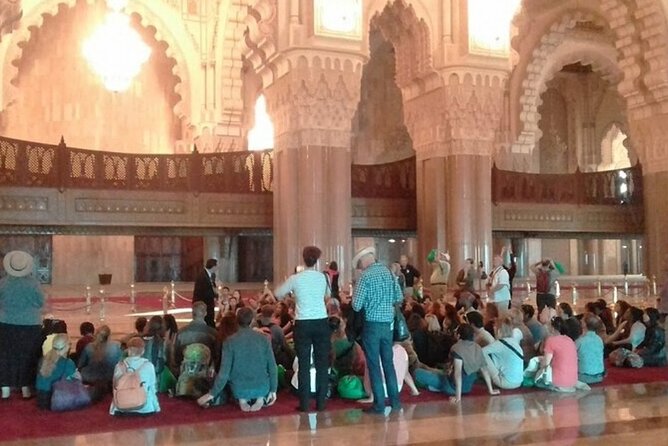
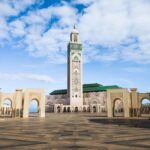
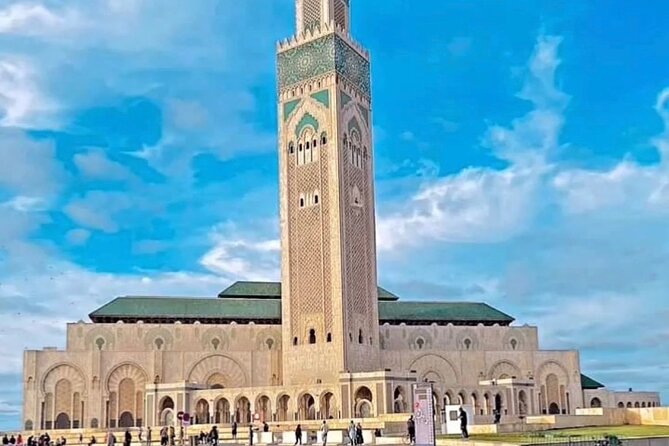
Your day starts at Hassan II Mosque, and the location sets the mood immediately. It’s built on the water, with the Quranic verse about God’s throne tied to the idea of a mosque grounded in the sea.
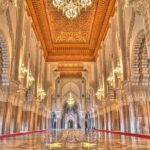
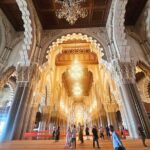
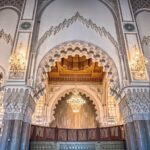
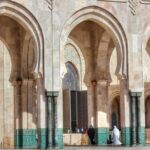
What makes the mosque so special for first-time visitors is scale and craft. It can accommodate 25,000 worshipers inside and 80,000 outside, and that capacity is part of why it feels monumental even from your first angle. If you like Moroccan design details, you’ll be happy here: the zellij tilework is described as some of the most exquisite examples, with sections reaching over 10 meters high.
It’s also one of the largest mosques in the world, and that size becomes part of the experience. You’ll likely notice how the grounds and sightlines are built for movement—this isn’t a quick “peek and leave” site.
The main drawback is timing. Inside access can be limited because the mosque is used for prayer most of the time, and at least one schedule includes a note that inside is limited to one per day. So go in with the mindset that your photo time and exterior views matter as much as inside.
Quartier Habous: shops, Moorish-French style, and a planned neighborhood feel
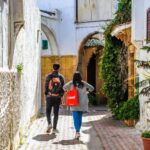
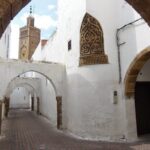
Next up is Quartier Habous, where you’ll spend most of your walking time. This isn’t just a place to buy souvenirs; it’s a planned “village” style neighborhood meant to welcome new inhabitants coming from different regions of Morocco.
The vibe comes from the mix of architecture styles. You’ll see a subtle blend of French architecture and Moorish style, and it gives the area a distinct look compared to older, more organic medina streets. The decor helps too. It’s the type of place where time slips by because there’s always another shop frontage, another pattern, another doorway to notice.
The neighborhood is described as having the facilities locals would need: mosques, a community oven, houses, and a majestic palace. In practice, that means you’re not only looking at buildings—you’re moving through a space that functions like a living part of the city.
One consideration: since it has many shops, it can feel more “shopping route” than “historical wandering.” If you want quiet street scenes, ask your guide to pace the walk so you still get the atmosphere without turning it into nonstop browsing.
Marche Central Casablanca: fish, spices, and leftover protectorate echoes
The tour then shifts gears to Marche Central Casablanca, a market that links past and present in a very tangible way. During the protectorate period, this market was set up as a modern place to sell European grocery items. You’ll find the memory of that in what the market was intended to carry.
After independence, the site kept its role as an important buying spot for locals. Today it’s still a place for fresh fish and Moroccan spices, and it’s described as a spot where you might even notice references to horse meat.
This stop is great if you like markets that feel specific and slightly surprising. It’s not just generic “take photos and leave.” You’re moving through sights that can include hidden antique pieces, which adds a layer of curiosity beyond the food.
A drawback: markets can be sensory-heavy. If you’re sensitive to crowds or strong smells, go slowly and plan to keep moving steadily through the stalls so you don’t feel stuck in one spot.
Rick’s Café: film fame with time to sit and look
Then you’ll head to Rick’s Café, the famous setting from classic cinema. The place became legendary because of the movie connection, especially through the icons Ingrid Bergman and Humphrey Bogart.
What makes this stop feel worthwhile isn’t just the name on the building. The tour schedule is built to include a moment of pause, so you can actually take in the atmosphere. Some itineraries allow more time here than you might expect, and that sit-down time can turn the stop from quick sightseeing into a real break.
If you’re a photo person, this is one of the easiest places to get a “Casablanca poster” picture without hunting. If you’re more into the people-watching side, you’ll likely enjoy the café stop as a slower beat between the mosque and the coastline.
Square of Mohammed V and the French-Art-Deco meets Morocco look
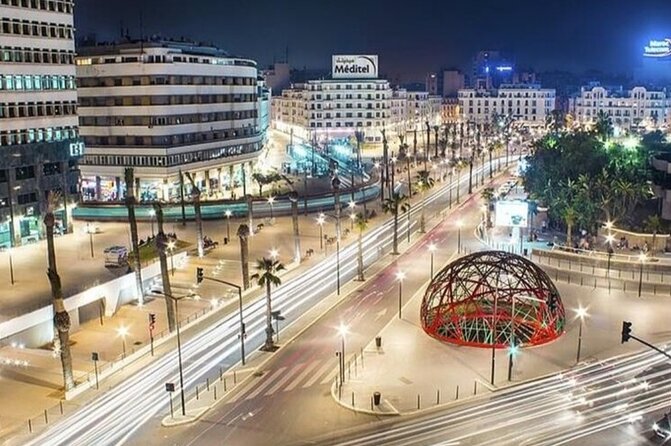
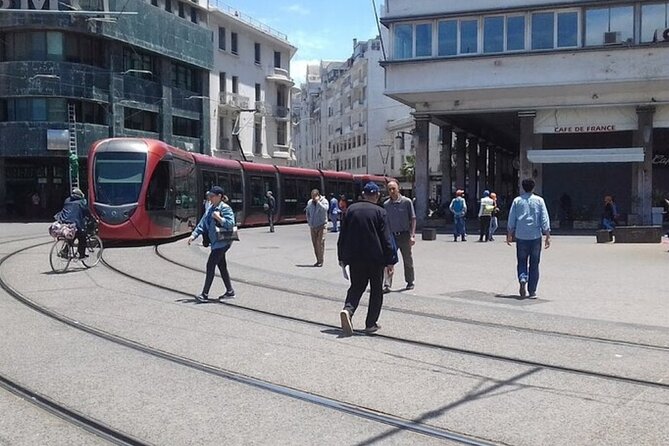
After Rick’s Café, the route includes Square of Mohammed V, a place you can use as a visual “reset.” This is where you spot more striking architecture—Moorish buildings mixed with European influence.
The style here is described as emerging in the early 1900s, blending Moroccan elements with European ideas, including French art deco. That matters because it helps you see Casablanca as more than just medina streets. The city has a layered personality: traditional forms alongside colonial-era design choices.
Your time here is intentionally short, so it’s not a slow photo marathon. The payoff is that you’ll learn how to recognize the visual patterns quickly. You’ll spot details you might otherwise miss if you were roaming on your own.
The Corniche: Atlantic air, royal portraits, and a lighthouse moment
Next comes the Corniche, where you get the Atlantic breeze and a change of pace. This coastal stretch is where people go for jogging, restaurants, and entertainment, so it feels more open and less “inside-looking-at-stalls.”
The tour frames the Corniche as a rare escape from the crowd energy and pollution pressures you might feel elsewhere in the city. Even if you just walk for part of the time, it helps your brain reset.
There’s also a small but memorable visual marker: you can see a portrait of the royal family, which gives you a quick visual anchor for the monarchy in Morocco. And the first lighthouse of the city appears like a hero against the winds and waves—exactly the kind of spot where a quick pause turns into a good photo.
Church of Notre Dame of Lourdes: stained glass, a cave, and calm contrast
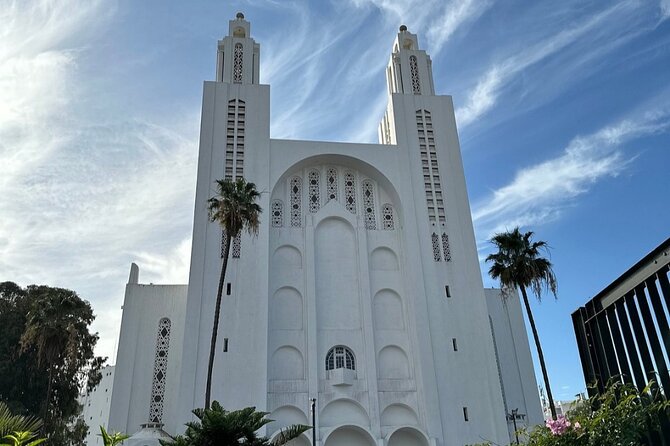
The last major stop is Church of Notre Dame of Lourdes, described as an amazing cathedral with modern architecture. Colored glass walls bring the light in a way that stands apart from most Moroccan streetscapes.
What really gives it personality is the cave area, with a statue of Mary surrounded by flowers and candles. That combination makes the space feel reflective rather than just architectural.
This stop works well near the end of the tour because it slows you down without needing extra walking. It’s also a helpful contrast point: after mosque architecture and market life, you get a different kind of spiritual space with modern design.
Price and what you’re really paying for
The price is listed at $116.19 per person for a private tour around 3–4 hours. That might sound high if you’re comparing it to public tours, but the value comes from what’s included and how the day is structured.
You get private transportation and bottled water, plus a mosque admission ticket is included. Other stops in the route are stated as admission-free, so your main “ticket cost” is handled upfront for Hassan II Mosque.
Because the tour is private, you’re also paying for fewer wasted minutes. In a city like Casablanca, moving efficiently between scattered sights can be the difference between a good day and a frustrating one.
If you’re traveling in a group, group discounts may improve the per-person value. If your group has flexibility on dates, booking early still helps, especially since this itinerary is often reserved about two months out.
Choosing the right kind of day: photos, pacing, and your guide
This tour style is built for smart coverage, not for deep academic storytelling. If your goal is photos, key stops, and local context you can use right away, this plan fits well.
Guide style can make the difference. You might be guided by people such as Adouane, Redon, or Edwin depending on availability. What’s consistent is the ability to adjust your pace—some schedules focus on a “whistle stop” approach for cruise-day timing, while others slow down more around the most meaningful photo moments.
Here’s how to make it work for you:
- Tell your guide upfront whether you want quick photo stops or extra time at a specific site.
- If you care most about the mosque, plan to use your time strategically there, because inside access can be constrained by prayer.
- If you want a break, ask for a little extra time at Rick’s Café so it’s not just a stop sign, but an actual pause.
In other words, your day gets better when you steer it a bit.
Who this tour suits best
This is a strong fit if you:
- Want a private route with pick-up and transport
- Have limited time in Casablanca
- Like seeing a mix of architectural styles—Moroccan, French influences, and modern coastal Casablanca
- Enjoy markets and don’t mind that they’re active, crowded, and full of small surprises
It’s less ideal if you want a long, slow walk through one neighborhood only, or if you’re the type who hates being moved between stops on a set schedule.
Should you book this Casablanca private city tour?
If you want a clean, efficient way to see Casablanca’s main faces in a single afternoon, I’d book this. The route balances big-ticket wow at Hassan II Mosque with real-city texture at Quartier Habous and Marche Central Casablanca, then adds a coastal reset on the Corniche and a calmer end at Notre Dame of Lourdes.
The key decision point is mosque time. Since inside access can be limited by prayer, this tour works best if you’re happy with outside views plus any inside time you’re allowed.
If you’re short on time, value guide coordination, and want a day that feels like Casablanca rather than a list of disconnected stops, this is a practical choice. Just pick your priorities—then tell your guide what matters most.
FAQ
How long is the private Casablanca city tour?
It runs about 3 to 4 hours.
What sites are included on the itinerary?
The tour includes Hassan II Mosque, Quartier Habous, Marche Central Casablanca, Rick’s Café, Square of Mohammed V, The Corniche, and Church of Notre Dame of Lourdes.
Is pick-up included?
Pick-up is offered, and the tour also includes private transportation. Airport pick-up is not included, but the tour notes an extra fee for Mohamed airport pick-up.
What’s included in the price?
The price includes private transportation and bottled water. Hassan II Mosque has an admission ticket included, while other stops are listed as admission free.
Is this a private tour or a shared group?
It’s a private tour/activity, meaning only your group participates.
What is the cancellation policy?
There’s free cancellation. You can cancel up to 24 hours in advance for a full refund. If you cancel within 24 hours of the start time, the amount paid is not refunded.
If you cancel or change within 24 hours, changes aren’t accepted.