REVIEW · CORDOBA
Cordoba: Mosque, Jewish Quarter and Alcazar
Book on Viator →Operated by Arte De Cordoba S.L. · Bookable on Viator
Cordoba starts telling its story before you even enter the sites. I loved having a guide turn the Mosque-Cathedral and the Jewish Quarter into a clear timeline, and I really liked how guides such as Anna and Alvaro make big architecture feel personal. One thing to factor in: the Alcázar can be closed for refurbishment, and on those days the plan may shift.
This is a solid half-day when you want more than photos. You’ll move through the Christian royal palace, a key Jewish reference point (including a stop for Maimonides), and then into the Mezquita-Catedral, which is the headline for many people. It’s also a walking tour, so wear shoes you won’t regret by hour three or four.
In This Review
- Quick reasons to go
- Starting at the Alcázar de los Reyes Cristianos: what you’re really seeing
- Practical note
- Maimonides and the Jewish Quarter: getting the connections right
- What about the synagogue?
- Inside the Mezquita-Catedral: how a guide makes it click
- Crowds and lines
- Headsets?
- The pacing over 4 hours: where time goes and where it doesn’t
- Breaks and walking comfort
- Price and value: what $59.26 buys you in Cordoba
- When access changes: Alcázar closures and your day plan
- How to handle this calmly
- Who this tour is for (and who should consider other options)
- Should you book this Cordoba Mosque, Jewish Quarter and Alcázar tour?
- FAQ
- How long is the Cordoba Mosque, Jewish Quarter and Alcázar tour?
- Is the tour offered in English?
- What are the main stops?
- What’s included in the price?
- Where is the meeting point?
- Where does the tour end?
- Is there a maximum group size?
- What if the synagogue is unavailable due to maintenance?
- Is free cancellation available?
Quick reasons to go
- Skip-the-line entry for the Mosque-Cathedral helps you spend more time inside and less time parked outside.
- A guided storyline connects Cordoba’s Christian, Islamic, and Jewish layers instead of leaving you with three separate monuments.
- Jewish Quarter streets on foot are the kind of narrow lanes where context matters, and the guide brings it to life.
- Alcázar de los Reyes Cristianos gives you the Christian Kings perspective that complements the Mezquita.
- Small-group feel (max 30) keeps the experience workable even with crowds.
- English-speaking guidance with professional interpretation makes the details easier to follow.
Starting at the Alcázar de los Reyes Cristianos: what you’re really seeing
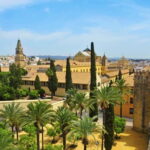
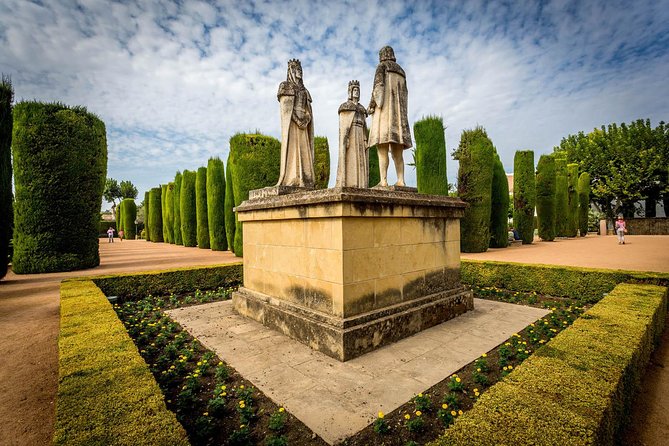
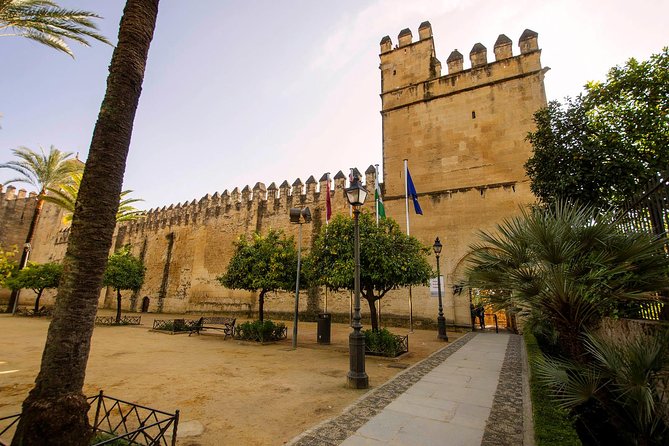
You begin in central Cordoba near Avenida del Alcázar, and the first stop is the Alcázar de los Reyes Cristianos. Even if you know it by reputation, it helps to arrive with the idea that this place is about power and survival, not just pretty walls.
The Alcázar was where the Christian Kings lived in Cordoba. That matters because when you later step into the Mezquita-Catedral, you’ll understand it less like an isolated monument and more like a city that kept reusing and redefining sacred space. The guide’s job here is to give you the political and architectural logic behind what you see.
Expect about an hour at the Alcázar. That’s enough time to orient yourself and get the main points without rushing. It’s also the best moment to ask questions, because after this you’ll spend more time flowing through the Mosque-Cathedral’s interior where sound and crowds can make it harder to pause.
You can also read our reviews of more tours and experiences in Cordoba.
Practical note
Courtyards, passages, and restoration details can take a beat to register. If you like architecture and historic layers, you’ll get a lot from the guide’s explanations.
Maimonides and the Jewish Quarter: getting the connections right
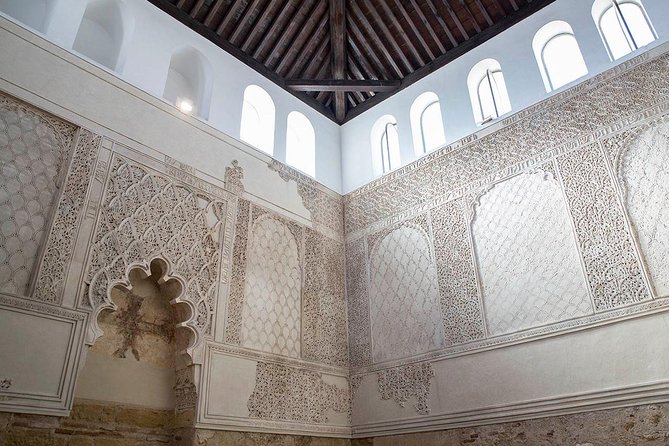
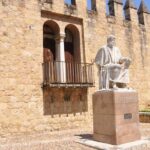
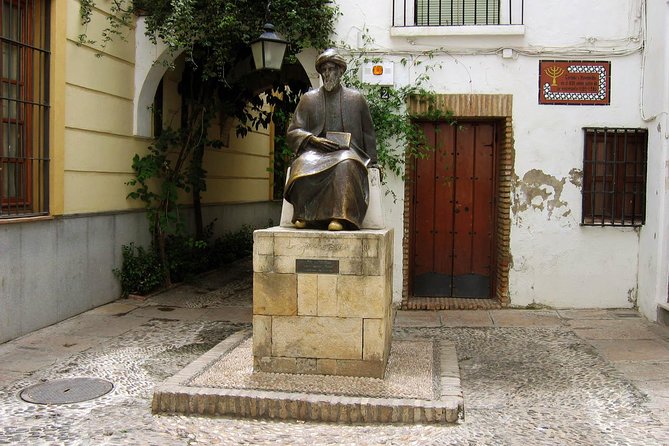
After the palace, the tour moves toward the Jewish Quarter atmosphere of Cordoba. You’ll stop for the Estatua de Maimonides, which is brief but meaningful—think of it as a mental bookmark. Maimonides was born in the 12th century, and the stop is there to connect his legacy to the city you’re walking through.
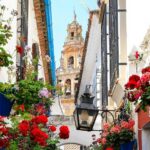
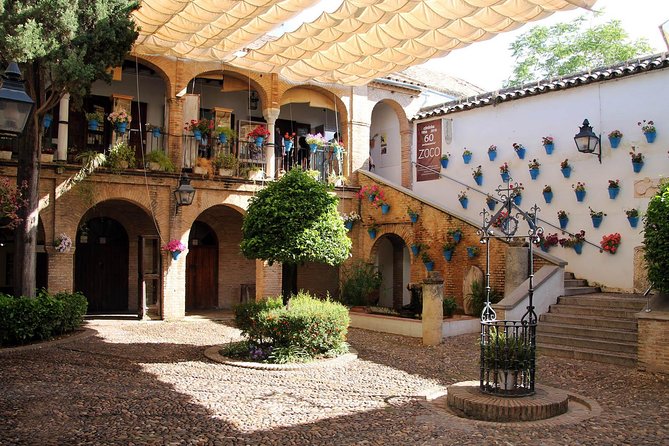
Then you’ll wander the smaller streets of the Jewish Quarter. This is one of those parts where the city’s layout does half the work. You get narrow lanes, turning points, and that slow feeling of being moved around by the past. The guide’s explanations help you make sense of what you’re seeing rather than just admiring the streets.
A big reason this part is worthwhile is that Cordoba’s story isn’t only about battles or rulers. It’s also about communities and ideas moving through the same urban spaces over centuries. A good guide helps you hold those connections in your head while you walk.
What about the synagogue?
Your ticket includes skip-the-line access for the synagogue. Still, there’s a real-world catch: the operator says they aren’t responsible if synagogue access is unavailable due to maintenance work. In practice, that means you should be mentally ready for the day to run with a Plan B if access is blocked.
Inside the Mezquita-Catedral: how a guide makes it click
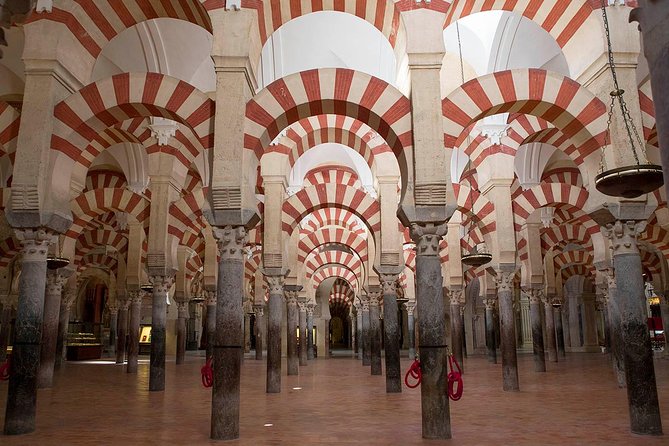
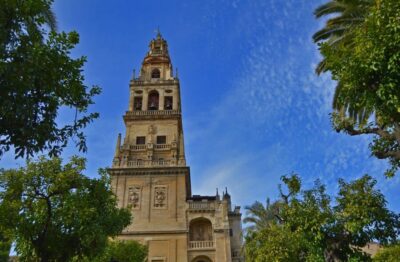
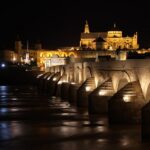
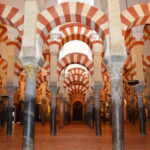
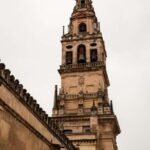
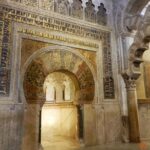
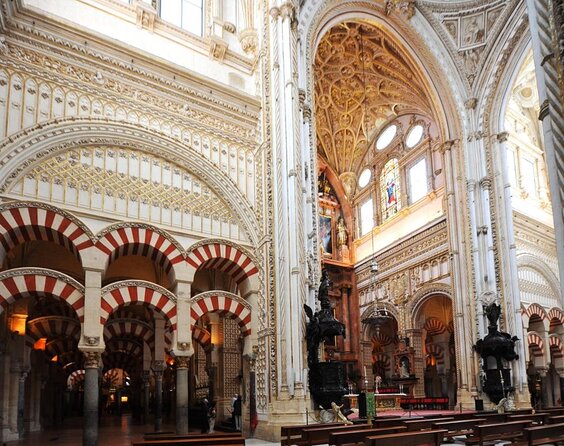
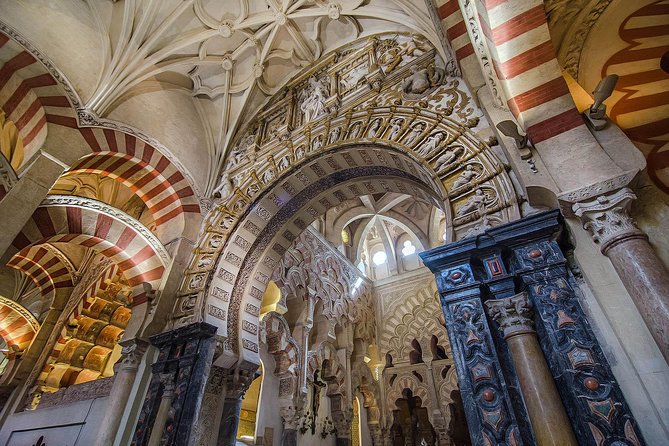
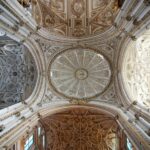
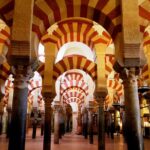
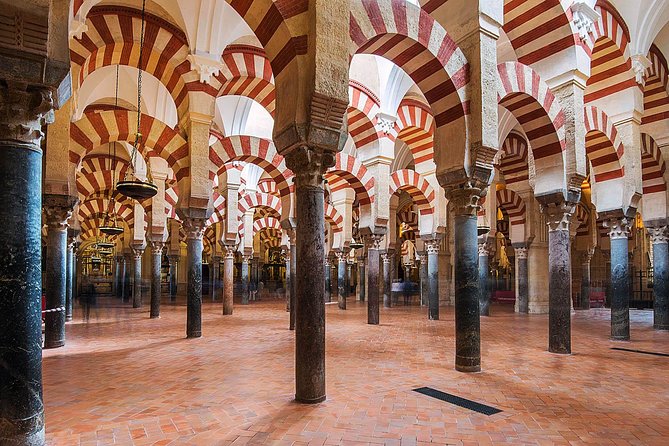
The Mezquita-Catedral de Córdoba is the main event. This is the place that started as a mosque centuries ago and is now the cathedral. The shift alone is mind-bending, but what really matters on the tour is how the guide helps you read the building.
You’ll spend about 1 hour 30 minutes here. That length is important. Too short, and it becomes a crowd-watching exercise. Too long without guidance, and you can feel lost in the patterns. This time window aims to balance both.
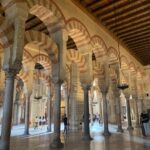
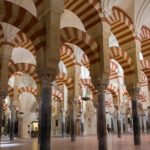
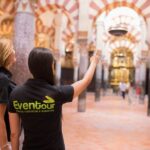
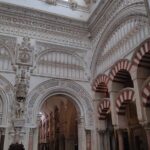
One detail I really appreciate about this kind of guided stop is the way it turns repetition into meaning. You start noticing the rhythm of arches, the geometry, and how additions changed the space. Guides mentioned in the reviews—like Saraya/Saray, Saraya, Patricia, and others—were especially praised for connecting construction details to the larger history of who controlled the city and why.
Crowds and lines
The good news: the skip-the-line ticket approach is meant to cut down waiting. People noted that even with crowds, the line movement at the Mosque-Cathedral can be quick once you’re in the right flow. Still, the interior is popular, so you should expect density.
If you’re sensitive to crowds, pick a mindset. Don’t fight people for a perfect view every second. Instead, follow the guide’s path and grab moments when the group pauses. You’ll likely remember the big impressions more than any single photo angle.
Headsets?
This isn’t guaranteed for every group, but at least one experience mentioned headsets working well. If you do get them, use them. If you don’t, stand closer to the guide during key explanations so you don’t miss quieter points.
The pacing over 4 hours: where time goes and where it doesn’t
This tour runs about 4 hours total. In theory, that sounds straightforward. In practice, walking time plus entrances plus crowd flow can stretch the experience, so it helps to know what to expect.
Here’s the basic rhythm:
- Start at the Alcázar area and take about an hour there.
- Quick stop at Maimonides before moving through the Jewish Quarter.
- Head to the Mosque-Cathedral for the biggest chunk.
One review also pointed out that the tour can feel like it’s split into segments, sometimes with different guides leading different sections. That’s not a problem by itself; it can even be a plus if each guide is focused on their specialty. The only downside is that you may not get the same voice for every moment, so pay attention when the guide changes and listen for the new plan.
Breaks and walking comfort
There’s no mention of a planned coffee or snack break. People also warned to bring decent walking shoes because you’re on your feet for a long stretch with crowds around major sites.
If you need a mid-walk reset, do it by timing: plan to use the natural pause between stops (or at a viewing point) rather than expecting a formal break.
Price and value: what $59.26 buys you in Cordoba
At about $59.26 per person, this is not the cheapest way to see Cordoba, but it also isn’t trying to be a luxury experience. The value comes from three things working together:
- Skip-the-line tickets for major sights (Mosque-Cathedral, synagogue, and Alcázar).
- A professional guide who explains what you’re looking at, not just where to walk.
- Time saved and context gained on the city’s busiest monument.
If you were to do it alone, you’d still need to figure out entries, lines, and how to connect the sites into a coherent story. Here, the guide does that linking. Also, Cordoba’s big draw is the fact that its monuments overlap. You can see three impressive buildings and still miss the point unless someone helps you connect why they changed and what that says about the city.
That said, the tour’s value depends on execution on the day. If the Alcázar is closed, you may lose the palace entry experience that you paid for. The Mosque-Cathedral usually remains the core, but your overall value is strongest when all the intended stops are accessible.
When access changes: Alcázar closures and your day plan
Here’s the reality check from the experiences: the Alcázar has, at least on some days, been reported closed for refurbishment, sometimes with short notice. In those cases, some guests said the tour pivoted to alternatives like gardens or other nearby elements, and the Alcázar entry was not included.
Also remember: synagogue access is included, but the operator states they aren’t responsible for synagogue unavailability due to maintenance. So a perfect day where every door opens may not happen every time.
How to handle this calmly
If you book, treat it like a guided circuit with two parts: a likely fixed anchor (the Mosque-Cathedral) and one or two parts that can depend on site conditions (Alcázar and synagogue access). That mindset helps you feel less disappointed if the day shifts.
If you have a flexible schedule, you can also reduce risk by booking for a morning time slot where you can rearrange later if needed. Cordoba is full of things to do, even if one monument changes.
Who this tour is for (and who should consider other options)
This works especially well if you:
- Want the story behind the architecture, not just a self-guided checklist.
- Like walking but don’t want to plan every ticket and route yourself.
- Enjoy history that connects communities across time.
It may be less ideal if you:
- Hate crowds and need lots of quiet time.
- Want a slow, independent pace with minimal explanations.
- Are extremely attached to getting inside every listed site on the same day, because the Alcázar and synagogue can be affected by closures.
For most people, the guide-led structure is the point. The Mosque-Cathedral becomes more than a spectacle when someone helps you understand what changed, when, and why.
Should you book this Cordoba Mosque, Jewish Quarter and Alcázar tour?
I’d book it if you want a guided “timeline walk” through Cordoba’s most important layers—Christian royal power at the Alcázar, the Jewish Quarter context with Maimonides, and the Mosque-Cathedral as the unforgettable centerpiece.
I wouldn’t book it with blind confidence if the Alcázar entry is the single thing you’re chasing most. The day-to-day closure risk is real based on reported experiences, and your overall satisfaction will depend on how the operator handles those access changes.
If you’re the type who likes learning while you walk, and you’re okay with crowds (or at least smart about timing), this tour offers strong value for the price—especially because skip-the-line access removes one of the most frustrating parts of visiting Cordoba’s top monument.
FAQ
How long is the Cordoba Mosque, Jewish Quarter and Alcázar tour?
It lasts about 4 hours.
Is the tour offered in English?
Yes. The tour is offered in English.
What are the main stops?
You’ll visit the Alcázar de los Reyes Cristianos, make a stop at the Estatua de Maimonides, and visit the Mezquita-Catedral de Córdoba.
What’s included in the price?
The tour includes skip-the-line tickets for the Mosque-Cathedral, the synagogue, and the Alcázar, plus a professional guide and a mobile ticket.
Where is the meeting point?
The start is Avenida del Alcázar, Av. del Alcázar, Centro, 14004 Córdoba, Spain.
Where does the tour end?
The end point is the Mosque-Cathedral Monumental Site of Córdoba, C. Cardenal Herrero, 1, Centro, 14003 Córdoba, Spain.
Is there a maximum group size?
Yes, the tour has a maximum of 30 travelers.
What if the synagogue is unavailable due to maintenance?
The operator states they are not responsible for synagogue unavailability due to maintenance work.
Is free cancellation available?
Yes. You can cancel up to 24 hours in advance for a full refund.