REVIEW · ISTANBUL
Hagia Sophia, Bosphorus cruise, Blue Mosque, Guided – Small Group
Book on Viator →Operated by Aljazeera Tour · Bookable on Viator
That blue-tile skyline starts early. This small-group Istanbul tour stitches together the city’s big religious sites and a proper Bosphorus cruise, with guided visits at the Blue Mosque, Hagia Sophia, and Eyüp Sultan. I like the small group size (up to 14), which makes it easier to move through crowded areas without feeling herded, and I also like that you get a structured day without figuring out transport between stops. One thing to keep in mind: Hagia Sophia has a separate €25 admission (paid in cash), and you’ll still need to go through mandatory security checks at both mosques.
You’ll spend much of the morning on foot around Sultanahmet, then shift gears with cable car views and a sea-level perspective from the water. This is a great format if you want the highlights, but it’s not a slow, wandering day—so if you hate shopping detours or want maximum time for lunch, plan to be flexible.
In This Review
- Key highlights worth showing up for
- Price and what you actually get for $53.88
- Hotel pickup and the shared-ride reality
- Blue Mosque: the six minarets and the tile obsession
- Hippodrome stops: monuments that made Constantinople tick
- Hagia Sophia: guided highlights plus the €25 cash fee
- Grand Bazaar time: orientation first, then go at your own speed
- Sultanahmet lunch break: short reset in the heart of old Istanbul
- Golden Horn drive-by: what you learn while you watch
- Pierre Loti Hill and the cable car: quick ride, big view payoff
- Eyüp Sultan Mosque: the Ottoman ritual site you shouldn’t skip
- The Fatih pause: Turkish delight and apple tea break
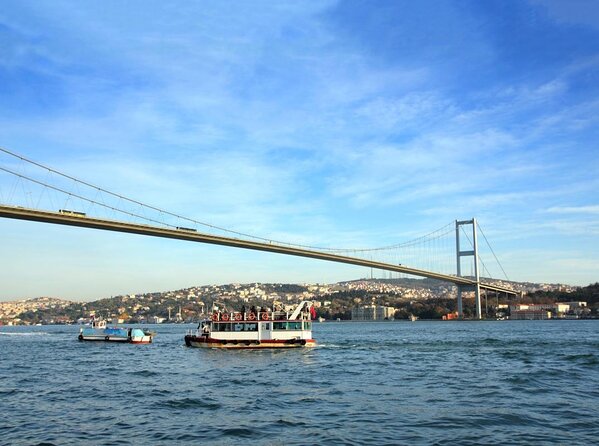
- Bosphorus cruise: skyline from the water and the two-continent moment
- Shopping stops: useful if you want souvenirs, frustrating if you don’t
- Guides and group flow: why the small-group size matters
- Should you book this Istanbul highlights day?
- FAQ
- Is Hagia Sophia admission included in the tour price?
- What is included for transportation and major activities?
- What about lunch and tips?
- How long is the tour and what time does it start?
- Is the Grand Bazaar always open?
- What should I wear for the mosques?
Key highlights worth showing up for
- Small group feel with a maximum of 14 people, so the day stays manageable
- Guided entry and context at Blue Mosque, Hagia Sophia, Hippodrome, and Eyüp Sultan Mosque
- Two big view moments: Pierre Loti Hill up top and the Bosphorus from the water
- Cable car included for a short ride that’s mostly about the Golden Horn panorama
- Golden Horn narration + passing drive so you hear what you’re seeing, even without stops
- Grand Bazaar time at your own pace after a helpful orientation at the main gate
Price and what you actually get for $53.88
At about $53.88 per person for a ~7-hour day, you’re paying for a tight routing problem solution: hotel pickup (if selected), an English-speaking guide, guided time at major sites, plus the Bosphorus cruise ticket and the Pierre Loti Hill cable car ticket included.
What’s not included is the Hagia Sophia admission fee (separate €25 cash), plus lunch (you pay on your own) and tips. In plain terms: most of the “big-ticket” parts of the day are wrapped in, but you still budget for the one standout museum fee and a meal.
If you’re the kind of traveler who hates piecing together tickets and transit, this price can feel like a deal. If you’re hoping for long free time or a no-shopping day, you might feel the edges.
You can also read our reviews of more tours and experiences in Istanbul.
Hotel pickup and the shared-ride reality
This runs with hotel pickup and drop-off from centrally located hotels, and it’s a shared transfer using a minibus or midibus. That matters because your exact departure/return time can slide a bit. In practice, it’s still organized, but it’s not the kind of private, on-your-time experience where you control every minute.
Also, the morning is a walking tour, so comfortable shoes aren’t optional. Even if some stops are short, Sultanahmet moves at city-walk pace: steps, stairs, and crowds.
Blue Mosque: the six minarets and the tile obsession
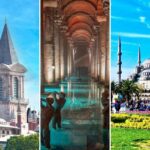
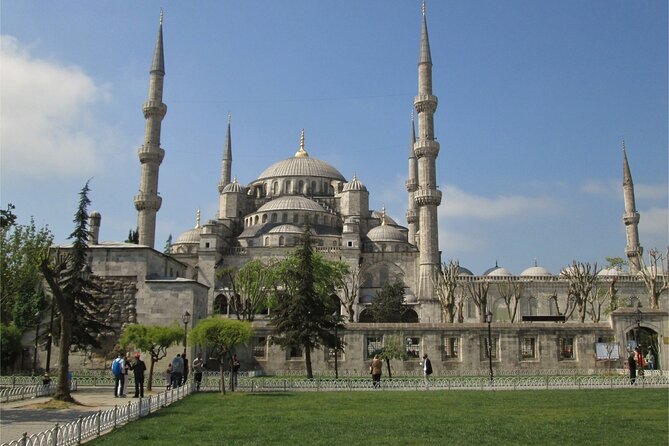
Your day starts at the Blue Mosque, famous for its 20,000 Iznik hand-painted tiles and six minarets. The guided visit is usually your first chance to get oriented fast, because the guide helps you understand what you’re looking at—especially the Ottoman commission under Sultan Ahmet I and how this landmark fits into the Classical Ottoman era.
You’ll also want to treat this as a sacred-site visit, not a photo shoot. Dress appropriately: long pants, long sleeves, and a scarf to cover your head. (Security screening is mandatory, even if you have skip-the-line help for entry timing.)
A nice thing here is that your time is capped to keep the day moving, so you get the key sights without turning it into a half-day trance.
Hippodrome stops: monuments that made Constantinople tick
Next up is the Hippodrome, once the social and sporting center of ancient Constantinople. Even if you’ve seen Istanbul postcards for years, this stop makes the city feel older in a different way.
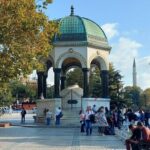
What you’re looking for includes the German Fountain of Wilhelm II, the Bronze Serpentine Column, the Obelisk of Theodosius, and the Column of Constantine. The guide’s job here is to connect the objects to the idea of public life—where crowds gathered, power played out, and the city’s identity was performed.
Time is tight here, so use it to read the shapes and symbolism rather than trying to photograph everything from every angle.
Hagia Sophia: guided highlights plus the €25 cash fee
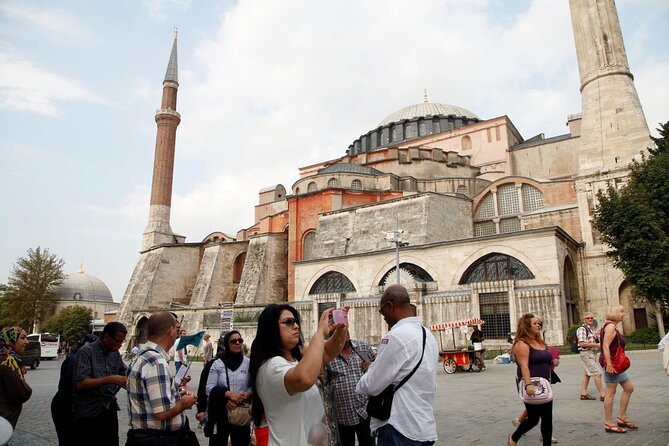
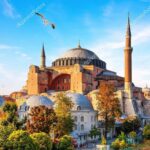
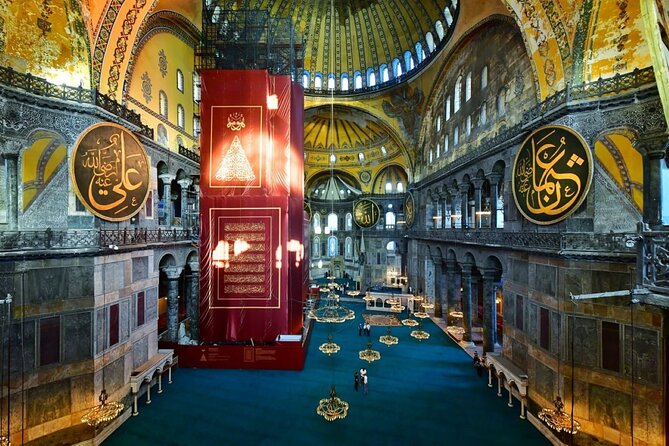
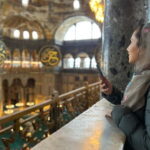
Then it’s Hagia Sophia Grand Mosque, the 6th-century mega-building that started as a Greek Orthodox church, later became a mosque, and then lived as a museum for years. Even when you know the basics, seeing it with a guide changes the experience because you’ll notice the details that you’d otherwise overlook—especially how the building layers eras on top of each other.
Important money note: Hagia Sophia admission is not included. You’ll need a €25 skip-the-line entrance ticket paid in cash. Also, while you may save time at entry, you still cannot bypass security checks.
If you’re visiting only one interior of the day, this is the one to prioritize. The guided portion is long enough to build context, and the payoff is huge: it’s the kind of place where the scale hits you even before you absorb the story.

Grand Bazaar time: orientation first, then go at your own speed
After the sacred sites, you’ll head to the Grand Bazaar area. Before you enter, there’s a short stop and briefing—standing by the main gate to get the layout and history so the bazaar makes sense.
Then you explore on your own with about 30 minutes of free time. The bazaar is enormous on paper—65 streets and 4,000+ shops—so don’t try to “cover it all.” Instead, treat the bazaar like a choose-your-own-adventure: pick one lane (spices, ceramics, textiles, jewelry) and focus on browsing rather than sprinting.
Two practical cautions:
- The Grand Bazaar can be closed on Sundays and religious holidays, so check the calendar for your dates.
- Expect sales pressure. Prices can be high in some stalls, so if you decide to buy, negotiate with confidence and compare if you can.
Sultanahmet lunch break: short reset in the heart of old Istanbul
You get a break for lunch in the Sultanahmet district, with time to sit, eat, and reset your feet. Lunch is on your own expense, so this is where you either find something simple nearby or use the stop to refuel before the afternoon climbs and cruises.
This segment is also a good moment to plan your energy. From here, you’ll do more movement and sightseeing, so don’t burn your lunch time walking around trying to find the perfect meal. Grab food, eat, and get back to the group.
Golden Horn drive-by: what you learn while you watch
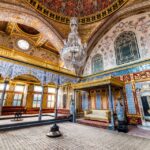
In the afternoon, you board a comfortable coach and drive along the Golden Horn. Here’s the key: you pass by without stopping, but your guide narrates what you’re seeing. You’ll spot places like Topkapı Palace area views, Dolmabahçe palace, and the outlines of historic neighborhoods plus religious landmarks.
Even without stops, this works well because the Golden Horn is one of those Istanbul features that looks different from every angle. The narration helps you connect the skyline and shoreline to the city’s Roman-era walls and older neighborhoods.
If your goal is only photos, you may feel less thrilled. If your goal is understanding, the drive-by commentary is a smart use of time.
Pierre Loti Hill and the cable car: quick ride, big view payoff
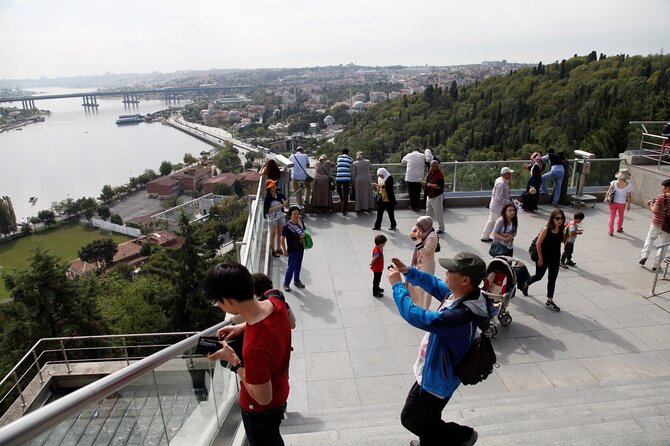
Next comes the climb to Pierre Loti Hill by bus. The plan is simple: go up, take photos, enjoy the view over the Golden Horn, and learn the story behind the name tied to the French novelist Pierre Loti, who spent time in Istanbul and wrote the novel Aziyade.
Then you descend by Istanbul cable car, and the ticket is included. This is one of the more time-efficient inclusions of the day: a short ride, then you’re ready for the next stop.
One caution: road traffic can eat time in Istanbul, and some people end up waiting longer than expected. If you hate lines, keep your expectations realistic. The view is the point.
Eyüp Sultan Mosque: the Ottoman ritual site you shouldn’t skip
Eyüp Sultan Mosque is a deeply respected site, and the visit includes the tomb of Abu Ayyub al-Ansari—a close companion of Prophet Muhammad. The guide also explains why this place matters in Ottoman tradition: it’s linked to the ceremonial moment where Ottoman sultans were girded with the Sword of Osman at the start of their reign.
This stop feels different from the tourist-heavy center because it’s about faith and tradition, not just landmarks. Dress rules still apply, and quiet, respectful behavior goes a long way.
The Fatih pause: Turkish delight and apple tea break
You also get a short break in the Fatih area with time to taste Turkish delight and apple tea. It’s brief, but it’s a smart reset after walking and mosque time. Think of it as your small reward before the sea-level Istanbul portion.
Don’t rely on this as lunch. It’s more of a snack and a breather than a full meal plan.
Bosphorus cruise: skyline from the water and the two-continent moment
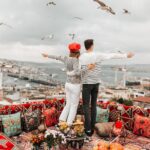
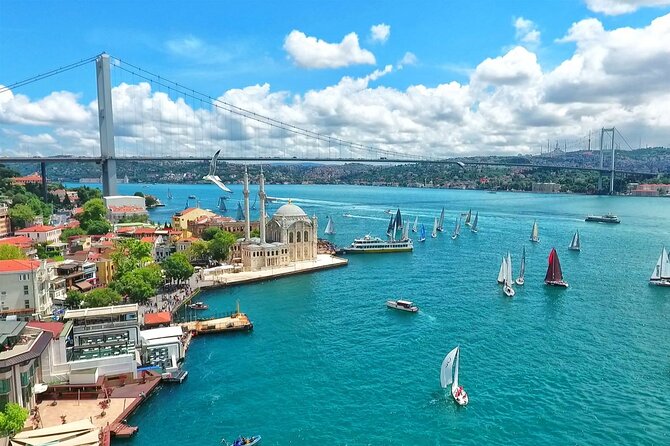
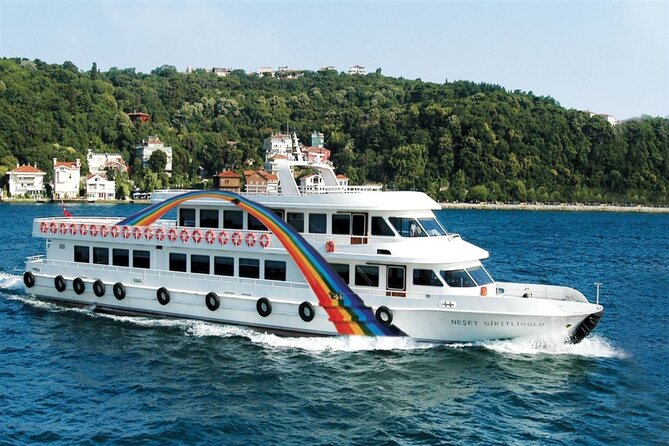
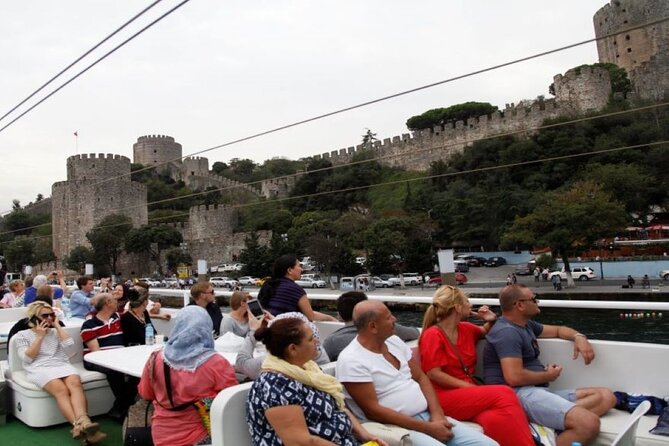
The day ends (and really, the centerpiece becomes the water) with a Bosphorus cruise lasting about 1 hour 30 minutes. The route is designed so you see major landmarks from the sea, including views of the Golden Horn, Topkapı Palace, Dolmabahçe Palace, Maiden’s Tower, Galata Tower, Blue Mosque, and the Ortaköy Mosque area.
You also get a cool conceptual payoff: the cruise shows Europe and Asia and the bridges that connect them. That moment helps the whole Istanbul story click into place, because the city’s identity isn’t one thing—it’s the overlap.
If you want more than views—like commentary about what you’re seeing—your guide may or may not provide narration during the cruise. Plan to take in the scenery first and be flexible.
Shopping stops: useful if you want souvenirs, frustrating if you don’t
You’ll include shopping time in the day—both a brief stop before the bazaar and time in the bazaar itself. Some travelers find it helpful for picking up practical souvenirs. Others feel it’s a waste when they want more time at the monuments.
If you’re even slightly price-sensitive, do this:
- Decide what you want before you enter.
- Set a spending limit.
- If a stop feels like a sales show, treat it like a quick walk-through and move on.
Also, if you’re visiting on a Sunday or a religious holiday, remember the Grand Bazaar can be closed, so the day’s balance shifts. Istanbul still delivers, but the shopping rhythm changes.
Guides and group flow: why the small-group size matters
A theme in feedback is that the best versions of this tour happen when the guide keeps the group together and reads the room—people needing a slower pace, a quick bathroom check, or help reassembling after crowd bottlenecks.
You might see guide names like Baki, Sarin, Sihen, or Sean associated with positive experiences. That’s a good sign, because it suggests the guides tend to be active and problem-solving—not just reciting dates and moving on.
Still, remember this is not a private tour. You’re traveling with others, and sometimes a guide has to balance multiple needs at once. If you’re the type who gets stressed by small delays, bring a patient mindset.
Should you book this Istanbul highlights day?
You should book if:
- You want a structured highlights route without planning transport between sites
- You care about guided context at the big hitters: Blue Mosque, Hagia Sophia, Hippodrome, Eyüp
- You’d rather get the Bosphorus cruise and cable car ticket handled for you
- You’re okay with a day that includes walking and some shopping time
Skip (or consider a different style) if:
- You want a slow, no-pressure day with lots of free wandering
- You dislike sales stops and fashion-show style interruptions
- You’re extremely sensitive to timing slips caused by Istanbul traffic or queues
- You’re visiting on a Sunday (Grand Bazaar closure risk)
If your goal is Istanbul’s “greatest hits,” this tour is set up to deliver that with a manageable group size. Bring comfortable shoes, plan on cash for Hagia Sophia, and keep lunch flexible—and you’ll likely feel like you squeezed more out of your day than you expected.
FAQ
Is Hagia Sophia admission included in the tour price?
No. Hagia Sophia has a separate skip-the-line entrance ticket cost of €25 per person, and it must be paid in cash.
What is included for transportation and major activities?
If you select the hotel option, you get hotel pickup and drop-off. The tour also includes the Bosphorus cruise ticket and the Pierre Loti Hill cable car ticket, plus guided visits at several key sites.
What about lunch and tips?
Lunch is not included (you’ll have time for it during the day and pay for it yourself). Tips are also not included.
How long is the tour and what time does it start?
The tour runs about 7 hours and starts at 9:00 am.
Is the Grand Bazaar always open?
No. The Grand Bazaar is closed on Sundays and on religious holidays.
What should I wear for the mosques?
Dress appropriately: long pants, a long-sleeved shirt, and bring a scarf to cover your head.