REVIEW · ISTANBUL
Istanbul: Chora Mosque Entry Ticket
Book on GetYourGuide →Operated by DEM MUSEUMS · Bookable on GetYourGuide
A church turned museum turned mosque, Chora is a real time machine. You go for the Byzantine mosaics and frescoes, then you stay for how the space feels like a calm corner of Istanbul instead of a tourist stampede. The one catch is that the mosque’s opening can change with Friday closures and prayer schedules, so plan your timing carefully.
Two things I particularly love: the artwork is preserved in a way that makes it easy to spot the fine detail, and the interior atmosphere is peaceful enough that you can actually look, not just rush. The other reason this ticket feels worth it is simple: the skip-the-ticket-line benefit can save you time when the area is busy.
If you’re the type who needs guaranteed, clockwork access, this may be less ideal on days when prayer blocks entry. And if you forget the dress code (or your scarf), you’ll lose momentum before you even start viewing the mosaics.
In This Review
- Key things to know before you go
- Why Chora (Kariye) Mosque is more than another Istanbul stop
- Inside Chora: where you should focus your attention
- The one-hour visit: how to make the most of your time
- Price and value: what $27 buys you (and what it doesn’t)
- Skip-the-line timing: how your ticket works with your smartphone
- Prayer schedules and Friday closures: the real logistical boss fight
- Dress code rules that can stop you cold
- Meeting point: where you actually go
- What to bring: the small list that prevents big problems
- Is the ticket worth it if Chora is outside the main tourist loop?
- Who should book this Chora entry ticket (and who might skip it)
- Should you book the Chora (Kariye) Mosque skip-the-line ticket?
- FAQ
- What is the duration of the Chora Mosque entry ticket?
- Where is the meeting point for the ticket?
- How much does the Chora Mosque entry ticket cost?
- Does the ticket include skip-the-line entry?
- When will I receive my entry ticket?
- Is the mosque open on Fridays?
- Are visitor hours affected by prayer times?
- What dress code should I follow?
- Are children admitted for free?
- Can I bring a stroller or pets?
Key things to know before you go

- World-class mosaics and frescoes inside Chora (Kariye) Mosque
- Skip-the-ticket line with an email ticket and smartphone QR
- UNESCO World Heritage List site (1985) with layers of Byzantine and Ottoman use
- Dress code matters: no shorts or sleeveless tops; scarf/body cover available on-site
- Prayer times can stop entry and Friday is closed to visitors
- One-hour visit window that works well if you pace yourself
Why Chora (Kariye) Mosque is more than another Istanbul stop
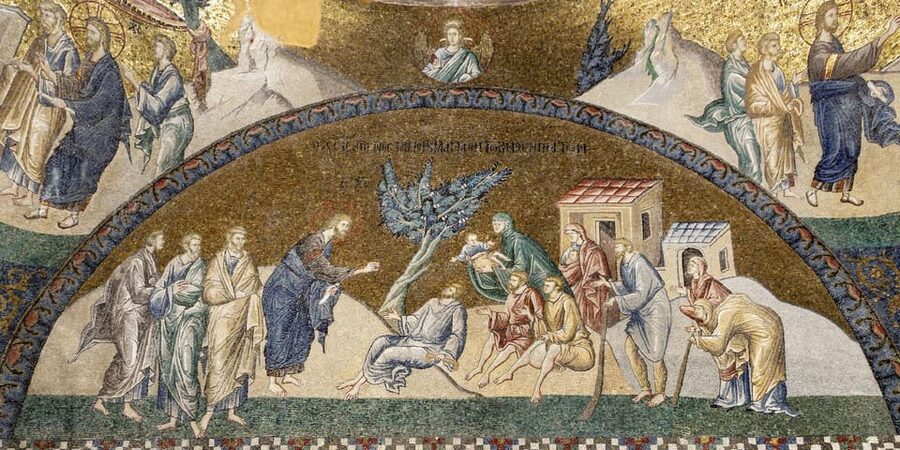
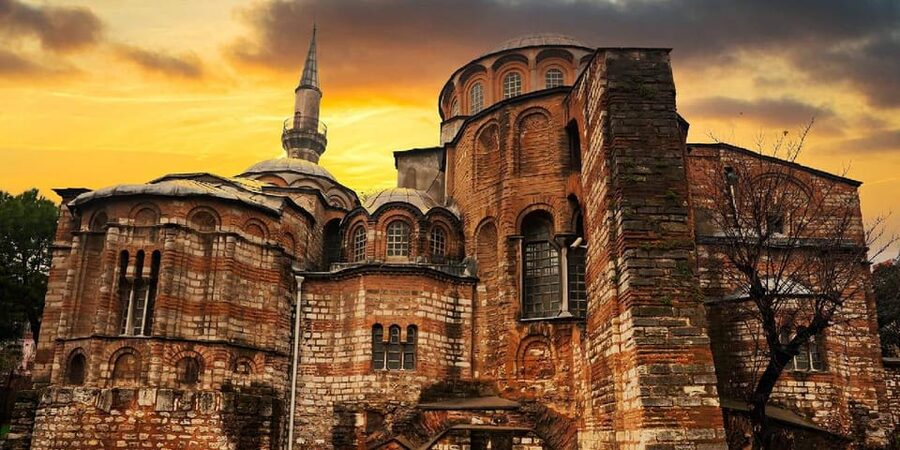
Chora Mosque, also called Kariye, sits in the Edirnekapı neighborhood of Fatih. It’s one of those Istanbul landmarks where the walls don’t just hold decoration. They hold centuries. The site traces its deep roots back to the 6th century, and you’ll feel that age the moment you’re inside.
Here’s the big reason this place matters: it began as a church, later became a museum, and is now a mosque. That change in religious life didn’t erase what makes Chora famous. UNESCO placed it on the World Heritage List in 1985 as a cultural heritage site, which is basically the world saying: pay attention to this.
Outside, you might notice the mosque’s pale pink look, which makes it feel different from many other major religious buildings you’ll see in Istanbul. Inside, that contrast continues. You’re not just looking at Ottoman-era religious space. You’re also meeting the earlier Byzantine artistic world, preserved and still readable.
You can also read our reviews of more tours and experiences in Istanbul.


Inside Chora: where you should focus your attention
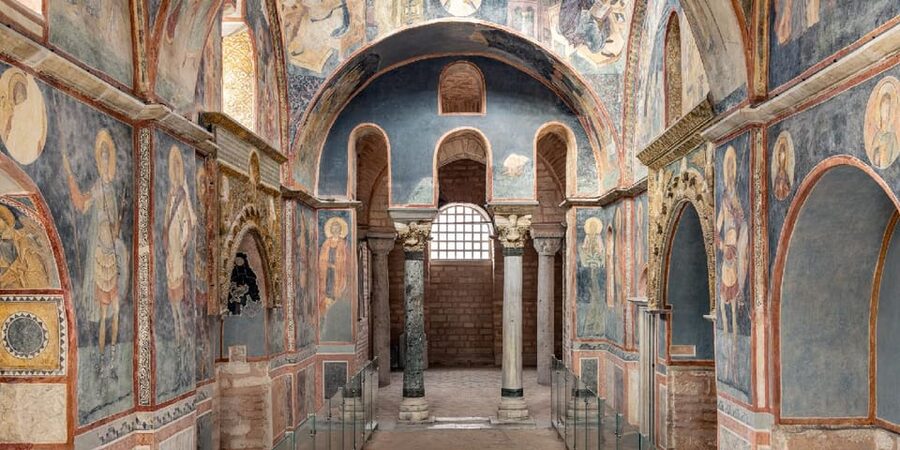
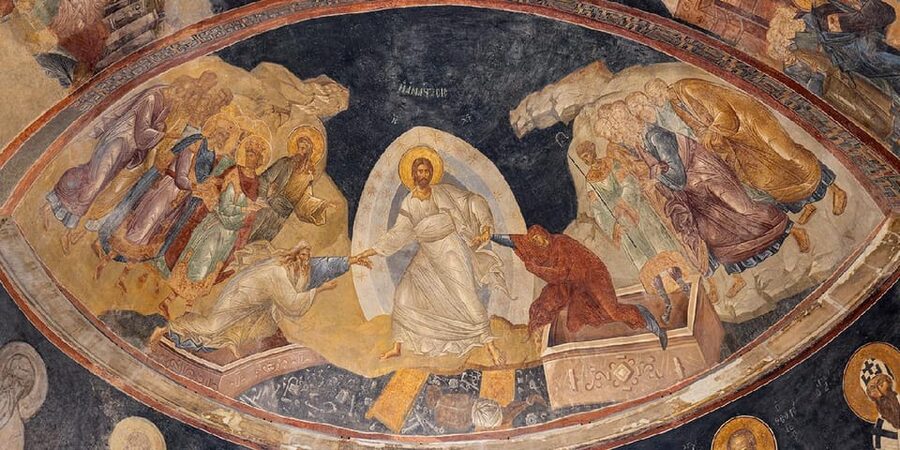
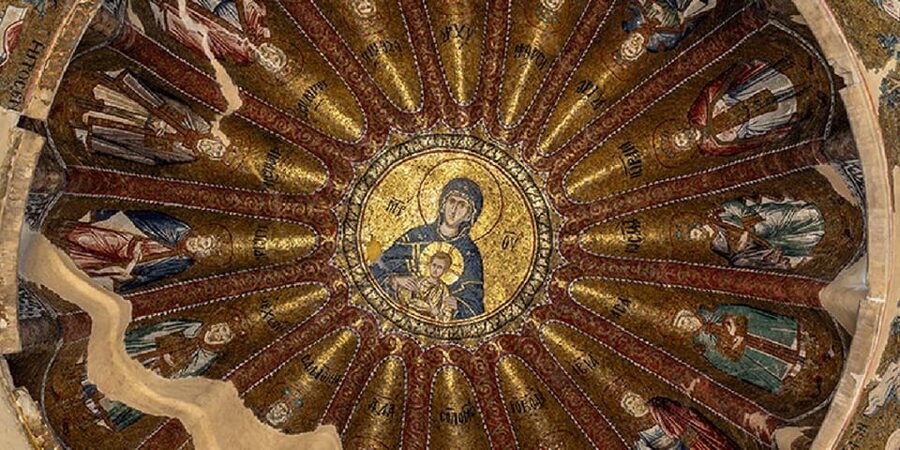
The most important part of Chora is the art. This is where people come for the mosaics and frescoes—often described as among the most exquisite you’ll see anywhere. The ceilings and walls carry images that were designed to teach, inspire, and guide attention, even if you don’t know every icon detail.
When you arrive, take a breath first. Seriously. The interior tends to feel quiet and reflective, which helps you slow down. Then start with the big visual zones—ceilings, upper walls, and focal panels—before moving into smaller details. The artwork is dense, and rushing makes it blur.
A couple of practical tools can help you read what you’re seeing. Some sections use QR codes, and scanning them can give you helpful information about the history and meaning of specific mosaics. There’s also mention of a free audio guide available on-site, which is a nice option if you prefer listening over reading.
One more detail to plan for: in at least one area, you may be asked to remove your shoes to view certain mosaics more clearly. That’s not the whole visit—just an occasional rule in specific sections—but it’s worth keeping your socks in mind.
The one-hour visit: how to make the most of your time

This ticket is built around a 1-hour visit. That’s short enough to be convenient, but long enough if you pace it. Your goal shouldn’t be to “see everything.” Your goal should be to see the main mosaic zones with enough time to notice the craft.
I’d do it like this:
- Spend the first 10–15 minutes getting oriented and identifying the highest-impact panels.
- Use the middle portion to focus on the mosaic scenes that catch your eye first.
- Leave the last 10 minutes for smaller details and any sections that feel most meaningful.
If you’re an art lover, you’ll naturally slow down. If you’re more of a “first time in Istanbul” visitor, you’ll still be able to enjoy it without getting lost in terminology. The artwork is visually powerful even when you’re not sure what every scene represents.
One of the smartest things you can do in a place like this is to choose your pace early. If you sprint at the start, you’ll miss the parts that make Chora special: the fine detail and the emotional mood created by the images.
Price and value: what $27 buys you (and what it doesn’t)
At $27 per person, the ticket is priced similarly to many “major attraction” experiences in Istanbul, but it’s the value add that makes it work. You’re paying for the entry ticket plus the skip-the-ticket-line benefit. In a site like Chora, where access can be affected by prayer timing, saving time before you reach the entrance is a real win.
Not included: food and drinks, hotel pickup/drop-off, and personal expenses. That means you’ll want to plan your snack or water on your own. The benefit of booking this is that it’s focused: you show up, you enter, you view, and you’re done—no long tour script required.
One more note on value: because it’s in a neighborhood setting (Edirnekapı), you might not be combining it with “five stops on one street.” This ticket is best if you treat Chora as a real visit, not a quick bathroom stop between other landmarks.
Skip-the-line timing: how your ticket works with your smartphone
This is a skip-the-ticket-line experience, and the key detail is how you prove entry. Your entry ticket is sent via email on the morning of your event date for this mosque. You’ll show your ticket on your phone using the QR code.
What you should do before you leave your hotel:
- Make sure your smartphone is charged (that’s explicitly recommended).
- Be ready to open the email fast at the entrance.
- Keep the QR code accessible so you don’t fumble while other people are waiting.
There’s also mention of free internet access included with the experience, which can be helpful if you’re trying to load your ticket when your connection is weak. In plain terms: don’t count on perfect Wi‑Fi from your hotel; count on your phone working.
If you’ve ever waited at a ticket window in a high-demand area, you’ll appreciate the setup here. Even if you arrive and see no line, skip-the-line is still useful because it reduces stress when access is time-sensitive.



Prayer schedules and Friday closures: the real logistical boss fight
Chora Mosque is not always open in a predictable way. The mosque is closed to visitors on Fridays. And visitor hours can change entirely based on prayer schedules.
The mosque will be closed to visitors 30 minutes before prayer times and will remain closed during prayer. That means your “I’ll arrive at 11:00” plan might fail if prayer timing cuts in.
My practical advice: build slack into your day. Aim to arrive earlier than you think you need. And if your schedule is tight, don’t stack Chora as a last-minute stop. It’s the kind of place where you want to walk in calm, not sprint and then get blocked at the door.
Also keep in mind: visitor hours may be restricted or halted depending on prayer activity. That’s not a problem you can solve with planning alone. It’s simply the reality of visiting an active mosque.
Dress code rules that can stop you cold
Chora enforces a dress code, and you’ll want to respect it before you get to the entrance.
Rules you should expect:
- Shorts aren’t allowed.
- Sleeveless shirts aren’t allowed.
- For women, a scarf is required to cover the head (if you don’t have one, you can buy a scarf and body cover from the desk).
Pets aren’t allowed. Assistance dogs are allowed. Strollers are also a factor: you’ll need to fold your stroller and carry it in your hand.
Good news: the site is listed as wheelchair accessible, so mobility shouldn’t be a deal-breaker. Still, be prepared for how people move inside a historic building.
If you want one simple mindset: treat the dress code as part of the experience. It helps you blend in and it keeps you from losing time right when you’re most excited.
Meeting point: where you actually go

Your meeting point is straightforward: go to the Chora Mosque.
Because there’s no hotel pickup and there’s no listed guided route through other sites, you’ll be doing this as a standalone destination. That’s actually good. It gives you control. You’re not negotiating crowds across multiple locations.
Just remember: the mosque’s opening can change. So getting there with enough time to handle a delay matters more than anything else.
What to bring: the small list that prevents big problems
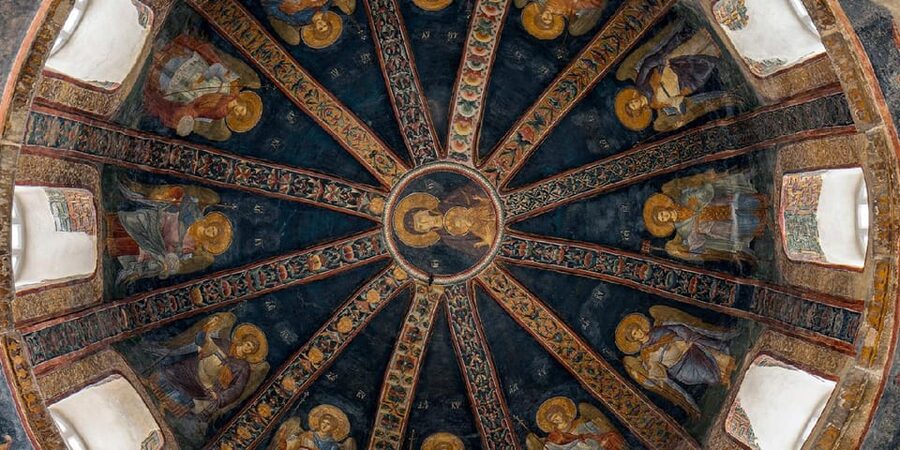
The essentials are simple, and the rules are specific enough that it’s worth checking your bag before you leave.
Bring:
- A charged smartphone.
- For children: a passport or ID card (kids under 8 get free admission, and the age needs verification at the entrance).
That’s it for the required items listed. Everything else is optional based on your habits—water, a light layer if you run hot, and patience.
Also, this is a non-refundable activity. So if your plans change dramatically, you’ll need to handle it carefully.
Is the ticket worth it if Chora is outside the main tourist loop?
Chora is a bit off the most obvious tourist paths. It’s not a “walk out of one famous building and into another famous building” situation. That’s part of why people find it calmer than some higher-traffic stops.
The upside of being off the center: you may get an experience that feels more focused. The area around the mosque can feel local rather than choreographed for crowds. One nearby café is mentioned as friendly, and there’s also a nearby shop with Turkish design goods, so you can add a relaxed pause before or after your visit.
The downside: you shouldn’t assume you’ll fit it perfectly between other major landmarks without effort. If Chora is on your must-see list, plan it like it deserves the time.
Who should book this Chora entry ticket (and who might skip it)
Book it if you:
- Care about Byzantine art and Christian icon scenes preserved inside a living place of worship.
- Want a museum-quality interior without a long, scripted tour.
- Like quieter experiences where you can slow down and actually look at details.
- Appreciate tools like QR code information and a possible free audio guide to help connect images to meaning.
Consider skipping or rethinking if you:
- Need guaranteed entry regardless of prayer times (because closures can happen).
- Are visiting on a Friday.
- Don’t want to follow dress code rules, including head covering for women.
Should you book the Chora (Kariye) Mosque skip-the-line ticket?
If your priority is mosaics and frescoes, this ticket is a strong choice. The skip-the-line feature matters, the visit length fits well, and the site’s artwork is the main event in a way that’s easy to understand once you’re inside.
I’d book it if you can give yourself schedule slack for prayer timing and you’re ready for the dress code. I’d be cautious if you’re traveling with strict time constraints or you’re visiting on a Friday.
FAQ
What is the duration of the Chora Mosque entry ticket?
The visit is listed as 1 hour.
Where is the meeting point for the ticket?
You go to the Chora Mosque.
How much does the Chora Mosque entry ticket cost?
The price is $27 per person.
Does the ticket include skip-the-line entry?
Yes, the ticket includes skip the ticket line.
When will I receive my entry ticket?
The entry ticket is sent via email on the morning of the event date.
Is the mosque open on Fridays?
No. The mosque is closed to visitors on Fridays.
Are visitor hours affected by prayer times?
Yes. The mosque is closed to visitors 30 minutes before prayer times and remains closed during prayer.
What dress code should I follow?
You must comply with the dress code. Shorts and sleeveless shirts are not allowed. A scarf and body cover can be purchased from the desk if needed.
Are children admitted for free?
Children under 8 receive free admission, but you must present a document verifying the age at the entrance.
Can I bring a stroller or pets?
Pets are not allowed. Strollers must be folded and carried in your hand. Assistance dogs are allowed.