REVIEW · ISTANBUL
Istanbul: Hagia Sophia and Blue Mosque Tour with Tickets
Book on GetYourGuide →Operated by Istanbul E-pass · Bookable on GetYourGuide
Three legends, one tight walk through Istanbul. I love how the tour connects Hagia Sophia’s two-religion story with the Blue Mosque’s Iznik tile interior. It also gives you the big-picture thread that ties the sites together around Sultanahmet Square.
A big plus here is the human factor: guides like Ibrahim and Garbi earn repeat praise for being engaging, flexible with group size, and tuned in to questions. The one real drawback to plan for is that, even with your entrance ticket, there’s no skip-the-line service at Hagia Sophia and the Blue Mosque, and security lines can take around 45 minutes in peak season.
In This Review
- Key highlights worth building your day around
- Why this Hagia Sophia and Blue Mosque tour fits Istanbul best
- Meeting at the double-decker stop: finding your guide fast
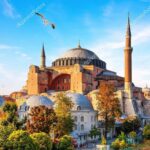
- Hagia Sophia: 1500 years of meaning under one massive dome
- The Blue Mosque stop: Sultanahmet Mosque and Iznik tile detail
- Hippodrome of Constantinople: chariot-race grandeur and one great photo stop
- Tickets, queues, and what to expect when security lines hit
- Price and value: does $48 make sense for Istanbul’s top sites?
- Who this tour suits best (and who should think twice)
- The role of your guide: why some names get mentioned a lot
- Should you book this Hagia Sophia and Blue Mosque tour?
- FAQ
- How long is the tour?
- Where do I meet the guide?
- What’s included in the ticket?
- Are food and drinks included?
- Do I need a headscarf?
- Is there a skip-the-line service?
- What should I wear or bring, and what is not allowed?
- Is the tour suitable for wheelchair users?
- What language is the tour guide?
- Is free cancellation available?
Key highlights worth building your day around
- Hagia Sophia’s 5-year build story: you get the timeline people remember and the details people miss.
- Iznik tiles in the Blue Mosque: you’ll know what you’re looking at before you stare at it.
- The Hippodrome’s famous centerpiece: photo time with the Obelisk of Theodosius.
- Guides who steer around crowds: the flow can change to reduce long queue time.
- Real group-size management: from smaller groups up to very large ones, pacing stays controlled.
- Tickets included for Hagia Sophia: you don’t have to juggle that step in the middle of your limited time.
Why this Hagia Sophia and Blue Mosque tour fits Istanbul best
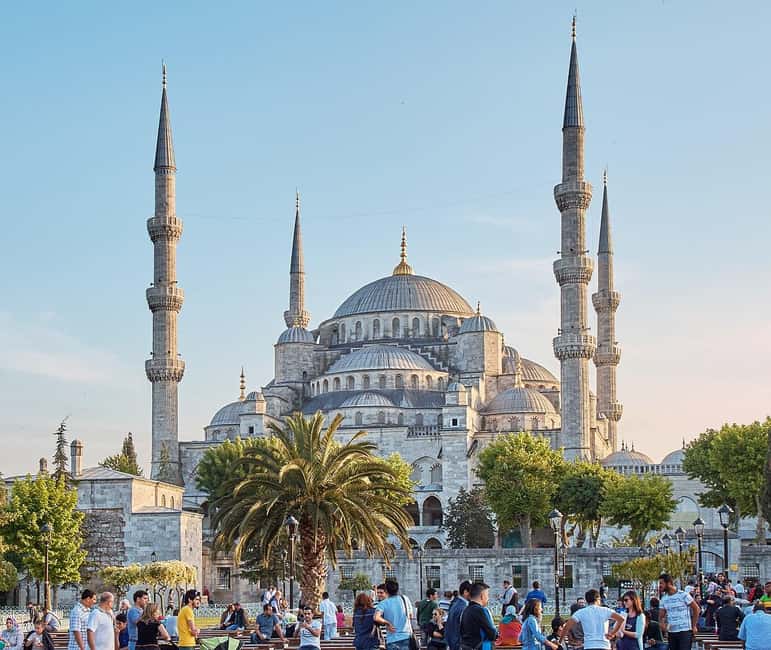
If you only have a morning or early afternoon in Sultanahmet, this format makes sense. In about 2.5 hours, you hit three heavyweights: Hagia Sophia, the Blue Mosque, and the Hippodrome area—without wasting time bouncing between separate tours.
What I like most is how the stops are treated like chapters, not separate photo ops. Hagia Sophia is framed as a headquarters of Orthodox Christianity, then as a first mosque after the conquest, and later as a coronation place for Roman emperors and a meeting spot for the Sultan and his people. That context changes how you read the building when you’re standing in front of it.
And the pace is purposeful. You get a guided visit first at Hagia Sophia (about 1 hour), then the Blue Mosque (about 45 minutes), then a shorter guided walk and photo stop around the Hippodrome (about 30 minutes). You won’t linger forever, but you’ll leave with solid mental notes.
You can also read our reviews of more tours and experiences in Istanbul.
Meeting at the double-decker stop: finding your guide fast
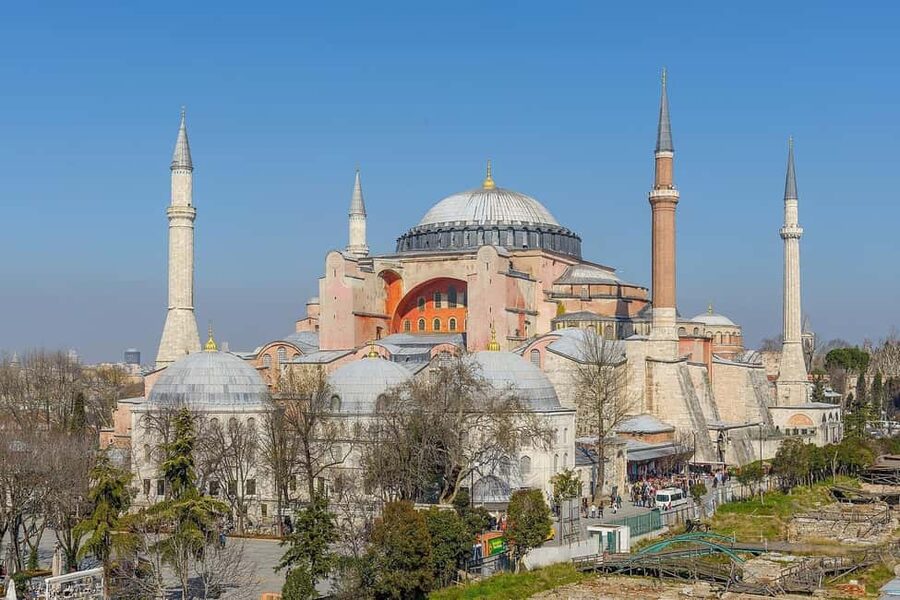
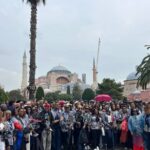
This tour starts in a very practical way. Meet at the Double Decker Sightseeing Tourist Bus Stop across from Hagia Sophia, and your guide will be holding a white flag with the Istanbul E-pass logo.
That matters because Hagia Sophia’s area can feel like a maze. If you’re trying to show up close to time, the bus-stop landmark is easy to verify on foot and from the street.
Before you go, check what’s expected of you. Bring comfortable shoes—you’ll be walking and standing—and a headscarf is listed as a must for entering. The tour also has “nope” items: shorts, short skirts, baby strollers, flash photography, and backpacks aren’t allowed.
Hagia Sophia: 1500 years of meaning under one massive dome
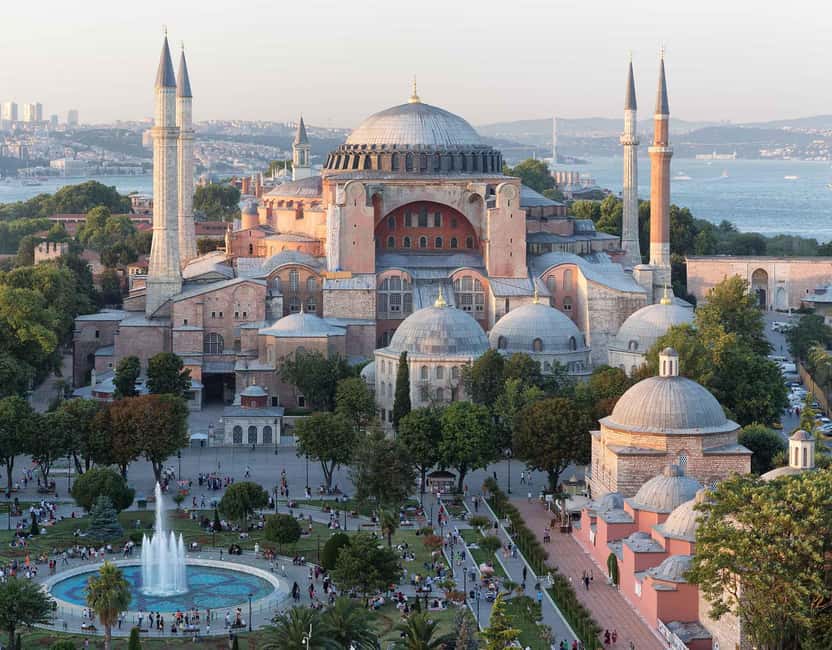
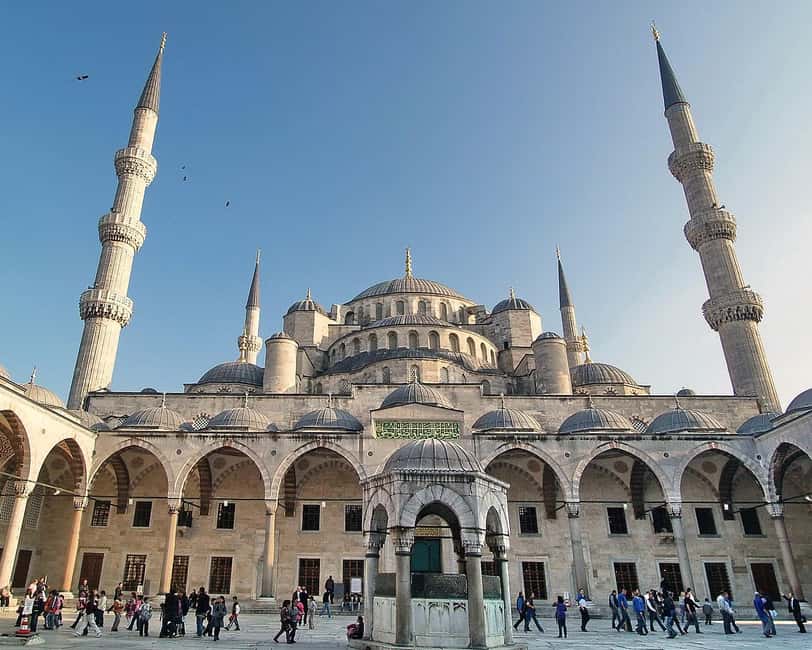
Your first guided stop is Hagia Sophia, where the tour gives you about 1 hour inside with a live guide. The pitch here isn’t just architecture. It’s the building’s role as a symbol for two religions—Orthodox Christianity first, then Islam after the conquest—so you understand why the place carries layers.
Here are the specific ideas you’ll want to keep in mind while you look around:
- It’s often described as a building that’s stood in essentially the same spot for around 1500 years.
- Construction is highlighted as happening within 5 years.
- The dome is discussed with impressive scale: 55.60 meters in height and 31.87 meters in diameter, and it’s noted as the biggest dome for about 800 years.
- The guide points out how the building’s religious imagery relates to time periods, including the idea of depictions of different religions being shown side by side.
You’ll also hear why this site mattered politically. It’s described as a coronation place for Roman emperors, and later as a meeting point between the Sultan and his people. That’s useful because Hagia Sophia isn’t just art and stone—it’s power in built form.
One practical drawback: entry can still be slow. Even though your package includes an entrance ticket to Hagia Sophia, the tour notes that skip-the-line isn’t offered at this specific site. In peak season, the security line might take around 45 minutes. The guide’s job is to keep you engaged during the wait with stories and tidbits, but the clock is still the clock.
The Blue Mosque stop: Sultanahmet Mosque and Iznik tile detail
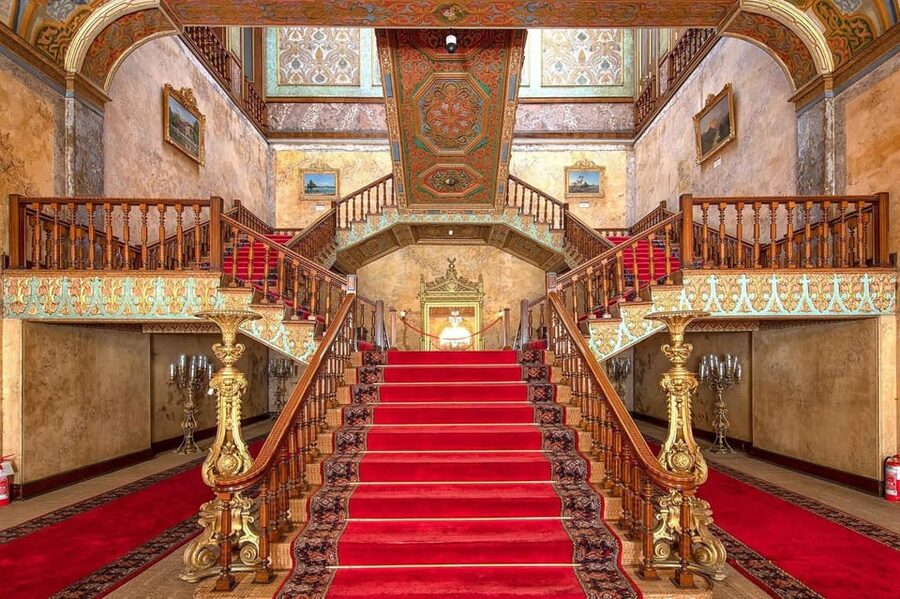
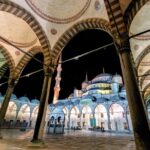
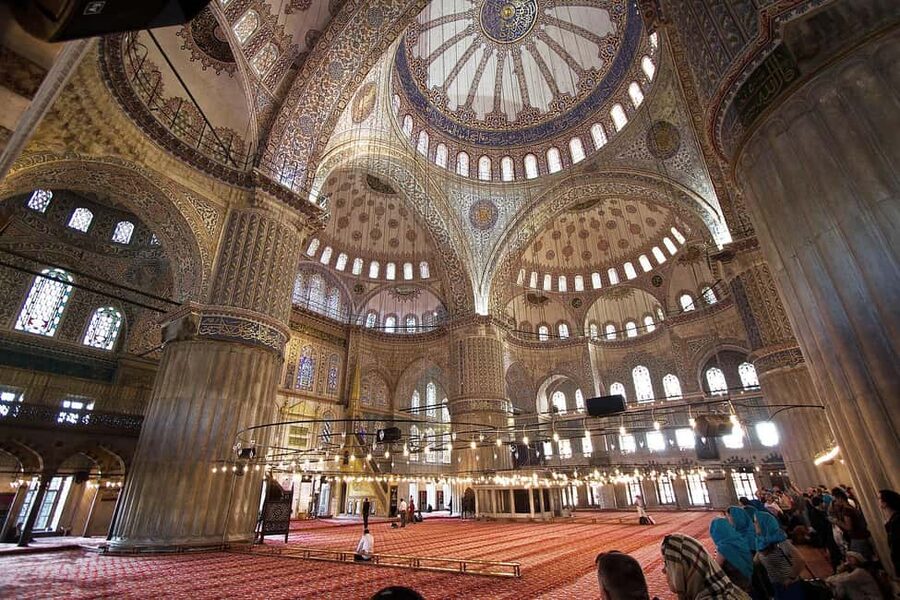
Next comes Sultanahmet Mosque, usually called the Blue Mosque, with about 45 minutes of guided time. This is the stop where your eyes get trained quickly. The interior is famous for its tiles, and the tour explains that the tiles are tied to Iznik, known as the most famous tile-producing city in Turkey.
Here’s what I think makes the Blue Mosque visit stronger with guidance: the guide gives you the language to interpret the decoration instead of just admiring it. When you know it’s Iznik-style craftsmanship being referenced, you can slow down and actually see patterns, not only color.
The tour also covers Ottoman naming traditions in a way that’s easy to remember. Instead of mystical wordplay, mosques could be named after:
- the order to build and
- the person who funded it.
That’s why the “Sultanahmet” name shows up in three related forms: the mosque itself, the Sultan connected to the construction, and the Sultanahmet area. It’s a small detail, but it helps you avoid confusion when you’re reading signs or maps later.
Dress rules still matter here. The tour lists short skirts and shorts as not allowed, and a headscarf is part of what you should bring. If you arrive underdressed, you risk delays that eat into the short guided time you have.
Hippodrome of Constantinople: chariot-race grandeur and one great photo stop
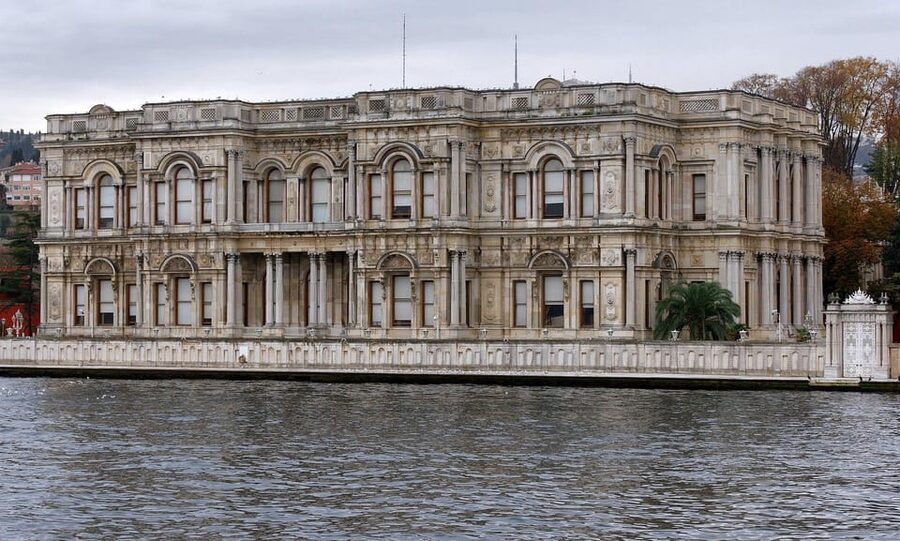
The last named site is the Hippodrome of Constantinople, in what’s now Sultanahmet Square. You’ll get a photo stop plus a short guided walk, totaling about 30 minutes.
This part isn’t about going inside buildings. It’s about understanding the setting. The Hippodrome is described as originally built in the 3rd century CE by Emperor Septimius Severus, then expanded in the 4th century by Constantine the Great. It served as a stage for chariot races and public events—basically the big arena where city life showed off its status.
And yes, the Obelisk of Theodosius is called out as a major feature. It’s described as a towering Egyptian relic brought in the 4th century. Even if you don’t know the story yet, you’ll recognize it in the square as one of the main vertical landmarks.
If you like tight itineraries, this stop is a good ending. You’re not stuck for long, but you leave with a clearer sense of why Sultanahmet is more than “just beautiful mosques.”

Tickets, queues, and what to expect when security lines hit
This is where you should set expectations correctly.
Your inclusions state an entrance ticket to Hagia Sophia. Some versions of the experience also include an entrance ticket to Basilica Cistern if that option is selected, and the guide might mention this depending on what you purchased.
But for the two major mosque entrances, you should assume you still need to go through security. The tour specifically notes no skip-the-lines service for Hagia Sophia and the Blue Mosque. In peak season, the security line might require about 45 minutes of waiting.
The good news: the tour emphasizes that your guide will keep you engaged while you wait. In the feedback you’ll see how guides handle this time—keeping conversations going, sharing stories, and making the wait feel like part of the tour rather than pure downtime.
Also, the groups can be mixed in size. One review notes groups ranging from 8 to 75, so expect that the guide may adjust pacing and conversation to manage everyone. That’s another reason starting on time matters.
Price and value: does $48 make sense for Istanbul’s top sites?
At $48 per person, this tour prices like a smart shortcut for limited time. You’re paying for:
- a professional English guide
- an entrance ticket to Hagia Sophia
- guided time at all three key sites in the Sultanahmet area
The value is strongest when you’re short on hours. Without a guide, you might still see the buildings, but you’d miss how the tour ties together the political and religious roles: Hagia Sophia as a center of Orthodox Christendom, then a mosque after conquest, with imperial coronations and sultan-era gatherings in the story.
Could you DIY it cheaper? Sure. But Istanbul’s biggest sites are also the slowest for decision-making when you’re tired and juggling lines. The guide’s role—especially when guides are praised for keeping groups moving and adjusting order to avoid crowds—can be the difference between a stressful afternoon and a smooth one.
And remember: food isn’t included. So if you were hoping that $48 covers everything, it doesn’t. Still, you’re also not being pushed into a long meal stop; your time stays focused on the monuments.
Who this tour suits best (and who should think twice)
This experience makes the most sense if you:
- want to see three major sites without spending half a day commuting
- like history explained in plain language, not just plaques
- can handle some standing and walking in a short window (your shoes matter)
It may be a poor fit if you need step-free access, because it’s listed as not suitable for wheelchair users. It’s also listed as not suitable for people with pre-existing medical conditions, so consider that before booking.
If you hate waiting in lines, there’s another consideration. Even with your ticket, the tour notes security waiting can take around 45 minutes at peak season at the two mosque sites. The guide helps with stories, but the line still exists.
Finally, check your wardrobe. You’ll be stopped from entering with prohibited clothing. If you’re traveling light and usually wear shorts or short skirts, this is one of those tours where you’ll want to plan ahead.
The role of your guide: why some names get mentioned a lot
One of the clearest patterns in the feedback is that guides shape the experience more than the route does. Names like Ibrahim, Garbi, Aylin, Semiha Alyin, Onuk, and Ihsan show up repeatedly, with praise tied to:
- being friendly and patient
- answering questions
- explaining cultural and historical context
- managing big groups without losing the thread
- keeping the flow efficient and, in some cases, adjusting order to avoid longer queues
If you care about learning while you walk, that’s your main reason to book this style of tour. The sites are iconic, but the explanation is what makes the time feel earned.
Should you book this Hagia Sophia and Blue Mosque tour?
I’d book it if you’re prioritizing time efficiency and you want a guide to connect the dots between Hagia Sophia, the Blue Mosque, and the Hippodrome. The included Hagia Sophia entrance ticket plus a structured guided route makes the $48 feel fair for a short visit.
I’d hesitate if you’re sensitive to queues or you’re relying on a true “skip the line” experience. The tour is clear that skip-the-line isn’t offered at Hagia Sophia and the Blue Mosque, and security lines can be lengthy in peak times.
If you’re flexible, dress code-ready, and you want context with your photos, this is a solid way to get your bearings in Istanbul’s historic core.
FAQ
How long is the tour?
The duration is listed as 2.5 hours. Start times depend on availability.
Where do I meet the guide?
Meet at the Double Decker Sightseeing Tourist Bus Stop across the Hagia Sophia. The guide will be holding a white flag with the Istanbul E-pass logo.
What’s included in the ticket?
The tour includes an entrance ticket to Hagia Sophia. Entrance to Basilica Cistern is included only if the Basilica Cistern option is selected.
Are food and drinks included?
No. Food and drinks are not included.
Do I need a headscarf?
Yes. A headscarf is listed under what to bring.
Is there a skip-the-line service?
A skip-the-line service is not offered at Hagia Sophia and Blue Mosque. During peak season, security lines might require about 45 minutes of waiting.
What should I wear or bring, and what is not allowed?
Bring comfortable shoes and a headscarf. Not allowed: shorts, baby strollers, short skirts, flash photography, and backpacks.
Is the tour suitable for wheelchair users?
No. It’s listed as not suitable for wheelchair users.
What language is the tour guide?
The tour includes a live English guide.
Is free cancellation available?
Yes. Free cancellation is available up to 24 hours in advance for a full refund.