REVIEW · CAIRO
Egyptian Museum, Mohamed Ali Mosque and Citadel
Book on Viator →Operated by travelconnection001 · Bookable on Viator
Cairo history in one packed, guided stretch. This tour strings together the Egyptian Museum and two major landmarks in historic Cairo, with 2-way hotel transfers to cut the hassle. You get a calm way to see big sights without turning your day into a taxi hunt.
What I really like is the Tutankhamun room focus at the museum, plus the guide help for moving through a place that can feel like it never ends. You’ll also appreciate the pacing at the Citadel and the Mosque of Muhammad Ali, since both are strong “stop-and-look” destinations.
One thing to consider: you’re visiting three major sites in about half a day, so you won’t see every corner of the museum or every room in the buildings. It’s a highlights plan, not a slow crawl.
In This Review
- Key highlights to know before you go
- Why this Egypt Museum, Citadel, and Alabaster Mosque combo works
- Egyptian Museum at NEMC: the smart way to use your 3 hours
- Saladin’s Cairo Citadel: why you’ll actually care about the “defense” angle
- Muhammad Ali Mosque (Alabaster Mosque): photos and meaning, not just sightseeing
- Price and logistics: what you’re really paying for at $70
- Timing and pacing: the 10-person group experience in real life
- Who should book this tour, and who might skip it
- Should you book this Egyptian Museum, Citadel, and Muhammad Ali Mosque tour?
- FAQ
- What time does the tour start?
- How long is the tour?
- Does the tour include hotel pickup and drop-off?
- Are entrance fees included?
- What’s included besides admission?
- How many people are in the group?
- Do I need to bring a printed ticket?
- Is tipping included in the price?
Key highlights to know before you go
- Max 10 people means you get space to hear your guide and ask questions.
- King Tut’s treasures are a major draw at the museum.
- Saladin’s Citadel brings you Cairo’s medieval defenses and hilltop views in one sweep.
- Mohamed Ali’s alabaster mosque delivers big photo angles from the grounds.
- Hotel transfers keep you from worrying about taxis, directions, and timing.
- Entrance fees + water/soft drinks are built into the price, so you can budget cleaner.
Why this Egypt Museum, Citadel, and Alabaster Mosque combo works
Cairo has layers. You can feel them walking from one era into the next. This tour is built for that exact experience: ancient artifacts first, then medieval power, then the 1800s ruler who reshaped parts of Cairo.
The best part is how the day is organized. You start with the Egyptian Museum while your brain is fresh and the museum still has that “let’s get oriented” energy. Then you shift to the Citadel, which helps you understand why Cairo’s leaders cared about control and visibility. Finally, you finish at the Muhammad Ali Mosque, where you’re rewarded with architecture you can actually take in, plus views you can frame for photos.
It also helps that the group stays small. With no more than 10 people, you aren’t pushed forward in a noisy knot. You can follow along without constantly losing your place.
You can also read our reviews of more tours and experiences in Cairo.



Egyptian Museum at NEMC: the smart way to use your 3 hours
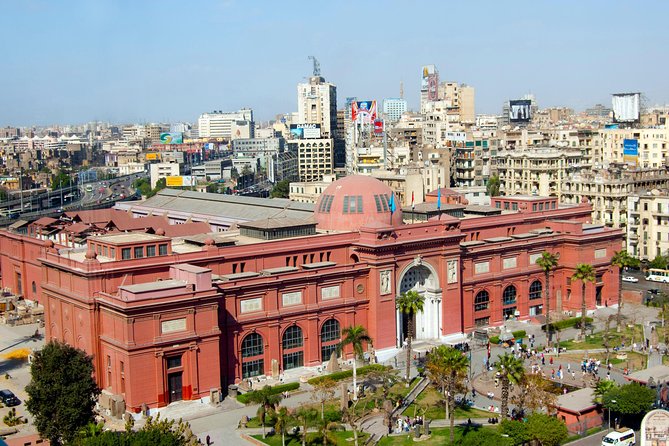
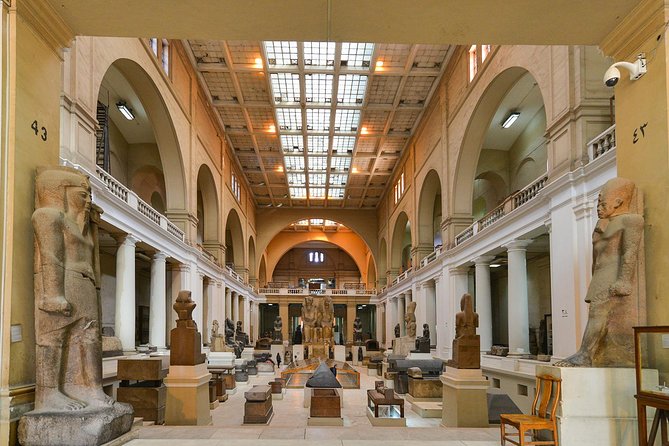
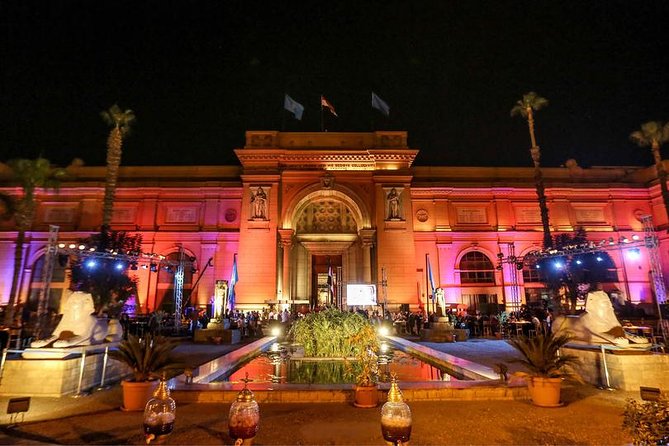
Your morning starts at the National Museum of Egyptian Civilization (NEMC), where the Egyptian Museum is located. Plan for a massive collection: you’ll be stepping into a space with more than 250,000 pieces on display covering thousands of years.
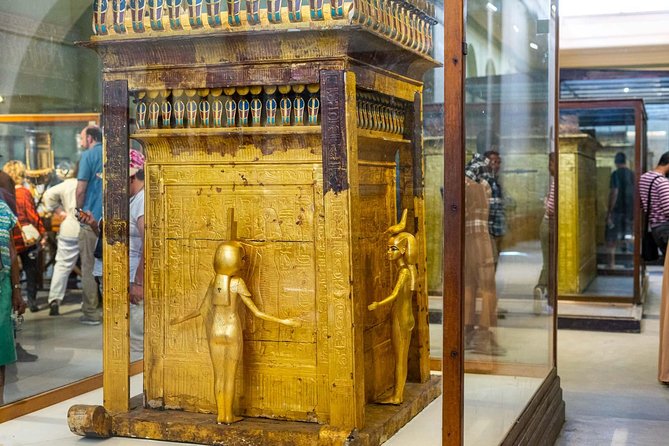
If you only have one museum stop, you want the most famous anchor. Here, that anchor is the Tutankhamen room. The big draw is the tomb-era treasure: jewelry and gold items, kept under wraps for a long time before the tomb was excavated in 1920. Even if you’ve read about Tutankhamun before, seeing the objects in person changes the scale of what you thought you knew.
The guide matters for a practical reason: the museum is crowded, and it’s easy to wander off your intended route. With a guide’s structure, you spend your limited time on what you came for, rather than spending it trying to figure out where to go next.
A tip that’s worth taking seriously: the Tutankhamun display has a history of moving to the new museum when construction is completed. If seeing the King Tut highlights is your top goal, try not to postpone this museum day. Timing can be the difference between “I got it” and “I missed it.”
What to expect:
- Orientation plus a route through major highlights
- Time to slow down for the key rooms rather than sprinting
- A focus on objects tied to well-known stories, like the Tutankhamun collection
Practical note: museum floors and galleries can involve a fair amount of walking. Wear shoes you’d trust on uneven stone. Bring sunglasses and sunscreen for when you step outside between halls and breaks.
Saladin’s Cairo Citadel: why you’ll actually care about the “defense” angle
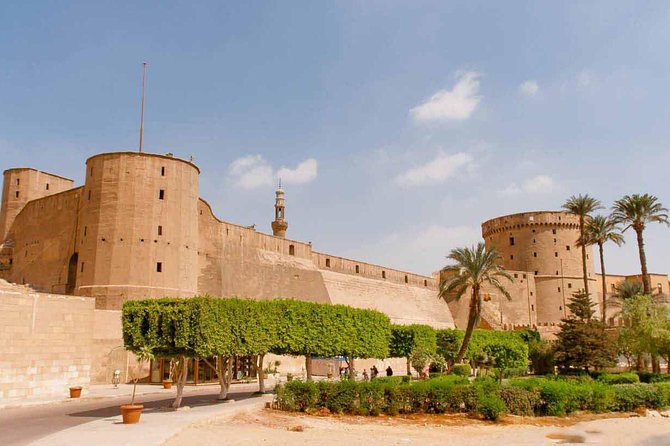
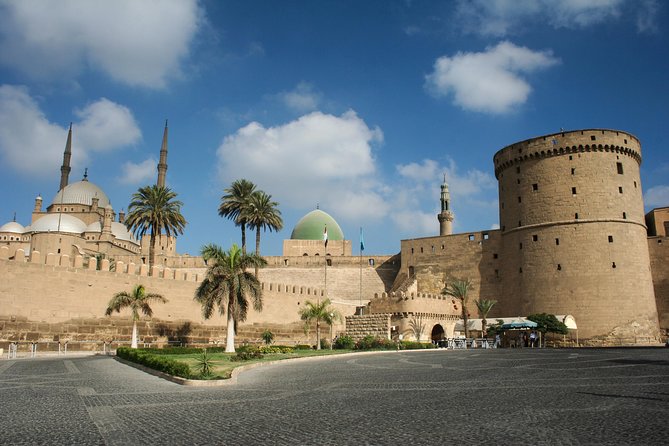
Next comes the Cairo Citadel, connected to Salah El Din (Saladin). This site sits on the Moqattam hills, and the tour frames it in the context of medieval Cairo’s security needs. The Citadel was constructed in 1183 AD to defend Cairo from Crusader armies.
That history detail matters because it changes what you see. Instead of just thinking “big walls,” you understand the logic of the place: height, visibility, and control. Even if you’re not a military-history person, the Citadel is one of those settings where the setting explains the story.
You’ll have about 2 hours here. That’s enough time to walk the grounds, take in the views, and get a coherent explanation of why the Citadel became such a key part of Cairo’s power structure over time. It’s also a good mental reset after the museum, because you can look outward and let your eyes travel.
What to expect:
- A guided walk tied to the defensive history
- Time to absorb the hilltop perspective
- A “Cairo overview” feel that makes the rest of the city make more sense
One consideration: this part can feel warmer if you’re there on a bright day, since you’re on hills and open areas. Hydrate and take short breaks when you can. The tour includes bottled water and soft drinks, which helps you keep the pace comfortable.
Muhammad Ali Mosque (Alabaster Mosque): photos and meaning, not just sightseeing
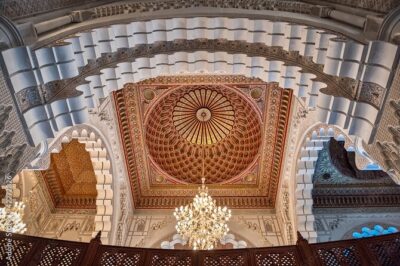
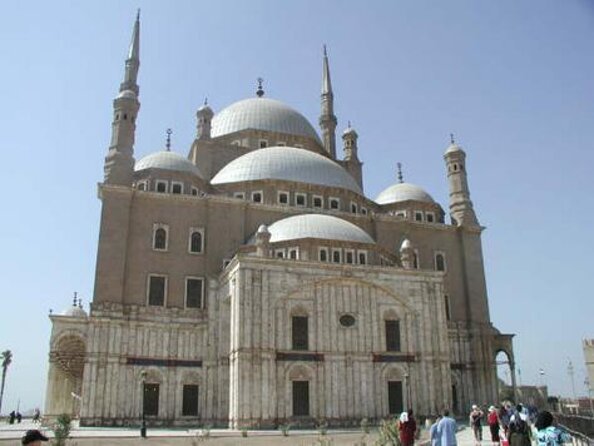
The final major stop is the Mosque of Muhammad Ali, often called the Alabaster Mosque. This is where Cairo’s more recent layers show up, right in the middle of the skyline.
The tour highlights the mosque’s creator: it was designed by the architect Yousif Boushnaq, a Turkish man who came specially from Istanbul to build the mosque for Mohamed Ali. Mohamed Ali ruled from 1805 to 1849, over 45 years, and his influence shows up in how Cairo looks and what it chose to represent.
You’ll get about 2 hours at the mosque area. That’s enough time to appreciate the details, pause for photos, and take in the views from the grounds. In fact, the standout experience here for many people is simply stepping back and realizing how great the sightlines are for city pictures.
What to expect:
- A guided look at the mosque’s design and who commissioned it
- Time to slow down for photos
- A viewpoint moment where the city suddenly feels more understandable
A practical note: dress codes matter in mosques, and it’s smart to plan ahead with clothing that covers appropriately. Even if you don’t know the rules for sure, having a scarf or layer in your bag is a low-effort safety plan.
Price and logistics: what you’re really paying for at $70
The price is $70 per person for about 6–7 hours total. For Cairo, that’s a reasonable package price when you compare it to doing the same mix of places on your own.
Here’s what you’re getting that usually costs extra when you plan it yourself:
- Hotel transfers (2-way), so you’re not coordinating rides between distant parts of the city
- Entrance fees included for the stops
- Soft drinks and bottled water
- All fees and taxes covered
For me, the value isn’t just the total cost. It’s the “less thinking” factor. In Cairo, where traffic and distances can throw off your plans, having transportation and timed pacing handled lets you spend energy on the sights instead of the logistics.
One small detail to budget for: tipping isn’t included. If you like to tip your guide or driver, set aside some cash ahead of time so you’re not scrambling.
Also, you’ll use a mobile ticket, which is handy. You won’t need to hunt for paper or printouts.





Timing and pacing: the 10-person group experience in real life
A tour that hits three landmark stops is always a bit of a balancing act. The key is whether the time feels rushed or whether it feels like you got something meaningful at each location.
With this one, the spacing is pretty deliberate:
- 3 hours at the Egyptian Museum so you can see the most important rooms
- 2 hours at the Citadel so you can walk and look out
- 2 hours at the Mosque of Muhammad Ali for both architecture and views
That rhythm helps you keep your day coherent. You’re not stuck only inside, and you’re not stuck only outside. You also get enough time that you can notice details, not just snap one photo and move on.
Because the group is capped at 10 travelers, the day tends to feel human-sized. You can ask questions when something catches your eye, and the guide can adjust the pace a little if people need a breather.
The possible drawback is the obvious one: highlights take time. If your goal is to see every artifact at the museum, you’ll need more than one museum day. This tour gives you the best-known anchors and enough context to understand what you’re seeing.
Who should book this tour, and who might skip it
This is a great fit if:
- You want a high-impact Cairo day without over-planning
- You like the combo of artifacts plus city power centers (museum → Citadel → mosque)
- You prefer small-group guiding rather than wandering solo through crowds
- You’re short on time and want to hit the main sights between 10:00 am and early afternoon
You might want to skip or pair it differently if:
- You’re the type who wants to spend half your day inside just one museum wing
- You’re very sensitive to walking and switching between indoor and outdoor spots
- You’re already planning to spend extensive time at the museum in a separate, deeper visit
For most people, though, it’s a solid way to get a real sense of Cairo’s timeline in one organized stretch.
Should you book this Egyptian Museum, Citadel, and Muhammad Ali Mosque tour?
Yes, if you want the easiest path to major Cairo landmarks with less hassle. The combination is smart: the Tutankhamen room gives you instant ancient-world focus, the Citadel adds the medieval “why Cairo was defended,” and the Mosque of Muhammad Ali rounds it out with 1800s ambition and iconic architecture.
Book it if you like structure, small groups, and a day that leaves you tired in a good way. Pass if you want to roam freely for hours in one place. But if your goal is to see the highlights and connect the dots, this package is a strong value at $70.
FAQ
What time does the tour start?
The tour starts at 10:00 am.
How long is the tour?
The duration is about 6 to 7 hours.
Does the tour include hotel pickup and drop-off?
Yes. Pickup is offered, and the tour includes 2-way hotel transfers.
Are entrance fees included?
Yes. Entrance fees for the stops are included.
What’s included besides admission?
The tour includes soft drinks and bottled water, along with all fees and taxes.
How many people are in the group?
The experience has a maximum of 10 travelers.
Do I need to bring a printed ticket?
No. It uses a mobile ticket.
Is tipping included in the price?
No. Tipping is not included.