REVIEW · CAIRO
Day Tour of Famous Mosques in Cairo
Book on Viator →Operated by Egyptravel Tours · Bookable on Viator
Cairo’s mosques tell a timeline in stone. This day tour strings together major landmarks in Islamic Cairo, from the Citadel’s Ottoman giant to older Fatimid and early Islamic architecture—then finishes with time in Khan el-Khalili. I especially like that the route is built like a story, not a random checklist, and I like having a real guide (one named Zizou is praised for clear English and smart context). The one potential drawback: two key sites are timed tightly, so you’ll want to move quickly and skip lingering if you like long, slow mosque visits.
At about 7 hours with air-conditioned private transport, it’s a good way to see a lot without spending your whole day negotiating Cairo traffic. And because entrance fees are included for the listed sites, you’re not juggling tickets while you’re trying to look up at domes and minarets.
If your dream is a relaxed, unstructured wander with no schedule pressure, this may feel a bit packed. But if you want high-value highlights, guided context, and a smooth day, it’s a strong option.
In This Review
- Key highlights to know before you go
- Why this Islamic Cairo loop works in one day
- How the day is organized (9:00 am start, private transport, timed stops)
- Stop 1: Mosque of Muhammad Ali (Alabaster Mosque) in the Citadel
- Stop 2: Mosque and Madrasa of Sultan Hassan—big Mamluk scale, quick hit
- Stop 3: Al-Rifa’i Mosque—built to complement a neighbor
- Stop 4: Al-Hakim Mosque—Fatimid origins and a long timeline
- Stop 5: Mosque of Ibn Tulun—an open courtyard that changes the feel
- Stop 6: Khan el-Khalili—shopping with context, not chaos
- Price and value: what $140 gets you (and where it may cost extra)
- Who this tour suits best—and who should rethink it
- Should you book this Day Tour of Famous Mosques in Cairo?
- FAQ
- What is the price for this tour?
- How long is the tour?
- What language is the tour offered in?
- Where does the tour start and end?
- Do you offer pickup from my hotel?
- Is this tour private?
- What’s included in the price?
- What isn’t included?
- Do I get a mobile ticket?
- Can I cancel for a refund?
Key highlights to know before you go
- A guided route through multiple dynasties: Ottoman, Mamluk, Fatimid, and older foundations all in one loop
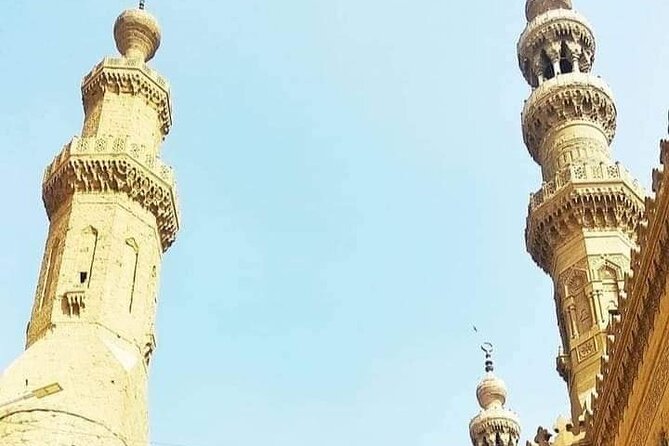
- Citadel skyline moments at the Mosque of Muhammad Ali—Cairo’s silhouette, framed by twin minarets
- Sultan Hassan at scale: a massive mosque-madrasa stop that gives you the big picture fast
- Ibn Tulun Mosque’s open courtyard light: a rare “see the design breathe” kind of stop
- Khan el-Khalili with help for shopping and bargaining, not just sightseeing
- Air-conditioned private transport plus bottled water and entrance fees included
Why this Islamic Cairo loop works in one day
This tour is built around a simple idea: in Cairo, the city’s religious architecture is also its history book. You start at the Citadel, then work your way through standout mosques that represent different eras and styles. The effect is like switching chapters—one stop explains the political power of its time, another shows architectural experiments, and another reminds you how old the city’s sacred core can be.
I like that the itinerary doesn’t just show you pretty buildings. Each mosque also hints at how rulers wanted to be remembered—through size, design, and even placement next to important monuments.
You’re also not stuck with only “mosque time.” The day includes Khan el-Khalili, so you get a market break where you can shift from looking up at minarets to bargaining over everyday crafts and souvenirs.
You can also read our reviews of more tours and experiences in Cairo.


How the day is organized (9:00 am start, private transport, timed stops)
You meet at Tahrir Square and the tour runs for about 7 hours. Pickup is available from your accommodation in Cairo or Giza, and longer-distance pickups can be added for certain areas (like Nasr City, Cairo Airport, Heliopolis City, Mirage City, Rehab City, Madinaty, New Cairo areas, New Capital hotels, or 6th of October). You’ll be contacted ahead of time to confirm the pickup time.
The tour is private—just your group—and includes air-conditioned private transportation. That matters in Cairo, because travel time can eat your energy fast. Here, you’re paying for fewer headaches between stops.
One more practical note: the schedule includes a mix of longer and shorter visits. Sultan Hassan and Al-Rifa’i are shorter stops, so expect a highlight tour rather than a slow, sit-and-stay experience.
Stop 1: Mosque of Muhammad Ali (Alabaster Mosque) in the Citadel
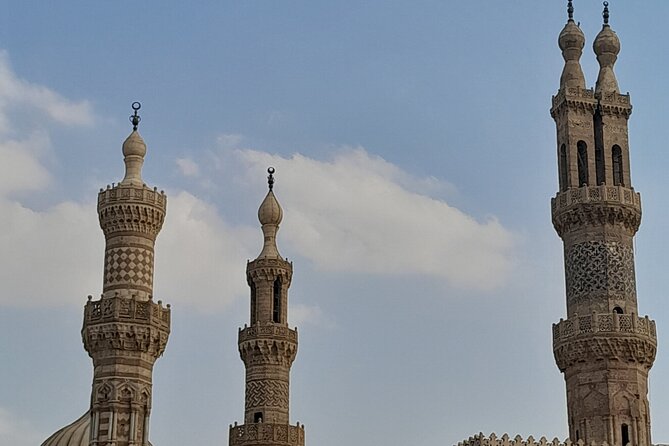
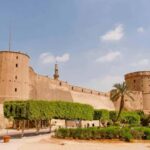
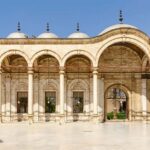
The day opens at the Mosque of Muhammad Ali inside the Cairo Citadel. This is the big, instantly recognizable one: Ottoman-era, with twin minarets and a silhouette that seems to control the skyline. It was commissioned by Muhammad Ali Pasha between 1830 and 1848, and it sits on top of the Citadel hill—so you don’t just get architecture. You get the view too.
The mosque is often described as the Ottoman showpiece of Cairo’s early modern period, and it was built in memory of Tusun Pasha, Muhammad Ali’s eldest son, who died in 1816. That detail helps your visit feel less like sightseeing and more like understanding why this mosque got built so grand.
What you’ll enjoy most here
- Seeing the scale from a distance, then getting up close
- The symbolism of Ottoman power planted on the Citadel high ground
- How your other mosque stops later in the day will make more sense after this “anchor” start
Potential drawback
Because it’s such a landmark, the site can feel like a quick “wow and move on” unless you’re ready to take a few minutes to look deliberately at design details.
Stop 2: Mosque and Madrasa of Sultan Hassan—big Mamluk scale, quick hit
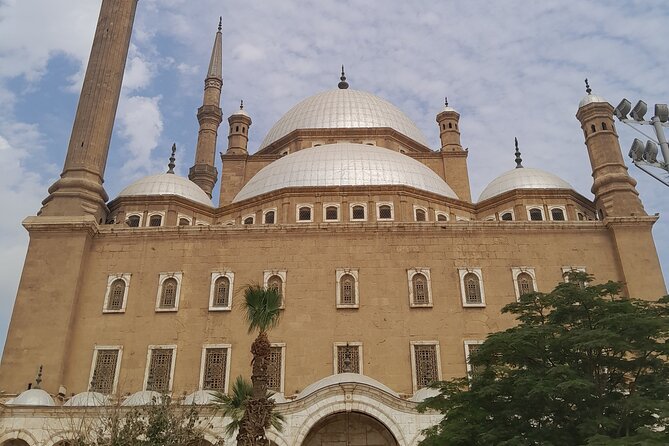
Next comes the Mosque and Madrasa of Sultan Hassan, a monument in the Salah al-Din Square area. Built between 1356 and 1363 during the Bahri Mamluk period, it was commissioned by Sultan an-Nasir Hasan. Even if you only have around 30 minutes, this stop gives you a lot because of what the building is trying to do: make a statement through size and architectural ambition.
This mosque-madrasa is famous for its massive footprint and for innovative components for its time. The result is that Sultan Hassan feels like a piece of Cairo you can understand by looking at it like a whole system, not just a single façade.
How to use your time well
- Don’t rush your eyes. Spend a few minutes mapping the building form before you hunt for details.
- Let your guide connect it to the idea of learning institutions (madrasa) attached to religious space.
The one watch-out
At 30 minutes, you’ll get a solid orientation, not a long deep-stare. If you’re someone who needs 45–60 minutes per site, keep your expectations in check.
Stop 3: Al-Rifa’i Mosque—built to complement a neighbor
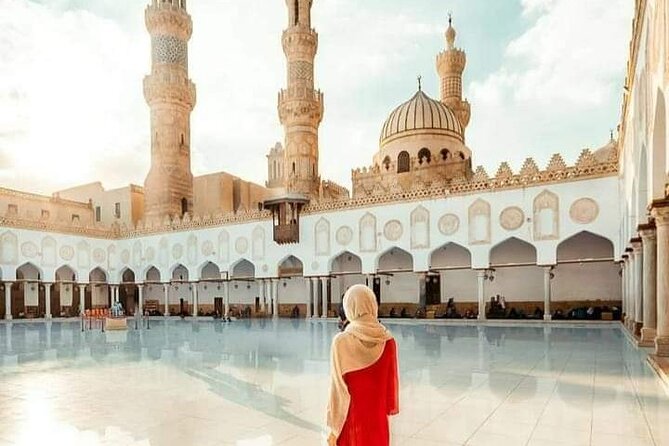
Across from Sultan Hassan is the Al-Rifa’i Mosque, located near the Citadel Square. This one has a different job in the story. It’s now the royal mausoleum for Muhammad Ali’s family and was architecturally conceived as a complement to the older structure next door.
It’s also part of a broader 19th-century effort by Egypt’s rulers to connect themselves with earlier periods of Islamic glory—while also modernizing the city. You’ll notice the mosque’s relationship to nearby squares and the European-style boulevards developed around the same time. The setting matters; the mosque isn’t sitting alone.
Your visit is timed at about 30 minutes, so think of it as a “contrast stop.” You’re learning how Cairo’s monument culture can look like continuity on one street—and like a deliberate reinterpretation in another.


Stop 4: Al-Hakim Mosque—Fatimid origins and a long timeline
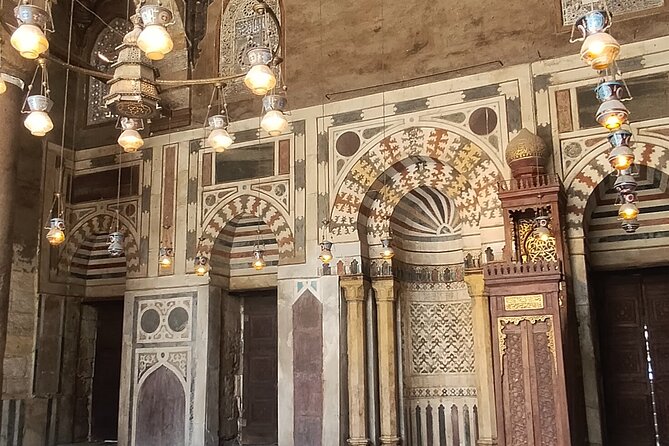
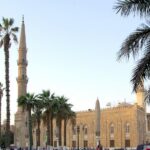
Then you move to the Mosque of al-Hakim, named after Al-Hakim bi-Amr Allah, a Fatimid caliph and Ismaili Imam who lived 985–1021. Construction began under Caliph al-‘Aziz in 990 AD and was completed in 1013, which is why it’s tied to al-Hakim’s name.
This is one of those stops where the timeline feels important. You’re not just looking at an old building. You’re standing on a site shaped by political and religious leadership from a very early period of Cairo’s growth.
You’ll have about 1 hour, which is a more comfortable window. That extra time gives you room to slow down and take in details without feeling you’re “behind schedule.”
Stop 5: Mosque of Ibn Tulun—an open courtyard that changes the feel
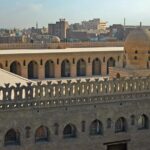
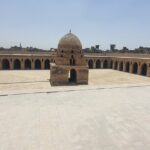
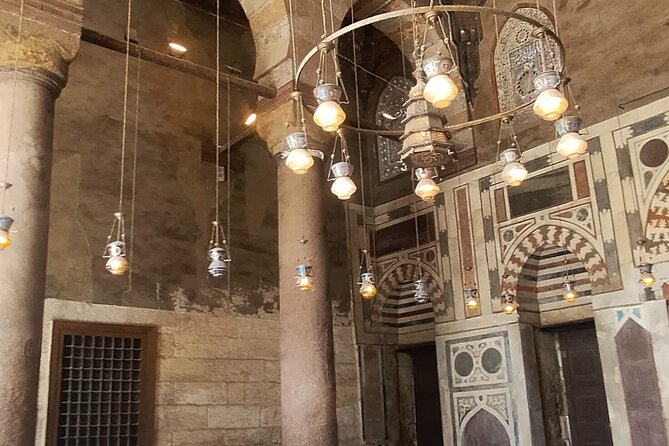
The Mosque of Ibn Tulun is one of the oldest mosques in Egypt and also in Africa, and it survives in full original form. It’s also the largest mosque in Cairo by land area—which becomes obvious the moment you understand how the space is organized around an open courtyard.
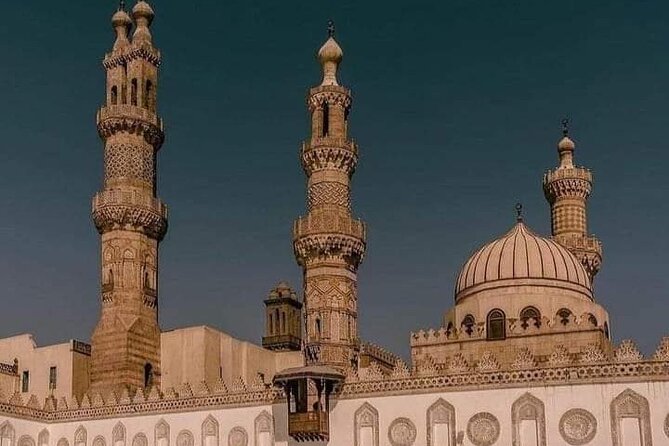
The courtyard design is the star. It lets natural light move through the complex in a way that makes the mosque feel less sealed and more breathable. You’ll also hear about its decorations created from carved stucco and wood, which points to a mix of materials and craft traditions that shaped how these sacred spaces looked and felt.
This is another about 1-hour stop, so you can do more than a quick look. If you like architecture that you can understand by how people actually move through it, this is the kind of mosque that rewards patience.
Stop 6: Khan el-Khalili—shopping with context, not chaos
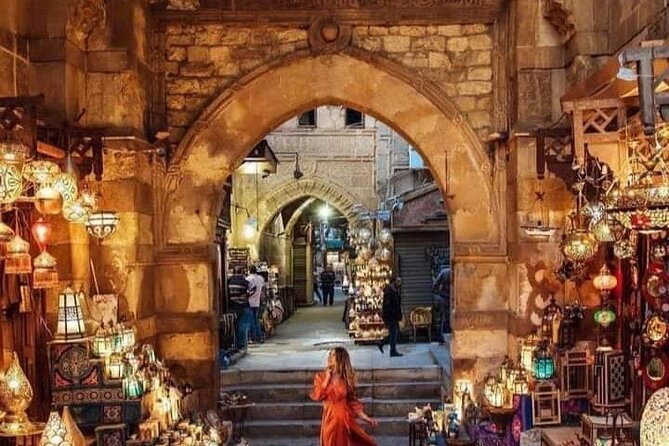
After the mosques, the tour gives you time for Khan el-Khalili, Cairo’s famous bazaar. It began as a trade center in the Mamluk era and took its name from historic caravanserais in the area. Today, the name refers to the broader shopping district, where artisans and workshops make and sell traditional crafts and souvenirs.
The important part isn’t only what you buy. It’s that you’re finishing with a human-scale slice of Cairo—where you can see what everyday life and tourism look like side by side.
You’ll have about 2 hours here, and a guide can make a real difference. In particular, one guide named Zizou is described as helping with bargaining and even picking up thoughtful souvenirs (including mugs for a wedding gift). That’s the kind of practical guidance that turns shopping from stressful to fun.
How to make this stop work
- Decide what you want before you enter the busiest lanes.
- Use your time to ask questions and check quality, not just chase the first attractive display.
Price and value: what $140 gets you (and where it may cost extra)
This tour costs $140 per person for about 7 hours. What makes the price feel more fair is that key items are included: air-conditioned private transportation, a professional tour guide, entrance fees for the listed sites, bottled water, and all taxes and service charge.
In other words, you’re paying for organization. That matters with a route like this, where the monuments are spread around the historic core and the day can get long if you’re handling transport and tickets yourself.
What’s not included is tipping, plus an extra $20 per booking for hotels far from the center like 6th of October and New Cairo. If you’re staying in a more central area of Cairo or Giza, you may avoid that add-on.
Also note: the listing mentions group discounts, while the tour itself is private for your group. If you’re traveling as a party, ask the provider how pricing works for your exact booking setup.
Who this tour suits best—and who should rethink it
This is ideal if you want:
- Major mosque highlights across multiple eras
- A guided narrative so the architecture has meaning, not just photos
- A smooth day with included transport and ticketing
- Time to relax a bit at the market without giving up the schedule
It may be less ideal if you:
- Want lots of free time at each mosque for lingering
- Prefer a purely independent itinerary where you control every minute
- Hate the idea of moving between several sites in one day
Should you book this Day Tour of Famous Mosques in Cairo?
I’d book it if you’re doing Cairo for a short time and you want to see the most important monument stops in a single, organized loop. The mix of Citadel landmarks, major historic mosques, and a final Khan el-Khalili window makes it feel like a real day in the city, not just a series of snapshots.
Before you commit, do two quick checks:
- Make sure you’re okay with shorter visits at Sultan Hassan and Al-Rifa’i.
- Confirm your pickup zone so there’s no surprise add-on if your hotel is far like 6th of October or New Cairo.
If that sounds like your kind of day, this tour is a high-value way to experience Cairo’s sacred landmarks in a tight schedule.
FAQ
What is the price for this tour?
The price is $140.00 per person.
How long is the tour?
It runs for about 7 hours.
What language is the tour offered in?
The tour is offered in English.
Where does the tour start and end?
You meet at Tahrir Square and the tour ends back at the meeting point.
Do you offer pickup from my hotel?
Pickup is available from accommodations in Cairo or Giza. Long-range pickup can be booked as an add-on for certain locations.
Is this tour private?
Yes. It’s a private tour/activity, so only your group participates.
What’s included in the price?
Included items are air-conditioned private transportation, a professional tour guide, entrance fees for the mentioned sites, bottled water, and all taxes and service charge.
What isn’t included?
Tipping isn’t included, and there may be an extra $20 per booking for hotels far from the center such as 6th of October and New Cairo.
Do I get a mobile ticket?
Yes, a mobile ticket is offered.
Can I cancel for a refund?
Free cancellation is available up to 24 hours in advance for a full refund.