REVIEW · CAIRO
Mummy museum and coptic area and Mohamed Ali mosque
Book on Viator →Operated by Lovely Egypt Tours · Bookable on Viator
Cairo stacks three legends in one day. You’ll get the story of how the pyramids were built, the Sphinx’s guard role, then a stop for mummies and coffins, finishing in Old Cairo churches connected with the Holy Family. It’s a full, efficient mix of ancient monuments and living religion.
I especially like how this tour centers on clear on-the-ground explanations, with guide Sabry Hashim repeatedly praised for being patient, friendly, and willing to tailor the day to your pace. I also like the order of sights: Giza in the morning light, then the indoor museum, then Old Cairo’s smaller, more human scale.
One thing to consider: it’s long and hot. The schedule is built for a full day with strong time outdoors at Giza, and the description calls for strong physical fitness—plus museum and site entrances aren’t included in the price.
In This Review
- Key highlights worth planning around
- Why this Cairo combo works: Pyramids, mummies, and Old Cairo
- Giza pyramids time: what you’ll see in about 3 hours
- The burial chamber and the sun-ray explanation
- What to watch for
- Great Sphinx and the sun temple area: photos, symbols, and heat
- Sun Temple of Raa and the “wishing well” moment
- Photos at the Sphinx
- NEMC museum stop: mummies, coffins, and royal objects
- King Tut and other heavy-hitters
- The museum value for first-time Cairo visitors
- Old Cairo churches and the Holy Family story
- Why this stop matters
- A note on Mohamed Ali Mosque
- Price and logistics: is $45 per person good value?
- Pickup and driver help
- The “women-friendly” practical help factor
- Who should book this day trip
- Quick tips to make the 8 hours feel easier
- Should you book this tour?
- FAQ
- How long is the tour?
- Is pickup offered?
- Is this a private tour?
- What stops are included in the day?
- Are admission tickets included?
- What is the price per person?
- Is group discount available?
- What fitness level do I need?
- Is service animal access allowed?
- Does the tour depend on weather?
Key highlights worth planning around

- Sabry Hashim as guide, with driver Mahmood mentioned in the same care-focused team
- A timed flow that balances outdoor monuments with indoor museum time
- Egyptian museum stop focused on mummies, coffins, and famous royal artifacts
- Old Cairo churches and the Holy Family story tied to escape from Herod
- A private group setup, so you’re not squeezed into a crowd-and-queue day
- Sun-and-heat reality at Giza, with advice to plan for long exposure
Why this Cairo combo works: Pyramids, mummies, and Old Cairo
Cairo can feel like sensory overload. Roads, noise, crowds, vendors, and that sun that doesn’t care about your plans. This kind of day trip earns its keep by bundling three parts of Egypt into one organized route: Giza’s monuments, the National Museum of Egyptian Civilization (NEMC) for mummies and royal objects, and Old Cairo for churches connected to the Holy Family story.
The value isn’t just that you tick off famous names. It’s the way the day is structured so you’re not hopping randomly across town. You start at Giza with the main outdoor wow-factors, then you shift to museum time for cool-down and context, then you end with Old Cairo, where the experience gets more about people, faith, and place.
There’s also a human advantage: this is a private tour/activity, meaning only your group participates. That typically makes it easier to pause for photos, ask questions, or adjust timing—something the guide support is praised for.
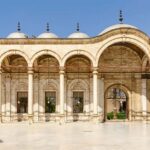
One more note for anyone specifically chasing Mohamed Ali Mosque: your provided plan emphasizes Giza, NEMC, and Old Cairo. It does not explicitly list Mohamed Ali Mosque, so if it’s a must-do, confirm whether it can be added.
You can also read our reviews of more tours and experiences in Cairo.
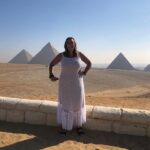

Giza pyramids time: what you’ll see in about 3 hours
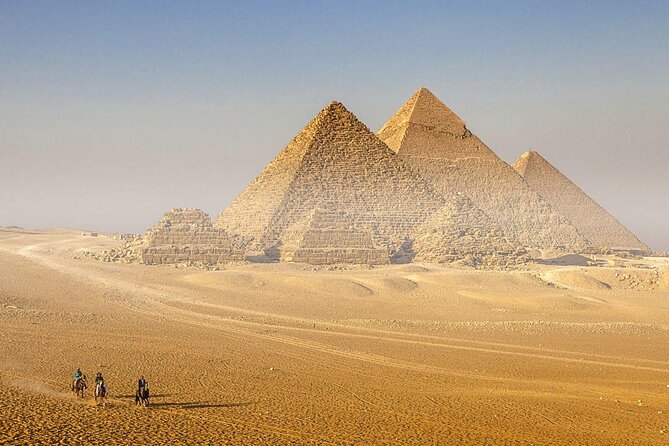
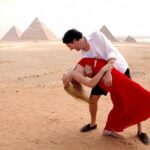
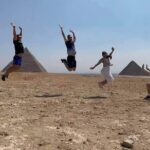
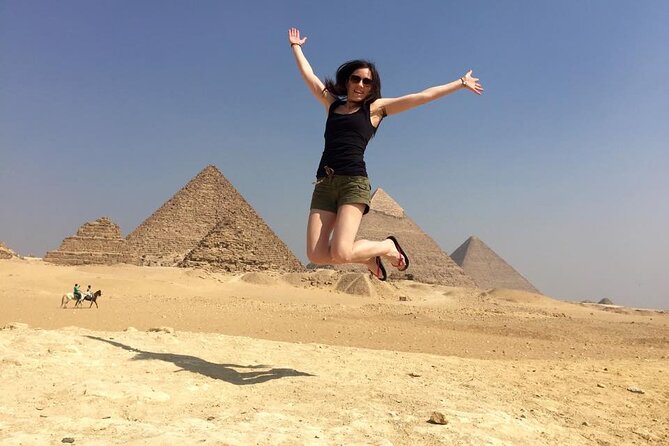
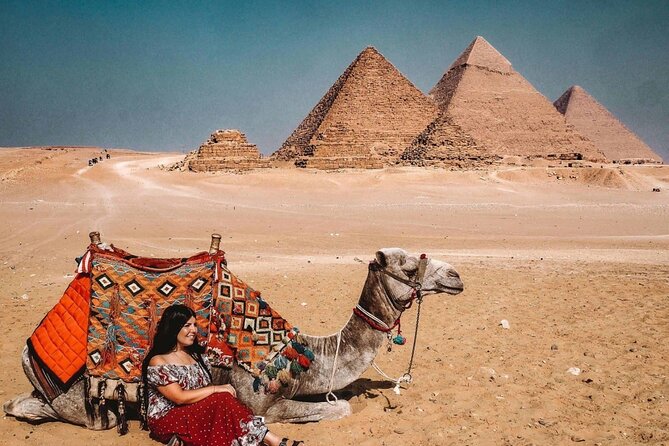
At Giza, you’re spending roughly 3 hours at the pyramids area, with admission tickets not included. That time is enough for a meaningful walk-by-the-big-things experience plus explanation, but it isn’t a slow, lingering day. Go in knowing what you want most: the Great Pyramid area and the burial-chamber ideas, plus the “why build this” story.
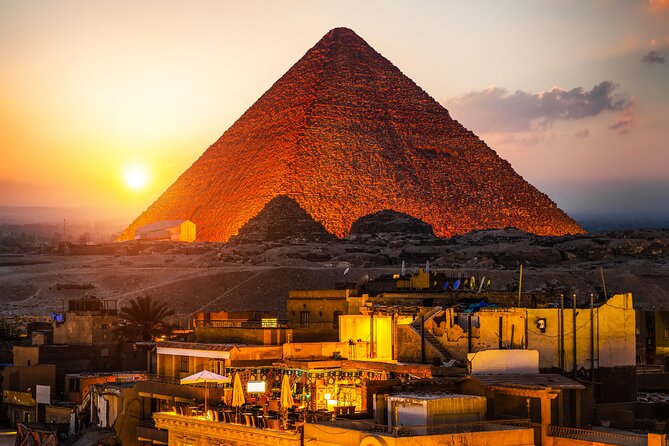
This tour’s Giza focus is the “secrets” angle—how the pyramids were built, and why they were built in the first place. You’ll hear numbers and scale details that make your brain do math: the Great Pyramid described as involving millions of stones and enormous stone weight, plus the idea that the stone was brought from Luxor via the Nile. You also get the height comparison described as 150 meters, tied to a distance metaphor between earth and the sun.
Even if you don’t take every figure as gospel, the real payoff is how the guide uses scale to explain the engineering challenge and the organizing power it required. Stand in the right spots, and the stories stop feeling abstract.
The burial chamber and the sun-ray explanation
A standout element in this plan is the explanation around the burial chamber as a single granite block (described as 80 tons), and the claim that sun rays reach the king’s mummy twice—linked to birth date and death date—tying the king’s relationship to the creation god and the sun.
That’s the kind of detail you can’t really get from a quick photo-stop. You’ll want comfortable shoes, sun protection, and a little patience, because Giza is open sky and the paths can feel long when you’re under a high sun.
What to watch for
The drawback of a tight Giza schedule is simple: you’ll be outdoors longer than you think. Plan to eat before you burn energy, bring water, and don’t count on lots of shade during your walking time. If you’re prone to fatigue in heat, you’ll appreciate the guide’s patience—but you still need to pace yourself.
Great Sphinx and the sun temple area: photos, symbols, and heat
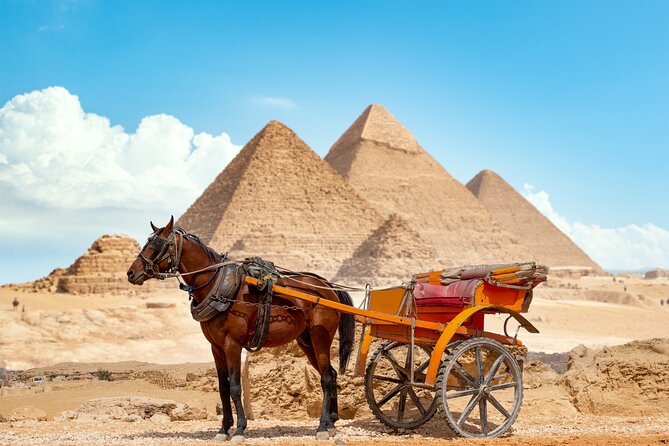
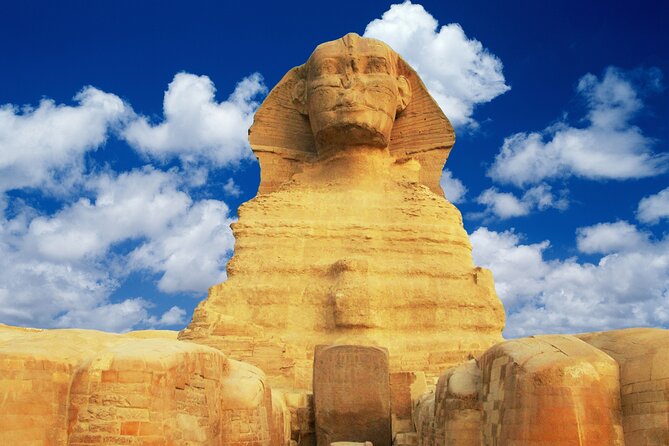
Next comes the Great Sphinx, about 1 hour with admission tickets not included. This is the time for the iconic “one stone cut by hand” focus and the Sphinx’s role as a guard. You’ll hear the symbolic pairing described as a human face of King Kefren with a lion’s body, meant to signal power and clever leadership.
If you’ve only seen the Sphinx from postcards, you’ll like getting the physical context: it was covered by sand, and the plan includes the story of how the nose and the long beard were damaged over time. Even if some details vary between guides, the main value here is that you see the Sphinx as a monument in its original setting, not just as a single face.




Sun Temple of Raa and the “wishing well” moment
This stop also includes the sun temple of Raa for Kefren’s prayers at sunrise and sunset, described as having no roof so the connection to the sun god is direct. You’ll also be pointed toward the wishing well, where you can put money in for luck and happiness.
That wishing-well part is small, but it adds a ritual beat to an otherwise strictly historical walk. It can also be a nice break in the timeline—an easy moment to step aside, cool down, and reset.
Photos at the Sphinx
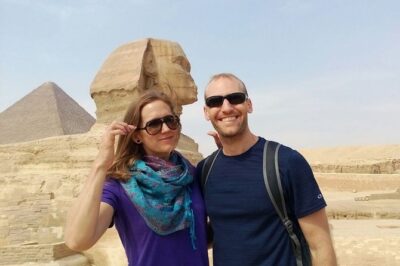
Photos are part of the plan, and you’ll likely have a chance to take them with the Sphinx close enough for clear composition. The practical tip: shoot early in your hour rather than at the end. Light and angle can shift, and heat can make you rush your shots.
Also, keep an eye on your footing. Under bright sun, shadows can trick your sense of distance.
NEMC museum stop: mummies, coffins, and royal objects
After Giza comes your “breather” stop: the National Museum of Egyptian Civilization (NEMC) for about 1 hour 30 minutes. Admission tickets aren’t included here either, so you’ll want to budget for museum entry separately.
This part of the day is about contrast. Giza is massive and open sky. NEMC is curated, indoor, and much easier to absorb. Here, the plan focuses on mummies, coffins, and jewels. Seeing royal objects in a museum setting changes how you understand the people behind the monuments. You’re not only looking at stone symbols now—you’re looking at what the culture chose to preserve.
King Tut and other heavy-hitters
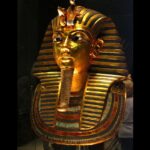
The museum segment is also described as including major names: King Tut treasure, his mask and jewels, plus Ramses the Second, Akhenaton, and Queen Nefertiti. That’s a good spread if you want more than just one royal storyline.
If your interest leans toward how Egyptian power and belief show up in objects, this is the stop that makes your day feel connected. You get to see craftsmanship up close—things your brain can’t quite grasp when they’re only described at a distance.
The museum value for first-time Cairo visitors
For people seeing Egypt for the first time, NEMC is a smart anchor. It gives you context before you start filling in details on your own. Even if you’re not a hardcore museum person, 90 minutes is enough to leave with clearer mental maps of dynasties and symbols.
Old Cairo churches and the Holy Family story
Old Cairo is your final major stop at about 1 hour, again with admission not specified for these church visits in the plan. This part is different. It’s less about pyramid scale and more about a living religious landscape.
You’ll visit different churches and the place associated with the Holy Family’s escape from Herod. That connection is the core idea: you’re walking through spaces shaped by centuries of faith, not just monuments built for kings.
Why this stop matters
If your day only focused on ancient kings, you’d miss how Egypt layers meaning over time. Old Cairo helps you see that Egypt’s story didn’t stop when the pyramids were finished. It kept evolving—politically, spiritually, and in daily community life.
It also tends to feel less physically demanding than Giza. Even when you’re walking, the pace feels more human-scale. If you’re feeling the afternoon heat, this is a good place to slow down.
A note on Mohamed Ali Mosque
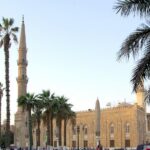
Your requested topic includes Mohamed Ali Mosque, but the provided tour plan points to Old Cairo churches rather than that specific mosque. If Mohamed Ali Mosque is a priority, you should ask whether it can be swapped in or added without breaking the flow.
Price and logistics: is $45 per person good value?
The price listed is $45.00 per person for about 8 hours with pickup offered and group discounts. It’s also described as a private tour/activity, with only your group participating.
Here’s how I’d judge value for this kind of day:
- You’re getting guiding and coordination for multiple major areas: Giza (pyramids + Sphinx), NEMC, and Old Cairo.
- You’re not spending your day figuring out transport between those zones on your own.
- You’re not locked into a rigid group crowd schedule, since it’s private for your group.
The main cost surprise to watch: admission tickets are not included for the stops where the plan says they’re not included (pyramids and Sphinx, plus the museum). So the real total depends on your ticket budget. Still, at this price level, you’re paying more for planning and guiding than for entrance fees.
Pickup and driver help
Pickup matters a lot in Cairo. Traffic and navigation are part of the stress. The tour description includes pickup, and reviews highlight a helpful driver team member (Mahmood) and a guide who provides practical help, including being protective and assisting with avoiding hassle.
The “women-friendly” practical help factor
In the feedback, the guide is praised for being protective and very helpful for women, plus for supporting things like currency exchange and buying products without getting scammed. You’ll benefit from that kind of guidance whether you travel solo or with family, because Cairo’s shopping moments can be confusing if you don’t have local eyes.
Who should book this day trip
This is a strong match if:
- You want a one-day Cairo overview that includes the big outdoor monuments and a museum stop with mummies.
- You like learning with a guide and asking questions rather than doing everything as a self-guided checklist.
- You want a private feel, not the squeeze of a large group.
It may not be the best match if:
- You get wiped out by heat and long sun exposure. The plan calls for strong physical fitness, and Giza is where that matters most.
- You want a super-slow pace at Giza with lots of wandering time. You’ll have only about 3 hours there, so you’ll need to be focused about what you prioritize.
If you’re traveling with kids, you’ll need to judge their heat tolerance and attention span. The itinerary is short enough indoors to breathe, but outdoors time still drives the day.
Quick tips to make the 8 hours feel easier
- Wear breathable clothes and good shoes. You’ll walk, and you’ll walk in sun.
- Plan water and shade timing. The plan spends real time under the open sky at Giza before the museum cool-down.
- Decide your photo priorities early at the Sphinx so you don’t rush.
- Budget for tickets since admission is not included for key sites listed in the plan.
- Ask for tailoring up front. One of the most praised elements in feedback is that the guide can adjust the day, including removing or shortening stops if you want to stay longer elsewhere.
Should you book this tour?
Book it if you want a practical Cairo day that hits Giza + mummies + Old Cairo with guiding that’s friendly, patient, and willing to adapt. The combination is efficient, and the guide support sounds genuinely useful for reducing Cairo hassle—especially with help around money and shopping.
Skip or double-check if Mohamed Ali Mosque is non-negotiable for your itinerary, because the provided plan doesn’t explicitly include it. Also, if you know heat and long walking are hard for you, plan to pace carefully and treat this as a day for endurance, not a casual stroll.
FAQ
How long is the tour?
It’s listed as about 8 hours.
Is pickup offered?
Yes, pickup is offered.
Is this a private tour?
Yes. It’s described as private, meaning only your group participates.
What stops are included in the day?
The plan includes Pyramids of Giza, Great Sphinx, National Museum of Egyptian Civilization (NEMC), and Old Cairo.
Are admission tickets included?
For the places where it’s stated, admission tickets are not included.
What is the price per person?
The price listed is $45.00 per person.
Is group discount available?
Yes, group discounts are mentioned.
What fitness level do I need?
The description says you should have strong physical fitness.
Is service animal access allowed?
Yes. Service animals are allowed.
Does the tour depend on weather?
Yes. The experience requires good weather, and if canceled due to poor weather you’ll be offered a different date or a full refund.