REVIEW · CAIRO
Medieval Cairo tour Ibn Tulun Mosque, Gayer-Anderson Khan El Khalili
Book on Viator →Operated by Deluxe Travel · Bookable on Viator
Cairo’s ancient corners feel close up. This private half-day tour strings together Ibn Tulun Mosque and the Gayer-Anderson Museum, then finishes with time at Khan El Khalili. You’ll ride in an air-conditioned vehicle with pickup and drop-off, and you’ll have a guide focused on making the sites make sense, not just look good on camera.
What I like most is the contrast in what you see. Ibn Tulun Mosque brings you a 9th-century interior known for gypsum ornamentation and engravings, plus that distinctive minaret with an outside staircase. Then the Gayer-Anderson Museum slows things down inside old houses (built in 1632 and 1540) where you can linger with glassware, crystal, silks, carpets, and embroidered costumes.
One possible drawback to factor in: photo/video camera fees may be requested at some museums in Egypt. It’s common enough that you should plan for it, just in case you arrive with gear expecting everything to be included.
In This Review
- Key Things You’ll Notice on This Tour
- Private AC Pickup and a Tight Half-Day Plan
- Mosque of Ibn Tulun: Gypsum Ornamentation and a Minaret You Can Spot Fast
- What makes Ibn Tulun special
- The practical side
- Gayer-Anderson Museum: Houses from 1632 and 1540, Plus Art Collections Made for Looking
- What you’ll see inside
- Time and ticket value
- A possible consideration
- Khan El Khalili Bazaar: Time to Shop, People-Watch, and Pick the Right Souvenir
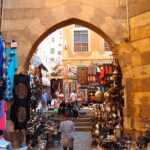
- What you can expect to find
- How to use the market time
- Transportation, Group Size, and the Comfort Factor
- Value Check: Why This $63.50 Price Can Make Sense
- Who This Tour Is Best For (and Who Might Want Something Else)
- Should You Book This Tour?
- FAQ
- Is this tour private or group?
- How long is the tour?
- What’s included in the price?
- Are admission tickets included?
- Do I need money for photos or video?
- Is food included?
- Is hotel pickup offered?
- What if my plans change?
Key Things You’ll Notice on This Tour
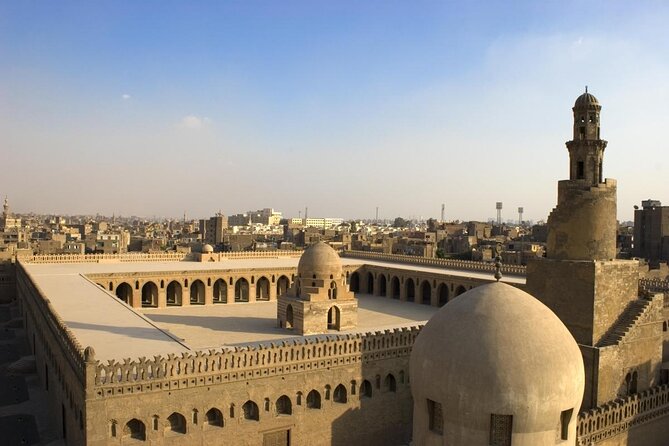
- 9th-century Ibn Tulun Mosque details: gypsum ornamentation, engravings, and the minaret’s outside staircase
- Gayer-Anderson Museum in two historic residences: Beit el-Kiridiliya (1632) and Beit Amna Bent Salim (1540)
- Reconstructed rooms upstairs: the third-floor spaces are set up to show collections in a more complete way
- Khan El Khalili’s early-market pedigree: built in the 14th century and considered one of the Middle East’s great markets
- Small group feel: maximum of 10 travelers, which usually keeps the pace relaxed
Private AC Pickup and a Tight Half-Day Plan
This is built for people who want Cairo landmarks without spending your whole day stuck in transit or waiting around. You get hotel pickup and drop-off in an air-conditioned vehicle, and the tour runs about 4 hours total. The timing is also designed to help you move through key spaces before larger crowds take over.
The tour price is $63.50 per person, and you’re not just paying for a ride. You’re paying for transport plus entry for the two main indoor stops (the mosque and the museum). That matters because tickets are often where DIY plans get annoying: you end up hunting for the right place, the right office, and the right line.
Also, because the tour is private and caps at 10 travelers, it’s easier to ask practical questions. You’ll get an answer for the stuff you notice in real time—patterns in the mosque, what you’re looking at inside the museum rooms, and how to handle the market shopping experience without turning it into a time sink.
A small note: there’s no food or drinks included. If you’re prone to getting cranky when your blood sugar drops, consider eating before you go or plan to grab something after you return.
You can also read our reviews of more tours and experiences in Cairo.


Mosque of Ibn Tulun: Gypsum Ornamentation and a Minaret You Can Spot Fast
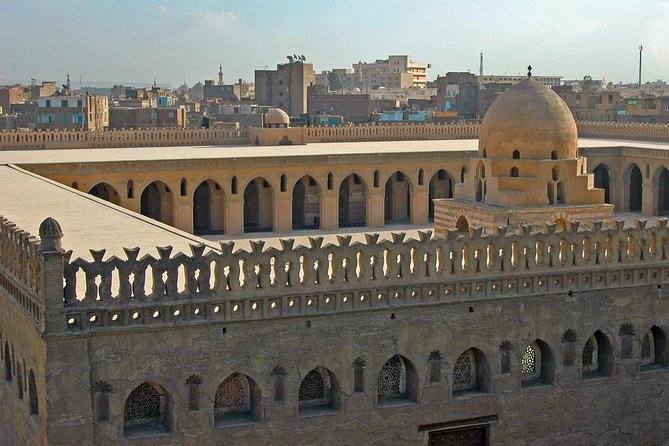
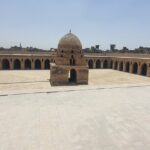
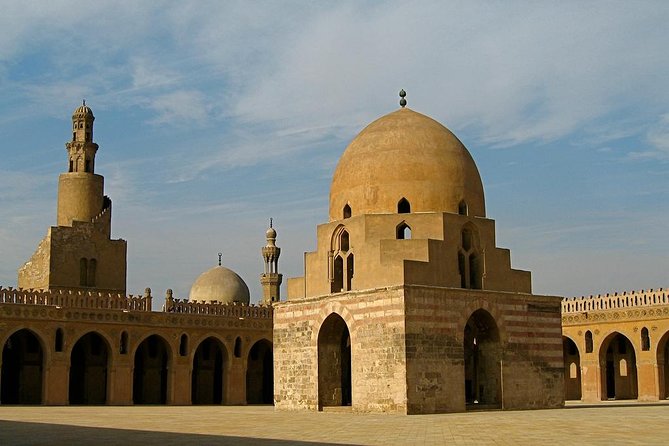
The tour starts at the Mosque of Ibn Tulun, completed in 878 AD by Ahmed Ibn Tulun, linked to the Tulunid Dynasty. It’s often described as the third mosque built in Islamic Egypt, and what you’ll notice right away is that it feels old in the most satisfying way: not flashy, but deeply detailed.
What makes Ibn Tulun special
The interior is known for varied gypsum ornamentation and engravings. That detail is the whole point. If you only get a quick glance, you’ll miss what makes the building memorable. This stop is scheduled at about one hour, which is just enough time to look closely without rushing the whole visit.
Then there’s the minaret. The standout feature is that it has a staircase that you can access from the outside. Even if you don’t go looking for it, you’ll likely spot it because it looks different from the minarets you may see elsewhere.
The practical side
- Admission is included, so you won’t be scrambling for payment on-site.
- Expect to follow standard rules for entering sacred spaces. The guide will help you navigate what’s allowed and what isn’t.
- The mosque stop is short enough that you can still keep energy for the museum and the bazaar afterward.
If you like architecture that rewards patience—shapes, textures, carved details—this is the anchor stop of the tour.
Gayer-Anderson Museum: Houses from 1632 and 1540, Plus Art Collections Made for Looking
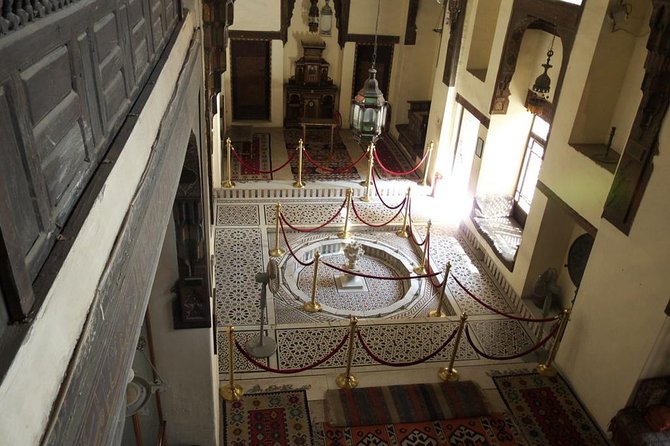
Next you head to the Gayer-Anderson Museum, also known as Bayt al-Kiritliya. This is where the tour changes pace from worship space to lived-in space. The museum was founded in 1937 in two ancient residences: Beit el-Kiridiliya from 1632 and Beit Amna Bent Salim from 1540.
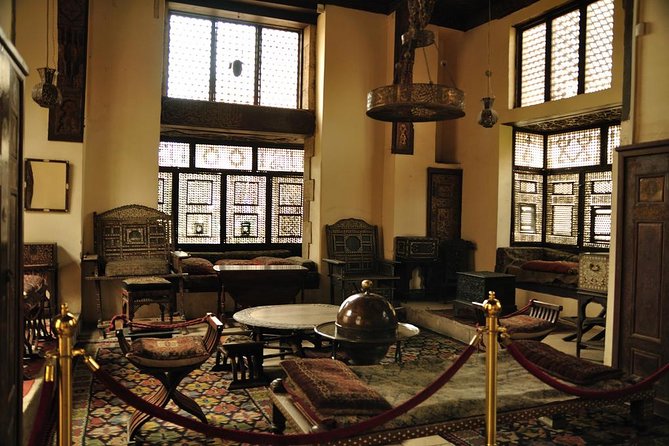
That setup matters. Museums inside single modern buildings can feel like you’re looking at objects with little context. Here, you’re moving through rooms that already have their own atmosphere. Even without any fancy explanation, the building type shapes how you understand the collections.


What you’ll see inside
The museum includes the private collection of Major Gayer-Anderson, along with items such as:
- furniture
- glassware and crystal
- carpets and silks
- embroidered Arab costumes
- and more traditional decorative pieces
One especially useful detail: several rooms on the third floor have been reconstructed to house the collections. That means you’re not just seeing objects dumped in a corner. You’re seeing rooms that are set up so you can take in the overall look—how things were arranged, how fabrics and decorative items sit together.
Time and ticket value
This is scheduled for about two hours, and the admission ticket is included. Two hours is a good window for people who don’t just want a quick walk-through. It also gives you space to pause when something catches your eye—like a display of glassware or a textile detail—without the pressure of a nonstop schedule.
A possible consideration
Like many museums in Egypt, there can be an additional fee for photo and video cameras. If photography is important to you, plan for it so it doesn’t throw off your mood mid-visit.
Khan El Khalili Bazaar: Time to Shop, People-Watch, and Pick the Right Souvenir
After the museum, you head to Khan El-Khalili, one of the earliest and greatest markets in the Middle East. It’s built in the 14th century, which gives you immediate perspective: this place isn’t just a modern shopping strip with old branding. It’s a market that has functioned across centuries.
This stop is scheduled for about two hours (with the day designed to wrap up and return you to your hotel afterward). It’s also where your guide earns their keep, because a market can eat time fast if you don’t have a plan.
What you can expect to find
In Khan El Khalili, you’ll see stores selling things like:
- jewelry
- wooden artifacts embossed with pearls
- leatherware
- embroidered dresses
- and a range of impressive souvenirs
This is a good place if you want items with clear visual identity—things that look like they belong in Egypt rather than generic trinkets.
How to use the market time
Think of the bazaar as two phases:
1) walk first, so you know what’s selling and what price range you’re seeing
2) then pick one or two items you really want, instead of grabbing everything you see
Because this tour is private with small-group handling, you’ll likely get help with what to focus on and how to avoid getting pulled into distractions. That’s a big part of why the experience works better than a solo bazaar wander with no local guidance.
Transportation, Group Size, and the Comfort Factor
You’ll travel by air-conditioned vehicle, with pickup and drop-off from your hotel. That matters in Cairo. You’ll be thankful when you step back into the car between stops, especially since you’re spending your time in two places with very different atmospheres—quiet interior architecture, then a market that can feel full-on.
The group limit is maximum 10 travelers. Even with a group that size, you’ll likely get a more human experience than big tour buses, because the guide can keep track of everyone and still answer questions.
And you get a mobile ticket. That’s one less thing to worry about when you’re juggling schedules, walking, and market noise.
Value Check: Why This $63.50 Price Can Make Sense
Let’s talk value in a practical way. At $63.50 per person, you’re paying for:
- transport with AC plus hotel pickup/drop-off
- entry to the mosque and museum
- a guide to help you understand what you’re seeing
- all taxes and service charges
You aren’t paying for food or drinks, and you may still encounter camera fees at some stops. So it’s not a “everything is free” deal.
But it’s still strong value if you want to cover three big stops in one tight half-day without doing the logistics yourself. The museum and the mosque are the expensive parts of many Egypt itineraries, and here you’re getting admission included for both. That can turn a self-guided day into a paperwork-and-lines day pretty quickly—especially when you don’t want to lose half your time figuring out where to go next.
If you’re staying in Cairo for a short window and want maximum payoff per hour, this tour fits that goal well.
Who This Tour Is Best For (and Who Might Want Something Else)
This experience is a great match if:
- you want a focused half-day rather than a long all-day plan
- you like architecture and decorative detail, not just big sightseeing photos
- you want market time but don’t want it to swallow your schedule
- you’d rather have a guide translate what you’re looking at, especially at the museum
It may be less ideal if:
- you want a lot of downtime or a slow pace
- you’re expecting meals included (they aren’t)
- you’re bringing camera gear and don’t want potential extra fees
Physical fitness is listed as moderate, so plan for some walking and time on your feet, especially in the bazaar.
Should You Book This Tour?
I’d book it if your main goal is a smart Cairo sampler that feels more meaningful than a checklist. The combination makes sense: Ibn Tulun Mosque for early architectural detail, the Gayer-Anderson Museum for collections in historic residences, and Khan El Khalili for real market shopping energy.
If you care about photography, do one small bit of homework: be ready for possible camera-related fees at museums. If you can handle that, you’ll get a clean, efficient route through three places that don’t feel like the same kind of stop.
FAQ
Is this tour private or group?
This is a private half-day tour with a knowledgeable guide, with a maximum of 10 travelers.
How long is the tour?
The duration is approximately 4 hours.
What’s included in the price?
Hotel pickup and drop-off in an air-conditioned vehicle, transportation by air-conditioned vehicle, and all taxes and service charge are included.
Are admission tickets included?
Yes. Admission is included for the Ibn Tulun Mosque and the Gayer-Anderson Museum. Admission is free for Khan El Khalili.
Do I need money for photos or video?
In many temples and museums in Egypt, an additional fee for photo and video cameras may be requested.
Is food included?
No. Food and drinks are not included.
Is hotel pickup offered?
Yes. Hotel pick up and drop-off are included, with pickup from your hotel in Cairo.
What if my plans change?
Free cancellation is available up to 24 hours in advance for a full refund.