REVIEW · CAIRO
Half Day trip to Islamic Cairo & Mosque Of Ibn Tulun
Book on Viator →Operated by EMO TOURS EGYPT · Bookable on Viator
Cairo’s graveyard district tells real stories. In this half-day guided circuit, you see the City of the Dead up close and then move into landmark Islamic Cairo mosques that still shape daily life. I especially like the practical flow of the route and the way the guide connects architecture to the people who use it.
The main drawback is emotional and social, not logistical: this is a working neighborhood near tombs, and you may feel pressured for money while you’re there. If that kind of discomfort would stick with you, plan your mindset (and keep your wallet decisions simple) before you go.
In This Review
- Key highlights worth your time
- How this 4-hour Islamic Cairo route actually works
- City of the Dead: what “alive” really looks like
- Cairo Citadel and Mohamed Ali Mosque: the alabaster look
- Al-Rifa’i Mosque across from Sultan Hassan: a “conversation” in stone
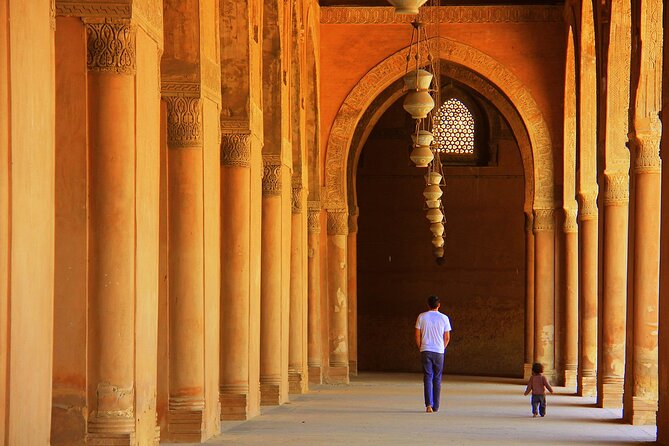
- Mosque of Ibn Tulun: older, larger, and open to the sky
- Al-Azhar Mosque: a founding date you can anchor on
- Price and logistics: what you’re really paying for
- The guide and driver make or break the experience
- Who should book this, and who should skip
- Practical advice so your day feels smoother
- Should you book this half-day City of the Dead and mosques tour?
- FAQ
- What is the duration of this tour?
- Is hotel pickup and drop-off included?
- Does the tour include a guide and transportation?
- Are bottled water and snacks included?
- Are admission tickets included for the sites?
- Is tipping included in the price?
- Is this a private tour?
- Do I need cash for tickets?
- Can I cancel for a full refund?
- Where does the tour end?
Key highlights worth your time
- City of the Dead, alive with life: Learn how around 500,000 Cairenes live alongside gravestones and mausoleums.
- Mohamed Ali Mosque in Cairo Citadel: Spot the alabaster-stone look of the outer walls on a focused stop.
- Sultan Hassan’s scale and design: See why the Mamluk-era complex is famous for size and the way it built education into the mosque.
- Ibn Tulun Mosque’s open courtyard: Walk around an older standout where sunlight and shadows play across the space.
- Al-Azhar Mosque’s origin story: Understand how the Fatimid-era founding helped create Cairo’s religious learning center.
- Hotel pickup, private car, and support: Private transfers plus bottled water help you move fast across a wide area.
How this 4-hour Islamic Cairo route actually works
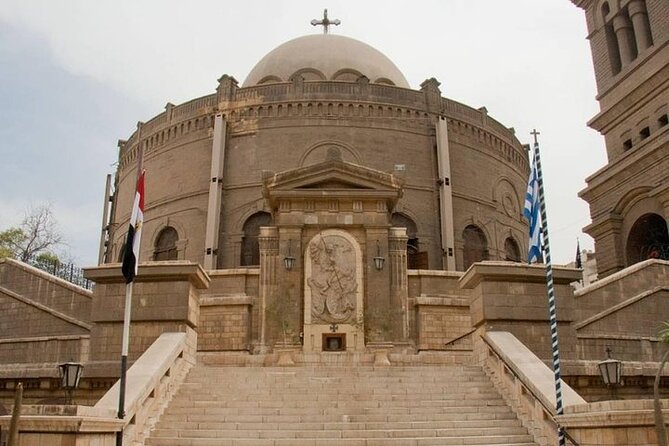
This is a compact half-day, about 4 hours total, with hotel pickup and drop-off in Cairo or Giza. You’ll ride in a private, air-conditioned vehicle, and you’ll have a guide who keeps the stops moving so you don’t lose time to confusion or slow logistics.
That matters in Cairo. You’re stacking major sites in a short window: a lived-in cemetery district first, then several heavyweight mosques and the Citadel area. Done well, this kind of route gives you a strong “taste test” of Islamic Cairo without turning the day into a marathon.
It also means you’ll want to arrive ready to walk and look. The most memorable parts here come from tight, high-interest spaces, not from long viewing platforms where you can just sit and watch.
You can also read our reviews of more tours and experiences in Cairo.


City of the Dead: what “alive” really looks like
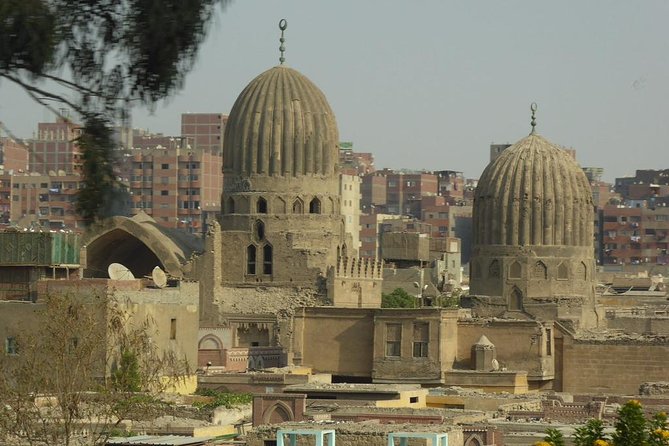
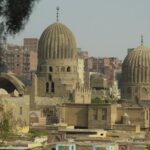
The first and most defining experience is the City of the Dead, an ancient cemetery that functions like a neighborhood. Your guide takes you into the crowded aisles and points out the Islamic architecture woven through the mausoleums and graves.
What I like about this stop is how it reframes the word cemetery. Instead of treating it like a museum object, you get a human explanation for why so many people live among tombs. The tour highlights that the scale is enormous—around 500,000 Cairenes live there—which helps you understand why the streets feel busy and why everyday life continues in what you’d expect to be quiet.
A possible emotional downside: this is a place shaped by poverty and inequality. One of the clearest caution notes from real experiences is that you may feel a constant push for money while you’re there. The guide can keep things respectful and informative, but the setting itself can be heavy.
My practical advice: go in with a plan. If you want to give, decide what feels right before you arrive and stick to that. If you don’t, know that it may still feel uncomfortable—so don’t book this if you’re already having a tough day.
Cairo Citadel and Mohamed Ali Mosque: the alabaster look
Next you head to the Cairo Citadel area for a short stop at Mohamed Ali Mosque. The tour focuses on its striking outer-wall appearance, often described as an alabaster effect because the exterior is covered by alabaster stone.
This is a good “reset” after the City of the Dead. The mood shifts toward monumental architecture and big-sky views from the Citadel zone. You’ll get time to look, take photos, and orient yourself to Cairo’s skyline and historic center.
What to expect in the short time window:
- You’ll likely keep moving quickly through viewpoint areas.
- The stop is brief (about 30 minutes), so prioritize what you want most: exterior details, angles, or the look from the Citadel grounds.
One thing to budget mentally: admission at these major sites is marked as not included. That doesn’t mean you’ll pay a fortune, but it does mean you should be ready to handle entry fees as you go.
Al-Rifa’i Mosque across from Sultan Hassan: a “conversation” in stone
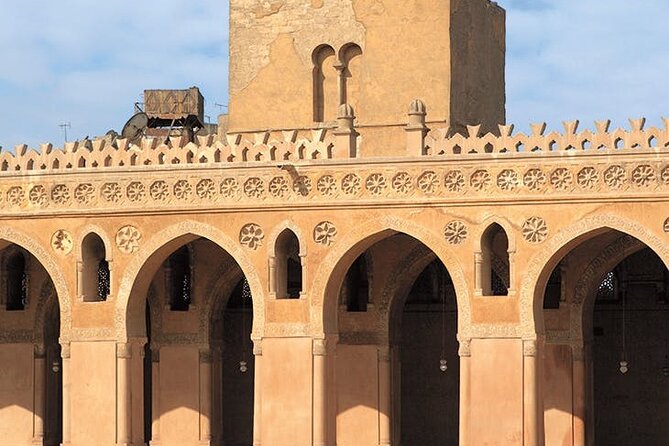
From the Citadel zone you also visit Al-Rifa’i Mosque and then the Mosque-Madrasa of Sultan Hassan. These stops are placed next to each other in the historic complex area, and that’s a smart choice for a half-day. You can compare the design language of two major structures while your guide explains the bigger story.
Al-Rifa’i Mosque is described as a building that was conceived as a complement to the older Sultan Hassan structure, across the road. The context here matters: you’ll hear how 19th-century rulers used prominent building projects to connect themselves to earlier Islamic greatness and also modernize the city.
Then you’re at Sultan Hassan, a massive mosque-madrasa founded in 1356 A.D. Construction began in 757 AH and finished three years later. Your guide can point out why it’s remembered as remarkable for its size and innovative components.
One of the most useful facts in the Sultan Hassan explanation is that the mosque-madrasa was designed with education built in—schools for the four Sunni legal schools of thought: Shafi’i, Maliki, Hanafi, and Hanbali. Even if you’re not studying Islam, that detail helps you see these places as living institutions, not just gorgeous buildings.
Timing note: each of these stops is around 30 minutes, with admission not included. So you’ll want to keep your attention high and your questions ready.
Mosque of Ibn Tulun: older, larger, and open to the sky
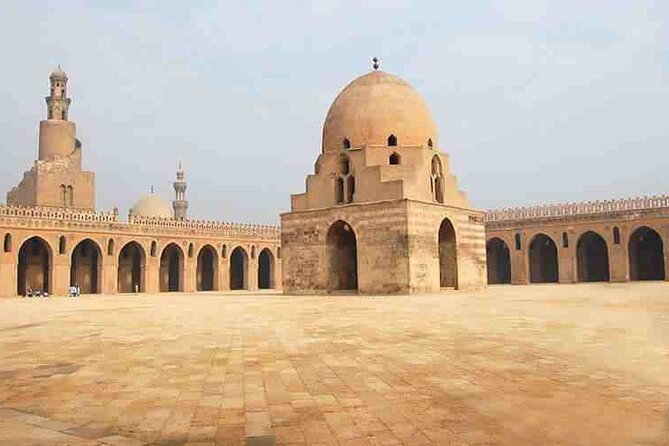
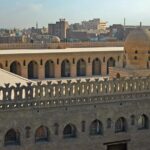
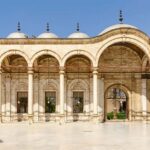
If you only had time for one “serious” mosque stop, Mosque of Ibn Tulun is the one that gives you the most payoff for the least time. It’s described as one of the oldest mosques in Egypt—and also Africa—surviving in its full original form. It’s also noted as the largest mosque in Cairo by land area.
The real visual trick here is the open layout. Ibn Tulun has a large amount of open space, so you get both sunlight and shadows. The architecture is arranged around an open square courtyard, and natural light moves through the space in a way that feels different from many enclosed mosque designs.
In other words: you’re not just looking at walls. You’re experiencing how the space breathes. That makes this stop easier to enjoy even if you’re not a “museum person.”
This is another 30-minute visit, and admission is not included, so it’s a good idea to arrive ready to focus on the courtyard and the main viewing angles rather than trying to see everything at once.



Al-Azhar Mosque: a founding date you can anchor on
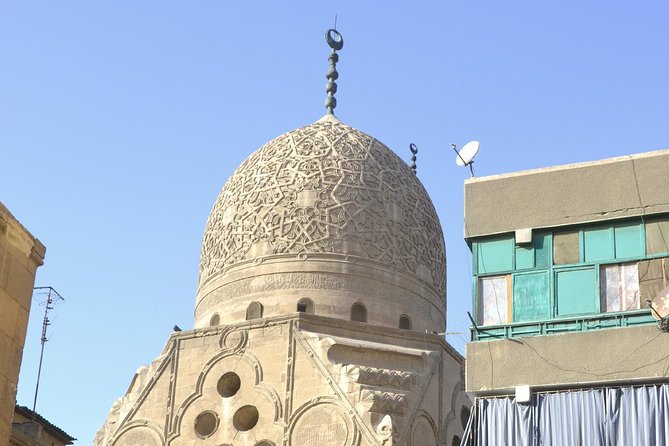
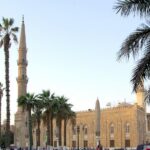
The final major mosque stop is Al-Azhar Mosque, sometimes described as the mosque of the resplendent. The tour explains that it was commissioned by the Fatimid Caliphate—specifically Al-Mu’izz li-Din Allah—for the newly established capital city in 970.
What I like about the way this is presented is the simple naming logic: the name is usually connected to Fatimah, given the title az-Zahrā’, meaning shining or resplendent. You also learn that Al-Azhar was the first mosque established in Cairo, and that Cairo later earned the nickname City of a Thousand Minarets.
This stop is also about scale of influence, not just architecture. Al-Azhar isn’t only a landmark you pass by; it’s tied to learning and religious life in Cairo’s center.
Again, admission is not included, and you have about 30 minutes. Use that time to focus on the key spaces your guide points out, because the short duration won’t allow wandering at your own pace for long.
Price and logistics: what you’re really paying for
At $60 per person for a half-day, the value comes from the combo of private car + hotel pickup/drop-off + guide + bottled water (and snacks for convenience). In Cairo, that kind of package helps you avoid the most annoying friction: finding the right meeting point, negotiating transit, and trying to coordinate multiple stops in a short window.
What’s not included is important: personal items, tipping, and admission tickets at the major sites (Citadel/Mohamed Ali, Al-Rifa’i, Sultan Hassan, Ibn Tulun, Al-Azhar) are marked as not included.
So when you budget, do it realistically:
- Plan for entry fees at the mosques/Citadel stops.
- Set aside a small amount for tipping if you feel the guide earned it. Tips are not required by the tour details, but they’re common for good service.
If you’re coming from a hotel in Cairo or Giza, you’re also buying time. The route is designed to keep you moving and not waste the morning sitting in traffic wondering where you are.
The guide and driver make or break the experience
This tour is very guide-dependent. The most praised aspect is how the guide turns stone and streets into understandable stories.
In particular, I’ve seen strong mentions of guides like Azhoma and Reda ELGendy, plus patience from drivers such as Hazim who stick around while you’re inside and waiting at short stops. When the guide is good, you feel less lost, and you get better photos because you know where to stand and what details to look for.
Even in the “great day” experiences, the pattern is consistent: the tour feels interesting because the guide explains what you’re seeing and keeps the experience flowing.
If your guide seems hesitant, this area can feel harder than it needs to. You’ll do better if you ask direct questions like:
- What should I look for first here?
- Why is this mosque-madrasa different from the others?
- What’s the most important detail for photos?
That style of engagement tends to pull the whole tour into focus fast.
Who should book this, and who should skip
This tour is best for you if:
- You want Islamic Cairo highlights in a short time.
- You’re curious about how people live in historic spaces, not only how monuments look.
- You like guided context that explains why buildings were built and how they functioned.
You might skip it if:
- You dislike emotionally challenging neighborhoods. The City of the Dead can feel depressing because it’s not staged; it’s real life, and you may be approached for money.
- You want a purely scenic outing. This is about culture and context more than easy sightseeing.
It’s also a strong choice for couples or solo travelers who want a private format. Since it’s described as private (only your group), you’re not stuck waiting for others to finish photos.
Practical advice so your day feels smoother
You’ll cover multiple historic stops in a half-day, so set yourself up for less stress:
- Keep expectations realistic: many stops are about 30 minutes, so you won’t see everything in depth.
- Bring a plan for money interactions at the City of the Dead. Decide in advance how you want to handle asks, because the setting can create repeated requests.
- Use the included bottled water and snacks as your “don’t get cranky” tool. With short site timings, low energy can ruin the experience fast.
Also, this tour uses a mobile ticket. That’s helpful—just make sure you can access it easily when you arrive.
Should you book this half-day City of the Dead and mosques tour?
Yes, I think you should book it if you want the best version of Islamic Cairo in a few hours: real neighborhood context at the City of the Dead, then major architecture stops like Mohamed Ali, Sultan Hassan, Ibn Tulun, and Al-Azhar.
But be honest with yourself about the first part of the day. If you know you’ll get worn down by poverty realities or feel bothered by requests for money, this may not be the right fit.
If you’re okay with that trade-off, this tour is a smart way to get oriented and leave with stories you can actually repeat—plus photos with purpose.
FAQ
What is the duration of this tour?
The tour runs for about 4 hours.
Is hotel pickup and drop-off included?
Yes. Pickup and drop-off from your hotel in Cairo or Giza are included.
Does the tour include a guide and transportation?
Yes. You get an experienced guide and all transfers are done by a private air-conditioned vehicle.
Are bottled water and snacks included?
Bottled water is included, and the tour description also mentions snacks for convenience.
Are admission tickets included for the sites?
No. Admission is marked as not included for several major stops, including the Citadel area and the mosques.
Is tipping included in the price?
No. Tipping is not included.
Is this a private tour?
Yes. It’s described as private, meaning only your group participates.
Do I need cash for tickets?
The tour data says admissions are not included for multiple stops, so you should expect to pay site entry separately.
Can I cancel for a full refund?
Yes, you can cancel up to 24 hours in advance for a full refund.
Where does the tour end?
You’ll finish with drop-off back at your hotel in Cairo or Giza.