REVIEW · CAIRO
The Egyptian museum and Cairo Citadel and Al Azhar Mosque Islamic Site
Book on Viator →Operated by Ancient Egypt Tours · Bookable on Viator
Four stops, one power-packed day. Cairo lays it all out: The Egyptian Museum, the Citadel of Salah El Din, Mohamed Ali’s Alabaster Mosque, and the Al-Azhar Islamic Cairo sights in about 8 hours. I love how you get serious artifact time up front, especially the Tutankhamen treasure exhibits, and I also like that the day shifts from pharaonic Egypt to living Islam with El Azhar and nearby mosques. The main drawback is simple: the schedule is tight, so you’ll need to focus on the highlights rather than expecting to linger.
This is built for people who want a plan without losing their sense of direction. With hotel pickup and private transportation, you spend less time figuring out routes and more time looking at what matters. Also, the human factor counts: guides such as Nurhann and Walid are described as kind, respectful, and good at answering questions, even making sure you’re back on schedule for later plans.
There’s a lunch break included in the flow, but lunch itself is listed as optional, so budget extra if you want to eat. The good news: the tour is rated 4.7 from a few recent reviews, and it’s priced as a straightforward day outing.
In This Review
- Key highlights you’ll actually feel during the day
- The big idea: Egypt’s museum core plus two Cairo landmarks
- Stop 1: Egyptian Museum of Antiquities and the Tutankhamen focus
- What to look for in the time you have
- Potential drawback at this first stop
- Stop 2: Lunch break plus Cairo Citadel and Mohamed Ali Mosque
- Cairo Citadel of Salah El Din
- Mohamed Ali Alabaster Mosque (The Alabaster Mosque)
- What could feel challenging
- Stop 3: Al-Azhar Mosque and Islamic Cairo’s mosque-and-street sequence
- El Azhar: where learning meets worship
- Bab Zuweila and Al-Mouayyed Mosque
- Walking to Al Hussein Mosque and Beit El Sehimy
- Another mosque stop mentioned, but not fully listed
- How the day actually flows (and why it feels manageable)
- The “focus” strategy that works best
- Price and value: what $20 per person really buys
- So who gets the best value?
- Guides matter: what Nurhann and Walid add to the experience
- Weather, timing, and small practical advice before you go
- Should you book this Egyptian Museum + Citadel + Al-Azhar tour?
- FAQ
- How long is the tour?
- What does it cost per person?
- Is hotel pickup included?
- Is this a private tour?
- Are admission tickets included?
- Is lunch included?
- What’s included for food and drinks?
- Is an Egyptologist guide included?
- What happens if the weather is poor?
- Can I cancel for free?
Key highlights you’ll actually feel during the day
- Tutankhamen treasures at the Egyptian Museum, with gold and jewelry you can see up close rather than only from photos
- Cairo Citadel viewpoints that help you understand where this city sits and how it developed
- Mohamed Ali Alabaster Mosque, famous for its Turkish-style design and its dramatic presence
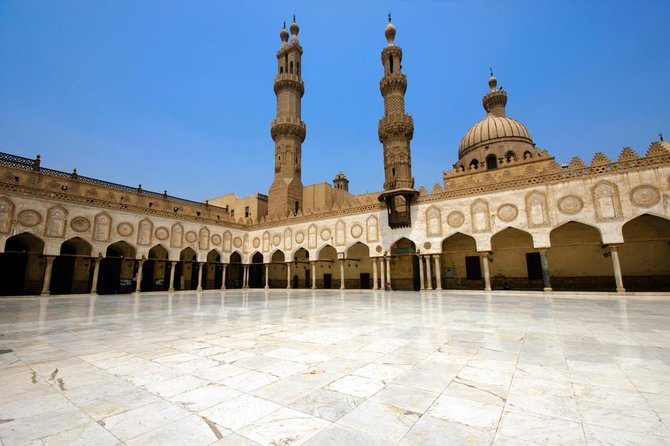
- El Azhar Mosque and Islamic Cairo sites, connecting worship, learning, and city history
- Bab Zuweila and Al-Mouayyed Mosque stops, including mention of Badr Al Dein Al Gamal’s role
- Private guide time with pickup and return transport, which makes the day feel calmer
The big idea: Egypt’s museum core plus two Cairo landmarks
This tour works because it doesn’t treat Cairo like a checklist. It starts with pharaonic Egypt at the Egyptian Museum, then shifts to power and defense at the Citadel, and finally moves into the spiritual and educational heart of Cairo at Al-Azhar and Islamic Cairo. You’re basically watching Cairo’s identity change as you move—objects, monuments, then living places of worship.
Another thing I like about this setup is that it’s paced like a guided day, not a frantic sprint. You get about 2 hours at the museum, then about 2 hours for the Citadel and Mohamed Ali Mosque area, then 2 hours for the Al-Azhar and Islamic Cairo circuit. That’s enough time to see the main sections, especially with a guide pointing out what to pay attention to.
The only real watch-out is attention management. If you try to see everything, you’ll miss the point of a guided highlight route. Think of it like choosing the best parts of a long story—and letting the guide’s explanations help you connect the dots fast.
You can also read our reviews of more tours and experiences in Cairo.


Stop 1: Egyptian Museum of Antiquities and the Tutankhamen focus
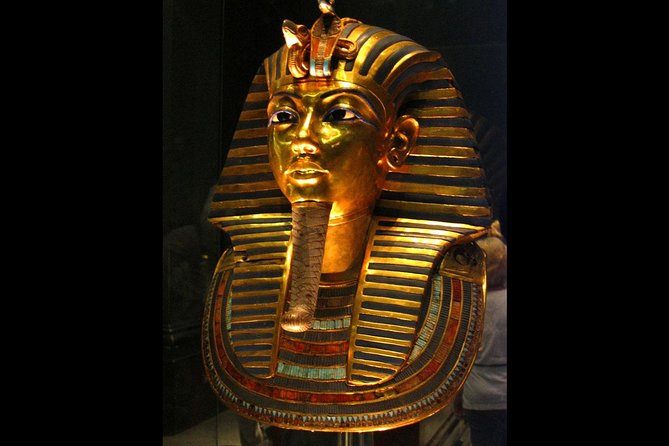
The first stop is the Egyptian Museum in Cairo, described as covering around 5,000 years of art and presenting more than 250,000 genuine artifacts, with a representative portion actually on display and the rest kept in storage. Even if you’re not a hardcore Egypt-nerd, that scale matters. It means the museum is designed to be a foundation, not just a random stop.
What to look for in the time you have
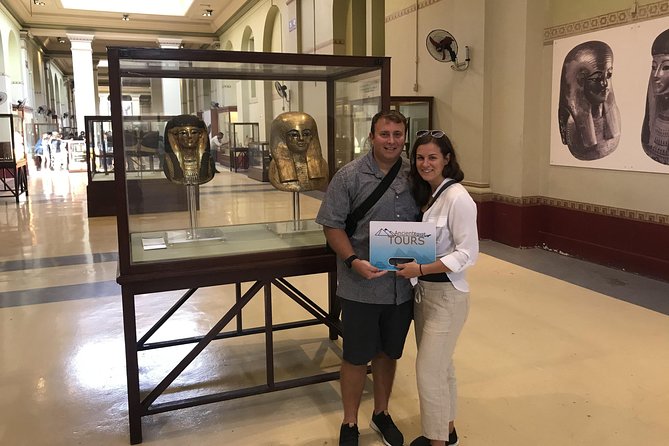
You’ll have about 2 hours here, and admission is included. With that time limit, your best move is to go in with a simple plan: focus on the Tutankhamen treasures exhibit area first, then choose a few major galleries tied to themes you care about.
The tour description specifically calls out a collection tied to King Tutankhamen—gold and jewelry that was enclosed in his tomb for roughly 3,500 years before it was discovered in 1922 during excavation. That story alone helps you interpret what you’re seeing. You’re not just looking at objects; you’re looking at a transformation from buried history to modern display.
You’ll also see a range of everyday and ceremonial items mentioned in the tour details, like jewels and headdresses, alabaster vases, and even toys from ancient Egypt. That mix is useful because it prevents the museum from feeling like it’s only about kings and gold. Small things make the past feel human.
Potential drawback at this first stop
Two hours in a museum this big can feel short. If you like reading every label or you want to follow every corridor, you may feel rushed. The value of booking with a guide is that you get a prioritized route—so you should lean into it and pick your top interests.
One practical tip: wear comfortable shoes. You’ll be walking and pausing a lot in a museum setting, and the biggest time-saver is staying comfortable enough to keep moving.
Stop 2: Lunch break plus Cairo Citadel and Mohamed Ali Mosque
After the museum, the day includes a lunch break at a high-quality local restaurant. Lunch is listed as optional, so if you want a full meal, plan for extra cost. Either way, the rhythm here matters: it’s a breather before the next concentration of monuments.



Cairo Citadel of Salah El Din
Next up is the Citadel of Salah El-din. The tour is structured around a key payoff: you get to see the view of all Cairo from the citadel area. That matters more than you might think. When you’ve just left a museum of artifacts, a city panorama gives you scale and context. You start understanding distances and how historic strongholds relate to modern Cairo.
The tour time for this part is about 2 hours, with admission tickets listed as included.
Mohamed Ali Alabaster Mosque (The Alabaster Mosque)
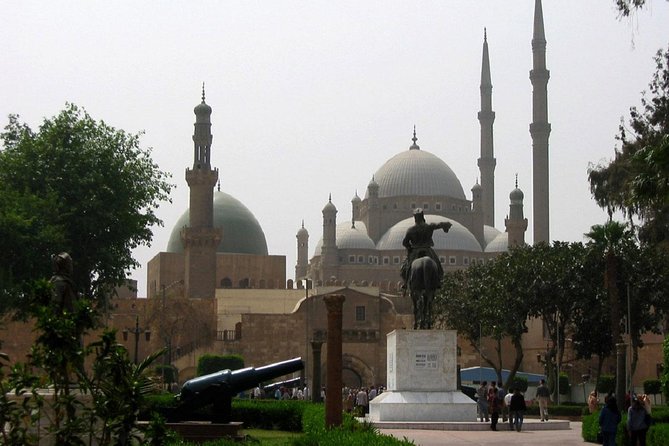
The highlight inside this stop is the Mohamed Ali Mosque, often called the Alabaster Mosque because of its light stone look. The description is specific here: it’s tied to Mohamed Ali, who ruled Egypt from 1805 to 1849 for over 45 years, and the mosque is described as being built in a Turkish style. That design detail is a great example of why this stop pairs well with the museum. You’re seeing how different influences shaped Egypt after the ancient period.
This is also where your guide can help you see beyond the obvious. Yes, the mosque is visually striking. But the real value is hearing what kind of statement a ruler built through architecture—and how that fits into Cairo’s story as an important center over centuries.
What could feel challenging
This segment includes walking and viewing, and it’s another reason to keep your expectations realistic. If you’re hoping for long, slow photo stops at every angle, 2 hours can move fast. You’ll still get great views, but you may not get unlimited wandering time.
Stop 3: Al-Azhar Mosque and Islamic Cairo’s mosque-and-street sequence
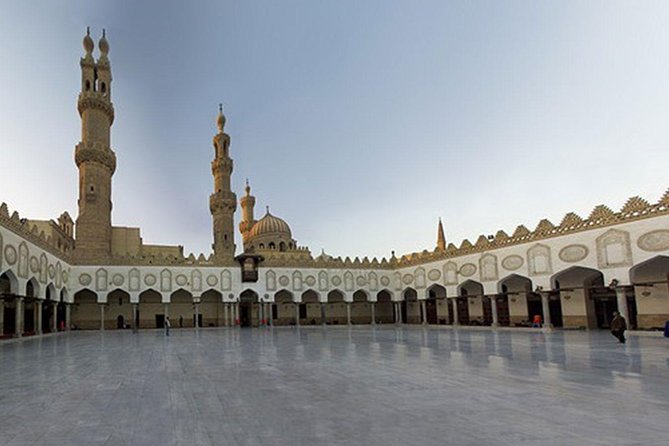
The last big block is Al-Azhar Mosque and the Islamic Cairo circuit. The tour is described as focused on important mosques and places of worship for the Islam faith in Cairo, with time to appreciate architecture and see how Muslims gather in these spaces.
You’re given about 2 hours here, and admission tickets are listed as included.
El Azhar: where learning meets worship
A major point in the tour details is the chance to visit El Azhar, described as the first Islamic university. Even if you don’t have deep academic interest, a university tied to religious life changes how you think about the city. It’s not only about worship as a moment; it’s about learning as part of a continuous tradition.
Bab Zuweila and Al-Mouayyed Mosque
From El Azhar, the itinerary mentions heading toward Bab Zuweila and the Al Mouayyed Mosque. The tour description also states that Badr Al Dein Al Gamal supervised the construction. That kind of specific attribution helps a lot. Instead of treating the mosque as an isolated structure, you can place it in a chain of leadership and building projects.
Walking to Al Hussein Mosque and Beit El Sehimy
Then the plan continues on foot toward Al Hussein Mosque and the unique Islamic house Beit El Sehimy. That house stop is a useful balance. When most people think of Islamic Cairo, they imagine mosques only. Seeing a historic house can make the whole area feel more lived-in, more connected to daily life rather than only grand religious monuments.
Another mosque stop mentioned, but not fully listed
The description says the trip continues to a Fatimide Mosque, but the specific name is cut off in the provided text. So I’d treat that as a bonus stop that depends on the exact route that day, rather than something you should plan your photos around.
How the day actually flows (and why it feels manageable)
This tour is designed as a single-day structure: museum, then citadel, then Islamic Cairo, then back to your hotel. It’s listed as about 8 hours, and it includes private transportation, with pick up from your hotel and return.
That matters because Cairo traffic and route changes can be unpredictable. When you have pickup and return sorted, the day becomes easier to handle, especially if you have dinner plans later.
The tour also includes bottled water (one bottle on board per trip) and snacks. That’s a small detail, but it’s the kind that can save you during long museum-and-mosque days where you might not want to run out for snacks between stops.
The “focus” strategy that works best
Because each major stop is time-boxed, the best way to enjoy it is to do this mental setup when you start:
- Decide what matters most to you at the museum (start with Tutankhamen, then pick one or two other themes)
- Use the Citadel view to orient yourself for the rest of the day
- In Islamic Cairo, let your guide connect the buildings and institutions, not just the photos
If you follow that, the tight schedule becomes a benefit instead of a limitation.
Price and value: what $20 per person really buys
At $20 per person, this is priced like a budget-friendly Cairo day with major sights. The big value piece is that admissions are marked included for the museum and the citadel/mosque stops, while you also get transport and hotel pickup.
Still, the pricing details have one important wrinkle: entry fees are listed as optional, and the expert Egyptologist guide is optional too. In practice, that can mean the core route is covered, while add-ons you request on the spot may cost extra.
Lunch is also listed as optional. The itinerary includes a restaurant meal break, but you should treat your lunch spend as your choice rather than a guaranteed included item.
So who gets the best value?
You’ll feel the most value if you:
- Want a guided route with pickup and return
- Like seeing famous sites without spending the whole day figuring out transport
- Are happy to focus on the main highlights instead of trying to cover every gallery in the museum
If you’re the type who wants total freedom to linger and read everything, you might find the time limits make this feel too structured. But if you want a smart overview with a guide handling the pacing, the cost-to-time ratio is strong.
Guides matter: what Nurhann and Walid add to the experience
Two guide names show up in the reviews provided: Nurhann and Walid. Both are described as kind and respectful, with deep explanations about Egyptian history in the museum and about Islam and architecture at the mosques.
That’s not just “nice to have.” On a day like this, a good guide helps you turn a list of buildings into a coherent story. You start noticing why certain objects were made, why certain rulers built particular monuments, and how religious institutions shaped city life.
One more practical detail from the reviews: Walid is mentioned as adding a boat ride at the end for extra cost when possible. If you want that kind of add-on, it’s worth asking your guide near the end of the day if timing allows.
Weather, timing, and small practical advice before you go
This experience lists a weather requirement. If conditions aren’t good, you may be offered a different date or a full refund. Also, the schedule needs enough daylight for outdoor viewing at the Citadel and for walking through Islamic Cairo.
Here are a few plain, practical tips that fit what the itinerary is asking you to do:
- Wear comfortable shoes for museum floors and street walking around Islamic Cairo
- Bring a light layer if the weather shifts through the day
- Keep your evening plans realistic. The tour is long, and guides aim to get you back on time, as noted in one review about catching a train
If you’re sensitive to crowds or prefer very slow sightseeing, consider whether you want a more flexible private day. Otherwise, this tour format is built for people who like a full, guided day.
Should you book this Egyptian Museum + Citadel + Al-Azhar tour?
If you want a single-day route that covers the museum core, the Citadel views, and the Islamic Cairo mosque circuit, this is a solid choice. The biggest strengths are the big museum focus, the monument-and-view pacing, and the presence of guides who can explain what you’re seeing (with names like Nurhann and Walid popping up in strong feedback).
I’d only hesitate if you’re the kind of visitor who needs unlimited time to read every label, because the museum and each major stop are time-boxed. You’ll still get highlights—you just won’t get an all-day museum marathon.
Overall: for $20, with pickup, transportation, snacks, water, and admissions listed as included for the main stops, this is a practical way to experience Cairo’s big layers in one organized day.
FAQ
How long is the tour?
The tour is listed as about 8 hours.
What does it cost per person?
The price is $20.00 per person.
Is hotel pickup included?
Yes. Pickup from your hotel and return are included.
Is this a private tour?
Yes. It’s a private tour/activity, and only your group participates.
Are admission tickets included?
Admission tickets are marked as included for the museum and the citadel/mosque stops. Entry fees described as optional may not be included.
Is lunch included?
Lunch is not included. Lunch at a local restaurant is listed as optional.
What’s included for food and drinks?
You get bottled water (one bottle on board the vehicle per trip) and snacks.
Is an Egyptologist guide included?
An expert Egyptologist guide is listed as optional, not included.
What happens if the weather is poor?
The experience requires good weather. If canceled due to poor weather, you’ll be offered a different date or a full refund.
Can I cancel for free?
Yes. There is free cancellation, and you can cancel up to 24 hours in advance for a full refund.