REVIEW · TUNIS
Private Guided Tour of Dougga and Testour Mosque
Book on Viator →Operated by Tunisia Guided Tours · Bookable on Viator
Roman ruins, minus the crowd chaos.
What makes this day trip tick is the combo of UNESCO-scale ruins and hands-on time to walk, look, and ask questions with a real guide. I like the door-to-door pickup option from Tunis or Hammamet because it protects your day from wasted logistics, especially when you’re pairing multiple sites in one go.
The other win is the stop at Testour, where the Great Mosque minaret features a counterclockwise clock with upside-down numbers, installed by Andalusians and back in action since December 2014. One consideration: this is a 6–7 hour outing with lots of time on uneven ground and it requires good weather, so plan for a long, active day and build in a little flexibility if conditions aren’t great.
In This Review
- Key things I’d circle before you go
- Dougga: A hilltop Roman town you can actually roam
- Aïn Tounga: The half-famous archaeological stop
- Testour’s Great Mosque: The minaret clock that runs backward
- Private guided pacing: what changes when it’s not a bus group
- Price and value: is $127.81 a fair deal?
- Timing and touring style for a 6–7 hour day
- Who this tour suits best (and who should rethink)
- Should you book the Private Guided Tour of Dougga and Testour Mosque?
- FAQ
- FAQ
- How long is the Dougga and Testour private tour?
- Where does the tour start, and is pickup included?
- Is this tour private?
- Are admission tickets included?
- What sites are included in the tour?
- How much time do you spend at each main stop?
- What’s special about the clock at the Great Mosque of Testour?
- Does the tour require good weather?
- What is the typical booking lead time?
- What are the cancellation terms?
Key things I’d circle before you go
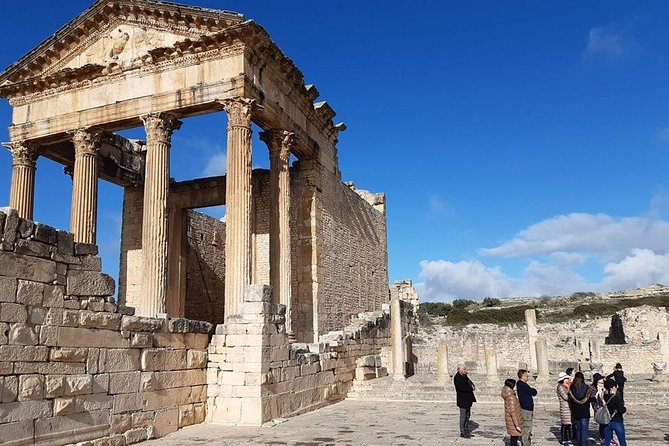
- Dougga’s preserved streets and buildings let you experience a whole ancient town, not just a few scattered monuments.
- UNESCO sites in one day means fewer transit days and more time in the sites themselves.
- Aïn Tounga feels underdeveloped, which is exactly why many people love it if you enjoy quieter, less staged places.
- Testour’s backward clock adds a fun, truly unusual detail you can’t easily get elsewhere.
- A private format keeps the pacing comfortable so you’re not rushing through photo stops.
Dougga: A hilltop Roman town you can actually roam
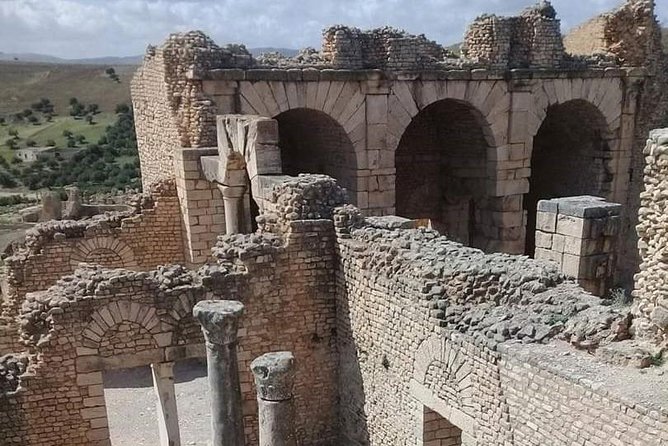
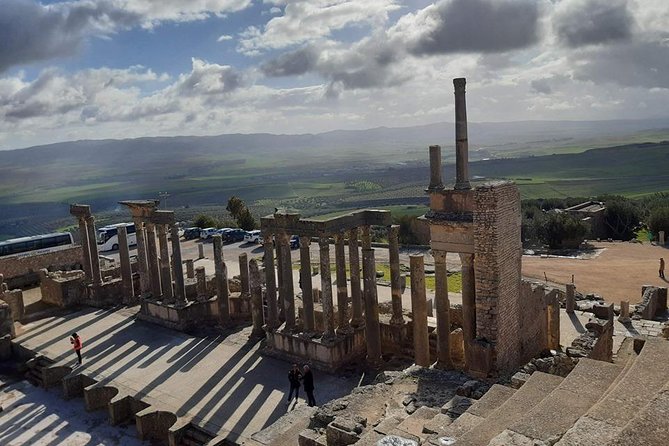
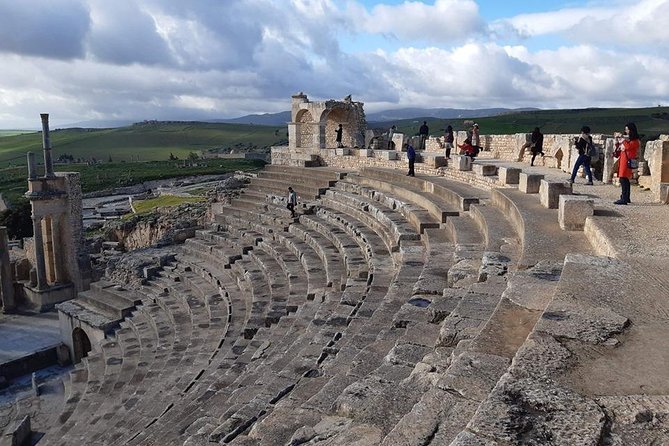
Dougga is the kind of site that makes you forget how most Roman ruins get “managed.” You’re on a hilltop, with wide views over surrounding valleys and olive plantations, and the setting helps you understand why this place mattered. The approach drive also sets the mood: you pass through rural countryside that feels like the real Tunisia outside the main city circuits.
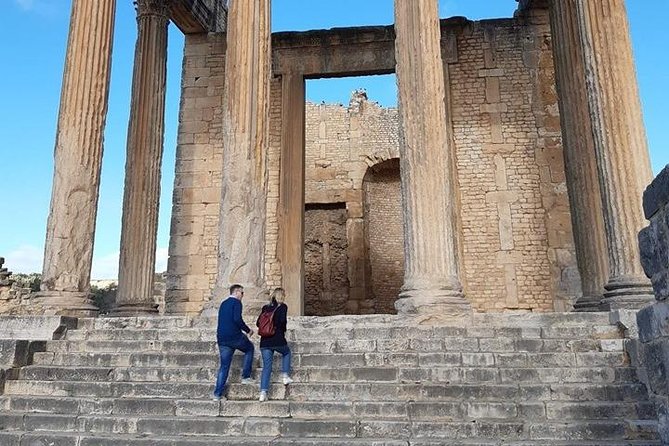
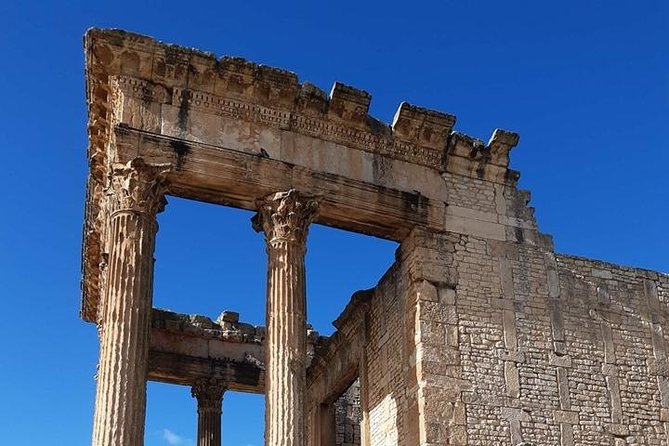
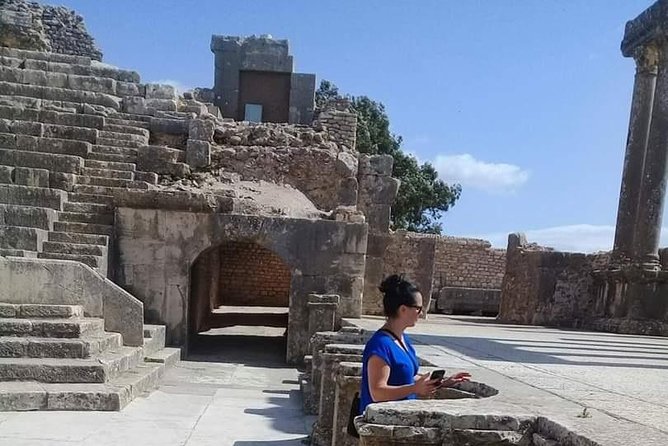
What I like most is the scale of preservation. At Dougga, the ruins aren’t limited to one or two major fragments sitting alone. Whole sections of the town are there—Roman streets included—so you can move through spaces that feel like they were built to connect daily life. You don’t just look from a distance. You can take your time climbing in and out of areas connected to houses, temples, and theaters, and even slip into the idea of tunnels and passageways the way ancient routes were meant to flow.
A useful context point for your visit: Dougga’s story doesn’t end with the Romans. You’ll also find an older Punic temple here, plus a cleansing bath area. That matters because it gives you a fuller sense of continuity—people weren’t arriving fresh in one century and then vanishing. Different cultures used, adapted, and left marks over time.
Practical takeaway: plan for about 2 hours for Dougga. If you like quiet photo time and a slower pace, you might naturally use that whole window.
You can also read our reviews of more tours and experiences in Tunis.
Aïn Tounga: The half-famous archaeological stop
Between Dougga and Testour, you’ll catch Aïn Tounga from the road—at first glance, it can look like just a square tower in ruins. Then you see it’s the entry point to a larger archaeological site spread along a hillside, surrounded by fields and olive groves. This is one of those places that doesn’t feel heavily developed for mass tourism, which is a big part of its appeal.
The setting helps: you’re not only visiting stones, you’re seeing a countryside-shaped context that explains why these sites were placed where they were. And because Aïn Tounga isn’t presented as a fully packaged spectacle, your guide’s interpretation becomes even more valuable. With the right explanation, you’ll start noticing how the terrain relates to what’s left behind—rather than treating it like a stop you sprint through.
Possible drawback: because it’s less developed than the headline site, you may not get the same “wow” density in every single corner of the ruins. If you’re the type who wants nonstop major monuments, you might want to treat Aïn Tounga as a bonus chapter that adds texture, not the main plot.
Practical takeaway: keep your curiosity switched on here. Bring a good walking pace and expect more atmosphere than polished visitor infrastructure.
Testour’s Great Mosque: The minaret clock that runs backward
Testour’s Great Mosque is where the day turns from ancient Roman (and Punic) worlds into something else entirely: Andalusian influence in Islamic architecture. The star detail is the minaret clock, which is a genuine oddball—in the best way.
Here’s what makes it special: the clock hands move in the opposite direction of a normal watch, and the numbers are placed upside down. According to the tour facts, Andalusians installed this clock about 300 years ago. It later suffered downtime, but it has been working again since December 2014.
For me, this stop works because it’s not just a pretty building. It’s a story you can see immediately. You look up, you notice the reversed mechanics, and you instantly get a question in your head: how did this tradition survive, and why does it exist like this? A guide can connect the architectural meaning with the local history, so the clock isn’t just a quirky photo—it becomes a clue.
The visit is short—about 30 minutes—which is actually perfect. It keeps the day balanced: you get enough time to take photos, ask questions about what you’re seeing, and then move on without feeling dragged through a long museum-style stop.
Practical takeaway: bring your phone camera, but also take 30 seconds to just watch how your eyes read the clock face. It’s one of those details that sticks.
Private guided pacing: what changes when it’s not a bus group
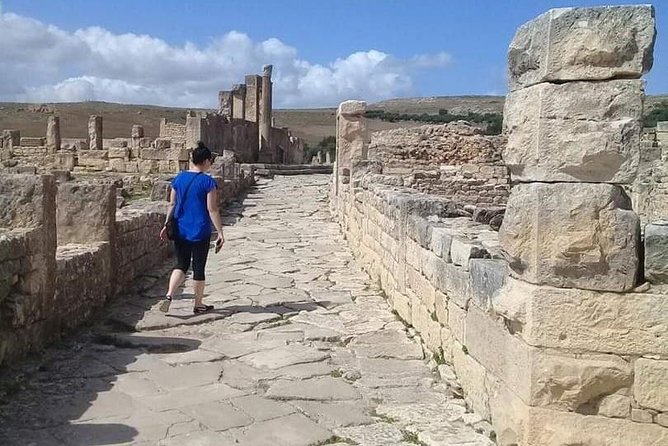
This is a private tour, meaning it’s built for your group only. That sounds like marketing fluff until you feel it in the timing. Instead of marching as one unit, you can slow down when you want to look closely at a street section at Dougga, or when you’re standing in a doorway wondering what daily life might have been like. You can ask questions without feeling like you’re holding up a parade.
And the guide matters. One of the standouts in feedback is Ghassen, praised for being very nice and offering good advice. That kind of guidance is exactly what helps at sites like Dougga, where the sheer amount of detail can overwhelm you if you don’t have a thread to follow.
Door-to-door transfers from Tunis or Hammamet also do real work for your comfort. With a driver handling the route, you can focus on the sites and scenery instead of losing half your day to getting to transit points and back.
Practical takeaway: if you hate rushing, or you prefer asking questions over playing “guess the ruin,” the private format is worth it.
Price and value: is $127.81 a fair deal?
At $127.81 per person, this tour isn’t the cheapest way to see UNESCO sites—but it’s also not overpriced for what you’re actually getting.
You’re paying for:
- a full-day plan that hits multiple major stops in one shot
- admission included at Dougga
- front-door pickup and drop-off from Tunis or Hammamet
- private guiding and vehicle transfer time that would be annoying to organize on your own
Where the value shows up is in efficiency. Dougga and Testour aren’t “quick hit” attractions. If you try to piece it together solo, you’ll spend energy on transport coordination, timing, and figuring out the flow between stops. Here, the structure does that for you.
Also, the tour notes group discounts, which can improve value if you’re traveling with family or friends. Even if it stays private, discounts can shift the math in your favor.
My fair warning: because it’s a long day, the value is best if you truly plan to use the full time. If you only want one major site and don’t care about the rest, you might feel it’s too much. If you like seeing how different eras and cultures overlap, you’ll likely feel like this price buys a complete experience rather than a rushed highlight reel.
Timing and touring style for a 6–7 hour day
The tour runs about 6 to 7 hours, with set visit chunks that keep the day moving. Dougga takes about 2 hours, Aïn Tounga and the drive time fill the middle, and Testour’s mosque is around 30 minutes.
A helpful way to think about the day:
- You start with big immersion time at Dougga, where there’s more to read and more space to wander.
- You get a quieter, less-developed stop at Aïn Tounga to break up the day.
- You finish with a concentrated cultural stop at Testour that’s quick but memorable because of the backward clock feature.
One consideration is weather. The tour explicitly needs good weather. That matters at sites outdoors, where visibility and comfort change fast.
Practical takeaway: wear comfortable shoes and expect you’ll be walking and climbing around ruins. The point isn’t to “tire yourself out,” but Roman towns weren’t designed for soft-soled tourism.
Who this tour suits best (and who should rethink)
This works best for you if:
- you want two UNESCO stops in one day
- you enjoy ruins where you can actually walk around streets and buildings (not just view isolated chunks)
- you like architectural oddities and cultural details, like the Testour clock
- you prefer a private guide who can keep the pacing comfortable
It may not be ideal if:
- you’re short on energy and don’t want an all-day outing
- you’re visiting during poor weather, since the plan depends on conditions
- you want only the most famous stop and would rather avoid a quieter archaeological add-on
Should you book the Private Guided Tour of Dougga and Testour Mosque?
Yes, you should book it if your priority is a well-paced day that combines major Roman preservation at Dougga with a distinctly Tunisian cultural twist at Testour. The private format and door-to-door transfers make the day feel smoother than trying to coordinate everything yourself.
I’d especially lean toward booking if you enjoy understanding connections across eras—Romans, Punic roots, and Andalusian influence all in one day. That’s the kind of mix that turns a checklist trip into something you can actually talk about.
If you’re flexible with weather and you’re comfortable with several hours of walking around archaeological ground, this is a strong use of your time in Tunisia.
FAQ
FAQ
How long is the Dougga and Testour private tour?
The tour lasts about 6 to 7 hours.
Where does the tour start, and is pickup included?
Pickup and drop-off are included from Tunis or Hammamet.
Is this tour private?
Yes. It’s a private tour, and only your group participates.
Are admission tickets included?
Admission is included for Dougga. The admission for the Great Mosque of Testour is free.
What sites are included in the tour?
You visit Dougga, the Aïn Tounga archaeological site, and the Great Mosque of Testour.
How much time do you spend at each main stop?
Dougga is about 2 hours, and the Great Mosque of Testour is about 30 minutes.
What’s special about the clock at the Great Mosque of Testour?
The minaret clock has hands that turn in the opposite direction, and the numbers are placed upside down.
Does the tour require good weather?
Yes. It requires good weather. If it’s canceled due to poor weather, you’ll be offered a different date or a full refund.
What is the typical booking lead time?
On average, this tour is booked about 5 days in advance.
What are the cancellation terms?
You can cancel for a full refund up to 24 hours in advance of the experience start time. If you cancel less than 24 hours before, the amount paid isn’t refunded.