REVIEW · CAIRO
Discover The Historical Mosques In Cairo
Book on Viator →Operated by Emo Tours Egypt · Bookable on Viator
Mosques in Cairo show a living timeline. I love the private A/C vehicle with hotel pickup, and I love that entry fees are included. You get a guided run through major landmarks of Islamic Cairo without the usual ticket-line hassle.
For about six hours, your guide helps connect the dots between different eras of Cairo’s mosque building, from the Fatimids to later Mamluk and Ottoman-style monuments. Bottled water is included, which matters in the heat and keeps the day feeling easy.
The trade-off: the timing is efficient. Several stops are brief, so if you want long, slow wandering, you may feel a little rushed.
In This Review
- Key things to know before you go
- Price and what $45 really covers
- Getting around Cairo without wasting your morning
- Al-Azhar Mosque: why this Fatimid landmark matters
- Mosque and Madrasa of Sultan Hassan: the Mamluk scale shock
- Cairo Citadel: Saladin’s fort, Cairo’s long government seat
- Mosque of Amr ibn al-As: Old Cairo’s early milestone
- Muhammad Ali Mosque: alabaster effect and Ottoman-era grandeur
- Al-Rifa’i Mosque: the finale opposite Sultan Hassan
- The guide makes the day (and the stories stick)
- What a typical day feels like in practice
- Who this tour is best for
- Should you book this historic mosques tour?
- FAQ
- How long is the tour?
- What’s included in the $45 per person price?
- Does the tour offer pickup from hotels?
- How many mosques or major religious sites do you visit?
- Is lunch included?
- Is the tour private?
Key things to know before you go
- Private A/C transfers keep the day comfortable, with hotel pickup and drop-off handled for you
- Entry fees are included, so you’re not juggling payments at each site
- An expert guide tells the stories behind the architecture, not just the facts on signs
- Seven major stops cover everything from Old Cairo through the Citadel area
- Bottled water is provided, which helps on a 6-hour circuit
- A brisk pace means you’ll see a lot, but you won’t linger for hours at one mosque
Price and what $45 really covers
At $45 per person for roughly 6 hours, this tour hits a sweet spot for Cairo. The big value isn’t just the guide—it’s that entry fees and transfers are part of the package, along with bottled water. That removes a lot of the usual “small costs” that can add up when you self-plan.
Also, it’s a private tour, meaning it’s only your group. You’re not squeezed into the kind of day where you’re constantly waiting for strangers to finish photos.
You can also read our reviews of more tours and experiences in Cairo.



Getting around Cairo without wasting your morning
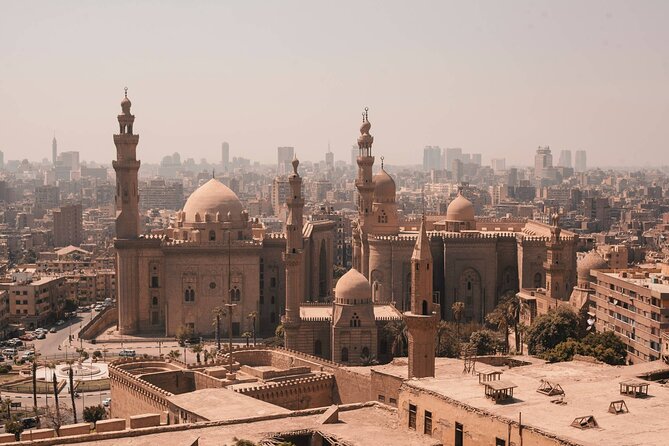
Cairo can be a time-eater. This tour solves that with hotel pickup and drop-off, plus private A/C vehicles using the latest model transfer setup. When you’re bouncing between Islamic Cairo and the Citadel area, that convenience is a big deal.
Because the transport is planned, you’ll spend more of your day looking at mosques and less time figuring out routes. It’s especially useful if your hotel is in Cairo or Giza and you want to avoid the scramble of public transit for a full circuit.
Al-Azhar Mosque: why this Fatimid landmark matters
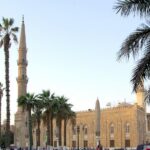
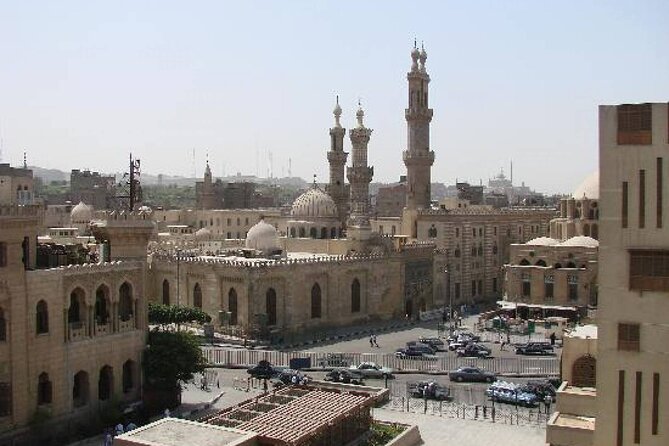
Your first major stop is Al-Azhar Mosque, in Islamic Cairo. The Fatimid ruler Al-Mu’izz li-Din Allah commissioned it for the newly established capital city in 970, and it’s often referred to as the first mosque established in Cairo.
What I find compelling here is how the name itself points to belief and storytelling: it’s commonly linked to az-Zahrāʾ, described as meaning the shining one, connected to Fatimah. When your guide explains the origin, Al-Azhar stops being just a famous building and becomes a landmark with a clear beginning.
Time-wise, you get about 1 hour, so you can look outside and inside with enough breathing room to absorb details. One practical note: this is an active mosque, so your visit can follow the rhythms of worship.
Mosque and Madrasa of Sultan Hassan: the Mamluk scale shock
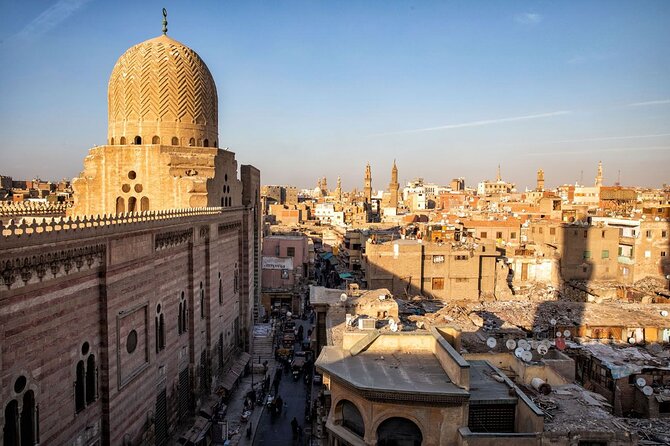
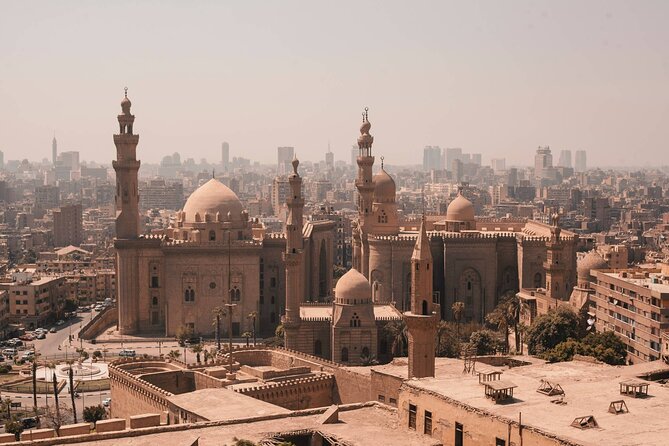
Next up: the Mosque-Madrasa of Sultan Hassan. It’s a monumental mosque and school building in the historic district, constructed between 1356 and 1363 during the Bahri Mamluk period, commissioned by Sultan an-Nasir Hasan.
The standout here is the sheer ambition of the architecture. Even if you only catch it for about 30 minutes, Sultan Hassan has a “how did they build this” feeling, with massive scale and architectural innovation that still reads clearly today.
If you like history you can see with your eyes, this is the stop that turns those dates into something physical. It also sets you up well for the Citadel, because the day keeps moving through Cairo’s power centers.
Cairo Citadel: Saladin’s fort, Cairo’s long government seat
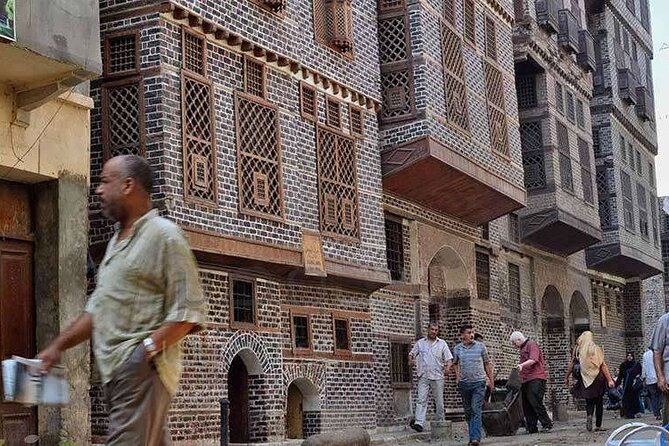
The Citadel of Cairo, also called the Citadel of Saladin, is where medieval Cairo feels most like a fortress-city. It began as a fortification project built by Salah ad-Din (Saladin) and was developed further by later rulers.
Here’s why the Citadel earns a spot in a mosque-focused day: it wasn’t just a defensive hilltop—it was the seat of government and the residence of Egypt’s rulers for nearly 700 years, spanning roughly the 13th to the 19th centuries. Your guide’s explanation usually helps you understand how religious and political life overlapped in the same spaces.
You’ll have about 1 hour at this stop, with admission included. The Citadel complex includes mosques and museums, so if you have a curious streak, you’ll likely want to spend extra time—but the tour keeps you moving so you still cover the major mosque highlights.


Mosque of Amr ibn al-As: Old Cairo’s early milestone
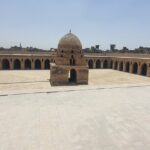
Then you head to the Mosque of Amr ibn al-As, also known as the Mosque of Amr. According to the dates associated with the original construction, it was built around 641–642 AD as the center of Egypt’s newly founded capital at Fustat.
This is one of those stops where the superlatives become real. It’s tied to the claim of being the first mosque built in Egypt and is connected to the general Amr ibn al-As, with the mosque location linked to the site of his military tent.
One of the most interesting details included in the tour framing is that one corner of the mosque contains the tomb of his son, Abd Allah ibn Amr ibn al-As. And because the structure was heavily rebuilt over the centuries, the current version reflects layers of reconstruction—so it’s not a single untouched time capsule, but a living monument that kept getting renewed.
You’ll typically get around 30 minutes here, and it works well: short enough to keep the pace, long enough to notice the scale and the active feel of a major historic mosque.
Muhammad Ali Mosque: alabaster effect and Ottoman-era grandeur
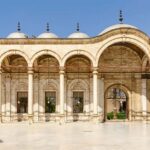
Next comes the Mosque of Muhammad Ali, often called the Alabaster Mosque because its outer walls are covered by alabaster stone. The alabaster connection is a great example of why this tour isn’t only about the oldest mosques.
You get about 30 minutes for this stop. Even in a short visit, the Muhammad Ali Mosque tends to register as a different style and mood compared with the earlier Fatimid and Mamluk landmarks—like Cairo changing gears across centuries.
If you’re the kind of traveler who enjoys contrasts, this is a strong pivot point. The day moves from the foundations and power-era monuments into a more showpiece, carefully designed monumental look.
Al-Rifa’i Mosque: the finale opposite Sultan Hassan
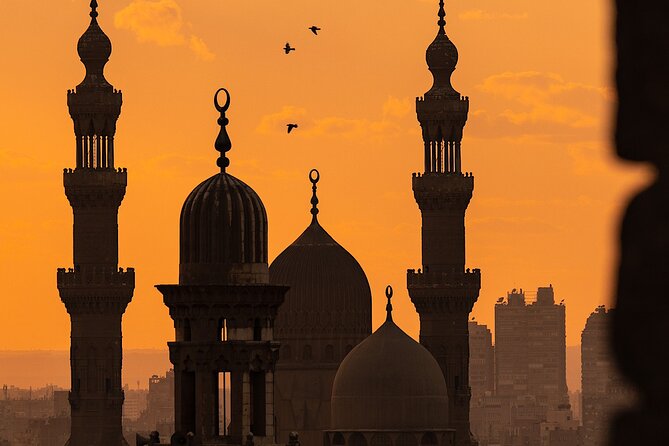
To wrap up the mosque circuit, you visit Al-Rifa’i Mosque. It sits opposite the Mosque-Madrassa of Sultan Hassan, which matters because the building was conceived as an architectural complement to the older structure.
The tour info connects it to a wider 19th-century effort to link the present with earlier Islamic glory—while also modernizing the city. That can make Al-Rifa’i feel like more than just another big mosque; it becomes a statement about how Cairo’s later rulers used history to define legitimacy.
You’ll have about 30 minutes for this final stop, with admission included. It’s a good length for closing the loop: you can compare it with Sultan Hassan across the street, mentally “stack” the eras you’ve seen, and end the day with a clear sense of how Cairo’s mosque architecture evolved.
The guide makes the day (and the stories stick)
This kind of tour succeeds or fails on the person giving the context. The operator’s feedback points to guides who don’t just recite dates, but explain why the architecture looks the way it does and how rulers and eras shaped the buildings.
Names that show up in positive feedback include Salua, Youssef, and Mahmoud Afifi. If you get someone in that quality tier, you’ll likely leave with a better mental map of Islamic Cairo, not just a list of stops.
You’ll also notice the guide is part historian, part walking translator of Cairo’s physical layout—especially around big complexes like the Citadel, where it helps to know what you’re looking at before you start chasing every view.
What a typical day feels like in practice
This tour is built around efficient timing. You start with pickup and begin the circuit, then you work through major sites in a logical flow: Fatimid-era Al-Azhar, Mamluk Sultan Hassan, the Citadel, Old Cairo’s early mosque, then Ottoman-era Muhammad Ali, and finally Al-Rifa’i.
Because the visits are short at several stops, I recommend treating the day like a set of “guided highlights.” That’s not a criticism of the tour—it’s the whole format. You’ll see a lot of Cairo’s most important mosque landmarks in one organized session.
And since this is priced as a whole package with bottled water, entry fees, and private transfers, you’re paying for convenience as much as for sightseeing. In Cairo, that trade can be worth it, especially if you’re balancing other must-dos like markets or museums.
Who this tour is best for
This works especially well if you want a mosque-focused Cairo day without turning it into a logistics project. It’s a strong fit for history lovers who like Islamic architecture, but it’s also accessible if you simply want to see the big names and learn what they mean.
If you’re juggling limited time in Cairo, the full circuit makes sense. With many stops around 30 to 60 minutes, you’ll still get meaningful viewing time while keeping the whole day to about 6 hours.
If you’re the type who wants to spend half a morning at one site, you might prefer a slower, single-neighborhood plan. This one is designed for momentum.
Should you book this historic mosques tour?
Book it if you want a structured, mosque-focused introduction to Cairo with minimal hassle. For the price, you’re getting the practical wins—hotel pickup/drop-off, private A/C transport, entry fees handled, and bottled water—plus a guide who can explain what you’re seeing.
Hold off if your ideal day is slow and contemplative at one place. This itinerary is short-stop style, not a marathon of one monument at a time.
One last planning tip: this tour is commonly booked about 9 days in advance, so if your dates are firm, it’s smart to reserve early and lock in a smooth day.
FAQ
How long is the tour?
The tour runs for about 6 hours (approx.), with multiple mosque stops and included admission at each.
What’s included in the $45 per person price?
The price includes hotel pickup and drop-off, private A/C transfers, a private tour guide, bottled water, and entry fees to the mosques.
Does the tour offer pickup from hotels?
Yes. Pickup is offered from hotels in Cairo or Giza, and you’ll also be transferred back after the tour.
How many mosques or major religious sites do you visit?
You visit seven stops focused on mosques and related religious landmarks: Al-Azhar Mosque, Sultan Hassan, Cairo Citadel (with mosques and museums in the complex), Mosque of Amr ibn al-As, Mosque of Muhammad Ali, and Al-Rifa’i Mosque.
Is lunch included?
No. Lunch is not included, but koshari at a local restaurant is listed as an optional add-on.
Is the tour private?
Yes. It’s described as a private tour/activity, meaning only your group participates. Group discounts are also mentioned.