REVIEW · DUBAI
Private Tour of Authentic Dubai, Markets, Boat Ride & Blue Mosque
Book on Viator →Operated by Ahmed Habibi · Bookable on Viator
Dubai’s real story is quieter than you think. This private, premium half-day points you toward Old Dubai instead of only the skyline, with a local guide, a comfortable air-conditioned ride, and key stops tied to trade, tradition, and the creek. You’ll also get a guided visit inside the Blue Mosque, plus a chance to wear traditional attire for a more respectful, memorable experience.
I especially like the way this tour builds from place to place. The Abra boat ride across Dubai Creek helps you understand why the city grew the way it did, and it turns the souks into a natural next step instead of a random shopping detour. I also like that you’re not just looking from the outside: the Blue Mosque visit is guided and inside-focused, which makes it easier to follow the story and not just take photos.
One thing to consider: you’re cramming a lot into 3 to 4 hours, so it’s best if you’re comfortable walking through markets and switching locations without a long sit-down break.
In This Review
- Key Highlights You’ll Feel Immediately
- Private Old Dubai in Comfort: Pickup, Private Vehicle, and a Guide Who Connects the Dots
- Al Seef and Al Fahidi Village: Sandstone Streets, Windtowers, and Heritage Stops That Make Sense
- Dubai Creek and the Abra Ride: The City’s Shortcut to Understanding Why It’s Built This Way
- From Deira Old Souk to the Gold Souk: Shopping Time With Real Market Context
- Spice Souk and Textile Souk: How to Follow Your Senses Without Losing Your Bearings
- Inside the Blue Mosque: Guided Visit, Dress Code Comfort, and Better Photos
- Value and Timing: Is $69.79 a Good Deal for This Much Old Dubai?
- Should You Book This Private Dubai Old Town Tour?
- FAQ
- How long is the private tour?
- Is pickup and drop-off included?
- Is this tour private for just my group?
- Do I ride an Abra boat?
- Which markets or souks are included?
- Does the tour include the Blue Mosque interior?
- Are dates and Arabic coffee included?
- Can I cancel for a full refund?
Key Highlights You’ll Feel Immediately
- Private local guide with pickup and drop-off in an air-conditioned vehicle
- Abra boat crossing that connects Bur Dubai and Deira by the water the old way
- Al Seef + Al Fahidi Village for traditional streets, windtowers, and heritage stops
- Blue Mosque visit inside, with an opportunity to wear traditional attire
- Gold, spice, and textile souk time with guided context (not just wandering)
Private Old Dubai in Comfort: Pickup, Private Vehicle, and a Guide Who Connects the Dots
The biggest difference here is that you’re not being herded through Dubai on a fixed script. This is a private tour, so your guide can pace the day for your group, answer questions as you go, and keep things on-theme: how Dubai traded, built, and lived before the skyscrapers took over the skyline.
Pickup and drop-off matter more than you might think. In a city built fast, having a plan from the start saves time and stress, especially on a short half-day. You’ll also have mobile tickets, which keeps the process simple when it’s time to enter heritage sites and move between stops.
Your guide is the secret sauce. Two names come up in the tour’s feedback: Farhan and Khaled. They’re described as warm, witty, and very good at turning what you see into a story you can actually remember. The provider behind this experience is Ahmed Habibi, which matters because it signals you’re working with a real operator, not just a one-off escort.
You can also read our reviews of more tours and experiences in Dubai.
Al Seef and Al Fahidi Village: Sandstone Streets, Windtowers, and Heritage Stops That Make Sense
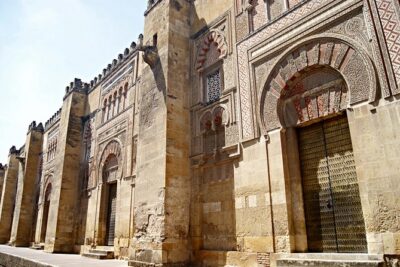
This tour makes a smart move early: it starts you in areas that explain Dubai’s old geography. At Al Seef, you’ll see a meeting point of old and newer Dubai. The area is known for sandstone buildings, windtowers, and the kind of traditional alley network that supported day-to-day life. If you’ve ever wondered how a city with extreme heat still managed pleasant streets, windtowers are the clue.
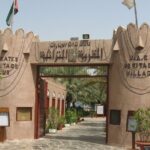
Next comes the Al Fahidi Historical Neighbourhood, where the goal is understanding how people built homes and how community space worked. You may visit places such as the Coffee Museum, Coin Museum, Majlis House, and other heritage locations in the area. Even if you don’t stay long in each room, being able to point at a traditional structure and have the guide explain why it was built the way it was makes the whole neighbourhood click.
A detail I’m glad this tour includes: the traditional houses are described as being built with stone, sandalwood, palm fronds, and palm wood. That’s not just trivia. It helps you visualize how materials, climate, and daily habits shaped the look and feel of Old Dubai. You’ll also walk through narrow alleys, pathways, and public squares, which is where the neighbourhood’s character shows up fast.
Practical note: museums and heritage sites work best when you treat them like context, not like a classroom. In this format—around 45 minutes here—you get enough to orient yourself, then you can spend the rest of the day shopping and exploring with better instincts.
Dubai Creek and the Abra Ride: The City’s Shortcut to Understanding Why It’s Built This Way
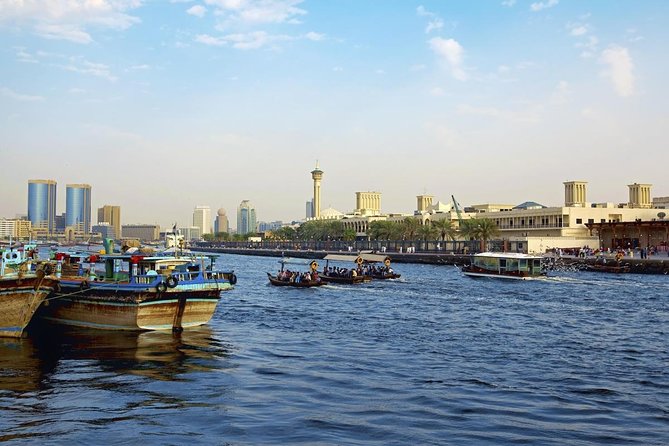
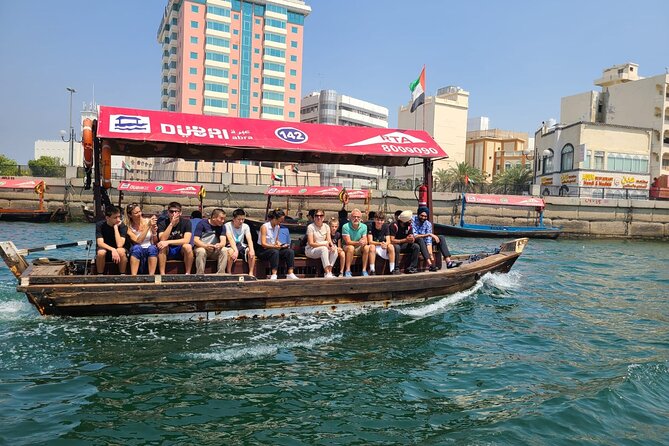
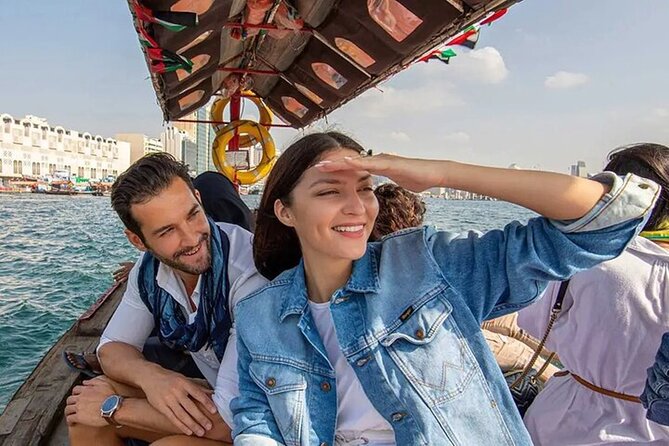
Dubai Creek is not a scenic extra. It’s the reason Old Dubai exists. The tour uses the creek to connect two key sides of the city by taking you on an Abra water taxi—the classic small boat locals used for generations.
You’ll cross and re-cross the water during the experience, with boat time designed to get you to the right areas for souk browsing. This is one of those activities that sounds simple until you’re actually there: the movement by water changes what you notice, because you see waterfront activity and the direction of streets more clearly.
The advantage of doing this with a guide: you’re not just on a boat. You’re learning how the creek functioned as a trade route, and how that trade links directly to why you end up in places like gold and spice shopping corridors. It also creates a natural pace reset. Markets can blur together, but a short water ride gives your brain a clean break.
Camera heads-up: boats create quick photo moments, but you’ll still want to keep your phone secure and ready. Market crowds can be tight later, so it’s smart to decide where you’ll stash your camera or valuables.
From Deira Old Souk to the Gold Souk: Shopping Time With Real Market Context
After the creek crossing, you land in the part of Dubai many people come for: souks. This tour doesn’t treat shopping like a free-for-all; it layers guidance and timing so you know where you are and what you’re looking at.
You’ll start with Old Souk time for browsing, then move toward the Gold Souk, described as Dubai’s largest gold market with over 300 retailers. That’s a lot of doors, and without context it’s easy to get lost—or to focus only on shiny displays without understanding the trade story behind them.
This is where the guide’s role matters again. You may learn about the region’s gold trading history as you walk, not after you’re already done shopping. You also get a standout detail to look for: the 64-kg gold ring, placed in Guinness World Records. That kind of specific reference helps you navigate faster, because you’re not just scanning; you’re searching with a purpose.
Shopping time here is shorter than a full shopping day, so I recommend having a plan with your expectations:
- If you’re buying jewelry or gifts, give yourself time to compare styles and decide your budget.
- If you’re just browsing, use the guide to pinpoint the most iconic sections first, then wander for fun.
Also, keep your eyes open for how signage and store fronts vary. In markets like this, the most dramatic items can be inside, not always at the entrance.
Spice Souk and Textile Souk: How to Follow Your Senses Without Losing Your Bearings
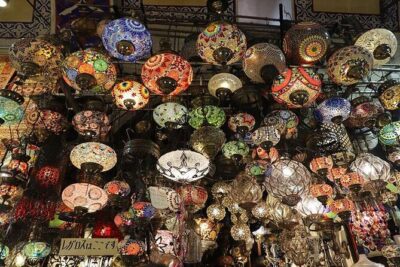
The Spice Souk is the sensory stop. Expect narrow alleyways, strong aromas, and plenty of stalls selling items you can smell before you really see. The goal is more than souvenirs. This stop is a chance to understand how trade goods moved through the city, and why spices and food products became tied to everyday life.
You’ll also see the kinds of souvenirs and traditional crafts you’d expect in a market environment, including carpets, jewelry, and ceramics. Even if you don’t plan to buy anything, walking this section with guidance helps you learn what you’re looking at and what makes one stall different from the next.
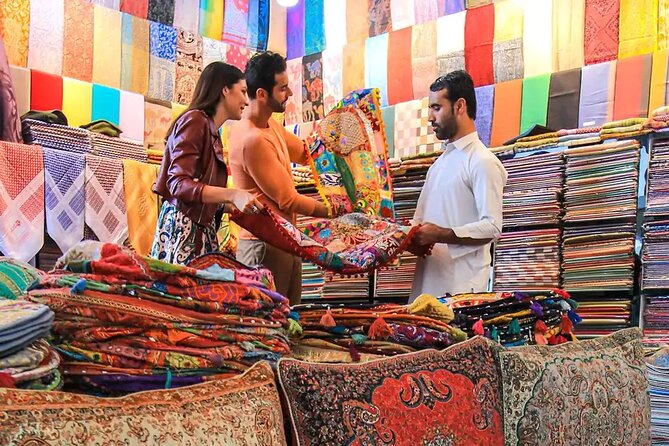
Then you’ll move to Textile Souk time. It’s only about 15 minutes, but that’s intentional: textiles are one of those categories where you can spot quality differences quickly with the right context, and then move on before you feel overwhelmed. This is also a great moment to think about practical gifts—things that fit in a suitcase and don’t require a long shipping process.
One practical consideration: markets can be crowded and hot. Plan to take short pauses when you can, and avoid spending too long in one stall unless you’re ready to commit. Your guide can help steer you to the right sections so you don’t burn your whole time stuck in one alley.


Inside the Blue Mosque: Guided Visit, Dress Code Comfort, and Better Photos
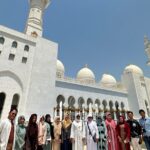
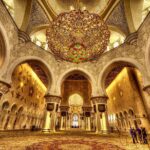
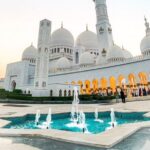
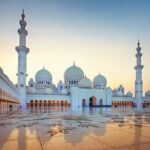
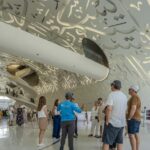
Most Dubai experiences include the outside of the Blue Mosque. This one includes the guided visit inside, which changes everything. Once you’re indoors, you’re no longer just admiring a landmark—you’re listening to the meaning behind the design elements and how the mosque functions as a living place of worship.
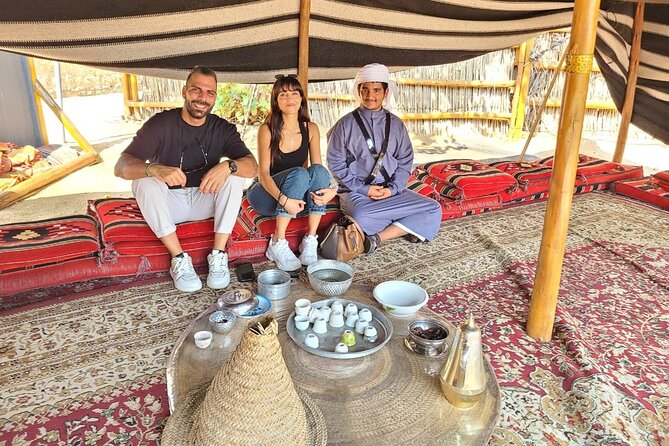
Dress code is the other big piece of this stop. The tour mentions an opportunity to wear traditional attire, which is useful if you want to follow local guidelines comfortably without scrambling for your own scarf or long cover-up right before the visit.
If you care about photos, this stop rewards you for slowing down slightly. Interiors are usually where people rush and then miss the details. Having a guide explaining what you’re seeing helps you frame your shots better, instead of just pointing the camera at the first large surface you notice.
This mosque visit also balances the day. After souks and trading corridors, a religious site offers a calmer rhythm and a different kind of learning. Even if you’re not a big architecture buff, you’ll probably leave with a clearer sense of why the Blue Mosque is such an important part of Dubai’s cultural identity.
Value and Timing: Is $69.79 a Good Deal for This Much Old Dubai?
At $69.79 per person, you’re paying for a bundle: private transport, a local guide, heritage entry fees, tastings, and built-in time at major souks. In practical terms, this can be good value if you want both structure and access.
Here’s what you’re getting that typically costs extra when you DIY:
- Private pickup and drop-off
- A local guide who connects the dots between architecture, trade, and markets
- Abra boat ride time
- Heritage-site access where tickets are handled
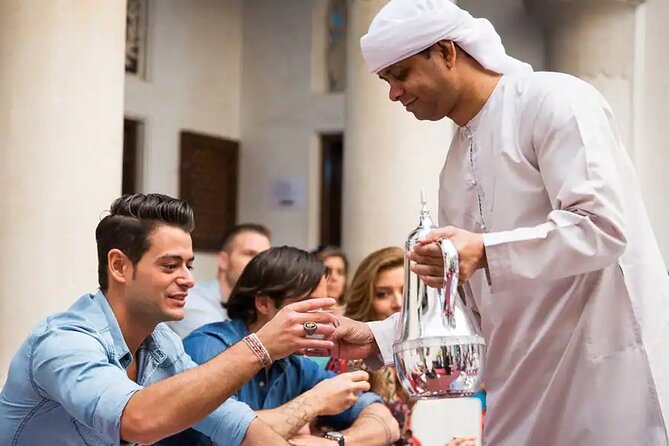
- Local tastings like dates and Arabic coffee
- Shopping time at the Gold, Spice, and Textile souks
Food is listed as optional at your own expense, so you’ll likely want to plan either a snack before or a meal after. Also, because the tour runs about 3 to 4 hours, you should treat it like a focused walk-through of Old Dubai rather than a full day of shopping.
Timing-wise, there’s also a hint from guide feedback: mid-day can work well for this style of tour. In a city where weather and daylight can affect comfort, I’d choose a time when you can handle short outdoor stretches and then rely on guides, museums, and indoor moments to cool down.
Should You Book This Private Dubai Old Town Tour?
Book it if you want Old Dubai to feel coherent. This tour is a smart mix of heritage neighbourhoods, a real creek crossing, market time, and an inside visit to the Blue Mosque. If you like learning by moving through places rather than sitting in one location, this format fits.
Skip it or reconsider if you hate walking through markets or want a long, slow pace with plenty of free time. The schedule is tight, and the souk stops are designed for browsing rather than hours of deep shopping.
One last practical tip for your group: if you can, pick comfortable shoes and plan your photo breaks. With the Abra ride, museums, souks, and a mosque interior, this is the kind of day where small discomforts add up fast.
If your goal is to see the parts of Dubai that explain the city, not just photograph it, this private tour is a very solid choice.
FAQ
How long is the private tour?
It runs about 3 to 4 hours.
Is pickup and drop-off included?
Yes. Private transport with pickup and drop-off is included.
Is this tour private for just my group?
Yes. It’s a private tour/activity, and only your group participates.
Do I ride an Abra boat?
Yes. The tour includes an Abra crossing connected to Dubai Creek, including time for the traditional boat ride.
Which markets or souks are included?
You’ll have time at the Gold Souk, Spice Souk, Textile Souk, and also Old Souk, plus time around Al Seef.
Does the tour include the Blue Mosque interior?
Yes. It includes a guided visit inside the Blue Mosque, along with an opportunity to wear traditional attire.
Are dates and Arabic coffee included?
Yes. Local tastings like dates and Arabic coffee are included.
Can I cancel for a full refund?
Yes. You can cancel up to 24 hours in advance for a full refund. If you cancel less than 24 hours before the start time, you won’t receive a refund.