REVIEW · ISTANBUL
Hagia Sophia & Blue Mosque Half-day Guided, Small Group Tour
Book on GetYourGuide →Operated by Aljazeera Tour · Bookable on GetYourGuide
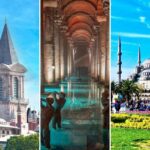
Three hours, four icons of Istanbul. This small-group guided tour is a concentrated taste of Sultanahmet, pairing the Blue Mosque and Hagia Sophia with the outdoor landmarks of the Hippodrome, then finishing with free time at the Grand Bazaar.
I love the way the guide makes the architecture make sense, especially the Blue Mosque’s hand-painted Iznik tiles and the story behind its six minarets. I also like the included walk through the Hippodrome monuments, where you can actually see pieces of the city’s layered past.
One big watch-out: the Hagia Sophia entrance ticket is not included and costs €25, paid in cash.
In This Review
- Key highlights you’ll feel right away
- The 3-hour format: what it’s great for, and what it isn’t
- Blue Mosque: 20,000 hand-painted Iznik tiles and six minarets
- Hippodrome: German Fountain, Serpentine Column, Obelisk, and Constantine
- Hagia Sophia: the world’s largest church for nearly a millennium (plus the €25 cash ticket)
- Sultanahmet Square and the short shop stop before the bazaar
- Grand Bazaar: orientation from the main gate, then real browsing
- Price and value: $20, plus one important extra cost
- Meeting point and getting started on time (the flag matters)
- Dress code, security, and why you should be ready before you arrive
- Who should book this tour (and who should consider a different option)
- Should you book? My take
- FAQ
- Do I need to pay an entrance ticket for Hagia Sophia?
- Is the Hagia Sophia ticket line skipped?
- Does the tour include hotel pickup?
- Where do I meet the guide if I’m not using hotel pickup?
- What sites are included in the guided portion?
- What happens at the Grand Bazaar?
- Is the Grand Bazaar open every day?
- What should I wear for the mosque visits?
- How long is the tour?
- Are food and drinks included?
Key highlights you’ll feel right away
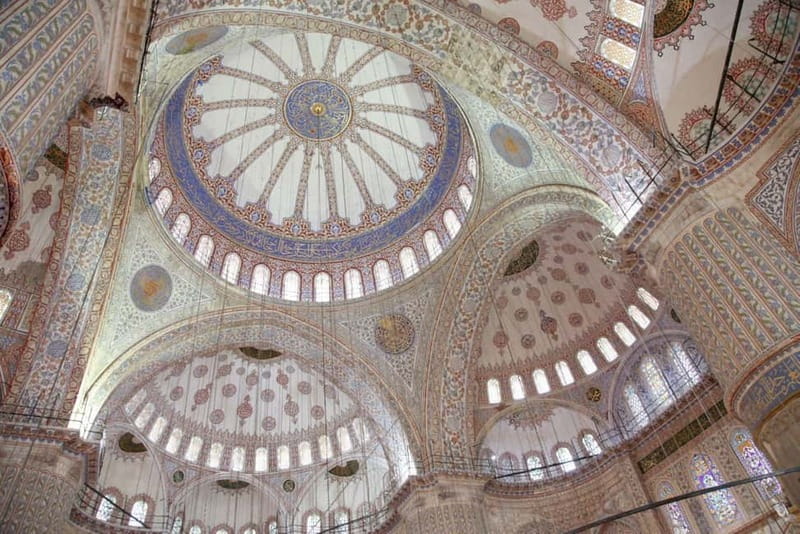
- Blue Mosque Iznik tiles and six minarets: the look is stunning, and you’ll get the “why” behind it.
- Hippodrome monuments with names you’ll recognize: German Fountain, Serpentine Column, Obelisk of Theodosius, Column of Constantine.
- Hagia Sophia’s church-to-mosque-to-museum timeline: a 6th-century building with centuries of new roles.
- Small-group pacing for a 3-hour hit list: guided where it matters, free time where it helps.
- Grand Bazaar time after orientation: learn the layout, then wander on your own.
The 3-hour format: what it’s great for, and what it isn’t
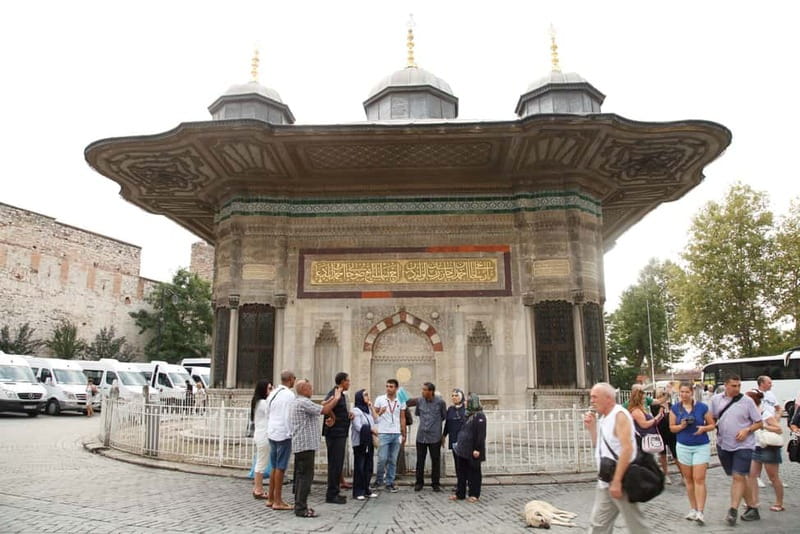
At just 3 hours, this tour is designed for people who want the big photo stops without sinking an entire day into transit and lines. You’ll cover Blue Mosque and Hagia Sophia with guidance, see the Hippodrome monuments in between, then end at the Grand Bazaar with time to browse.
The “value” here comes from focus. You’re not paying for endless wandering; you’re paying for an English-speaking guide to connect details—why a building looks a certain way, why these monuments were placed where they were, and how Constantinople’s old civic spaces connect to today’s Istanbul. That’s especially helpful if it’s your first trip and you’re trying to keep your bearings.
The trade-off is simple: the pace is brisk. You’ll get guided highlights, not long sit-down time. If you tend to want museum-depth reading, consider it a fast orientation tool before you return later.
You can also read our reviews of more tours and experiences in Istanbul.
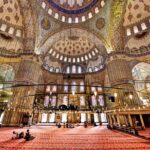
Blue Mosque: 20,000 hand-painted Iznik tiles and six minarets
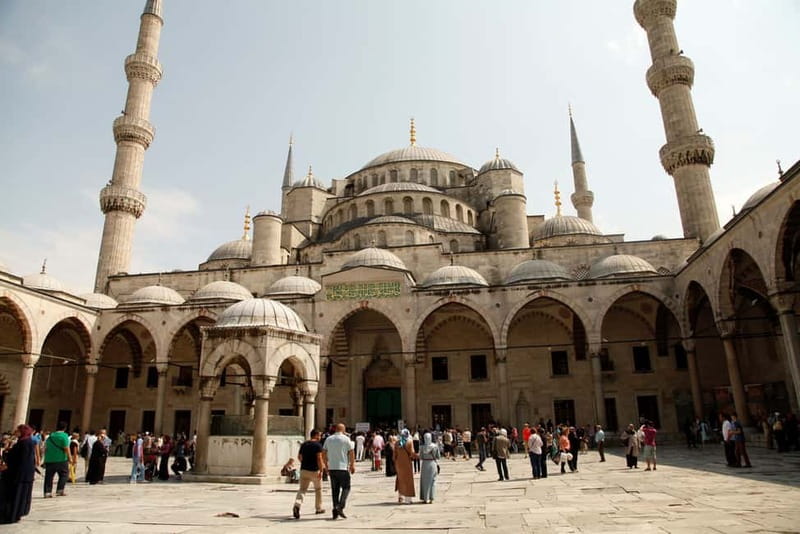
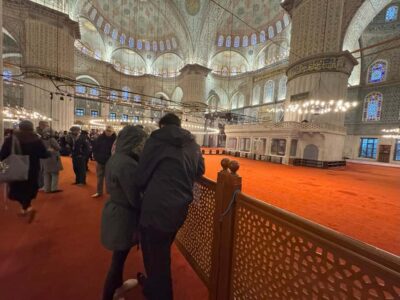
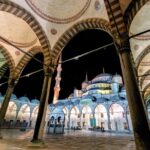
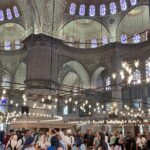
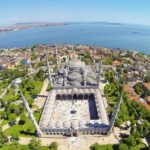
The tour typically starts at the Sultan Ahmed Mosque, commonly called the Blue Mosque. What you notice first is the interior light and the pattern work—then you’ll hear why it’s famous: the mosque is known for about 20,000 hand-painted blue Iznik tiles and six elegant minarets.
Your guide also frames the mosque in Ottoman history. You’ll learn it was commissioned by Sultan Ahmet I and that it’s considered the last great mosque of the Classical Ottoman period. That context changes the visit: you’re no longer just looking at pretty surfaces, you’re understanding why the design choices mattered.
Practical tip: dress code and head covering requirements can slow you down at the entrance. The tour is short, so I’d plan to arrive ready—long pants, a long-sleeved top, and bring a scarf to cover your head. Also remember that short skirts and sleeveless shirts aren’t allowed.
If your group includes someone who asks a lot of questions, this is a good stop for it. One guide name that comes up in feedback is Mr Baki, described as patient and good at answering queries, plus helpful for taking photos. Even if you don’t get him, you’ll still benefit from having an English-speaking guide pointing out what to look for.
Hippodrome: German Fountain, Serpentine Column, Obelisk, and Constantine
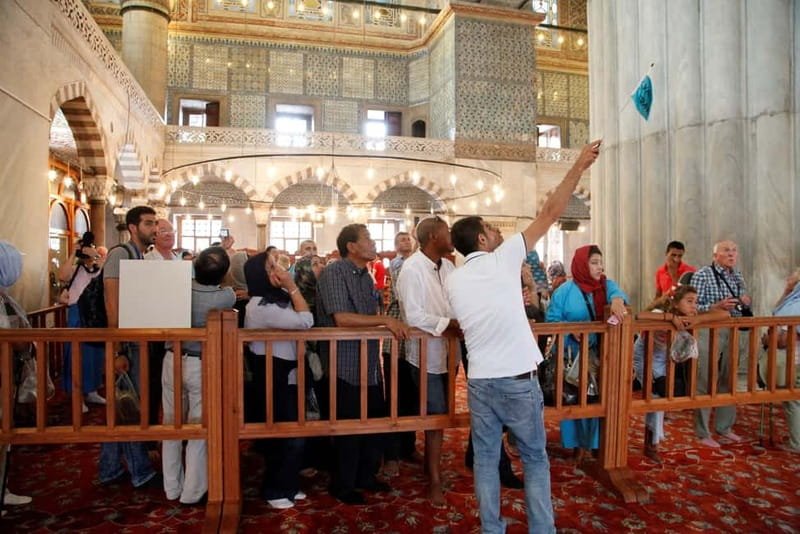
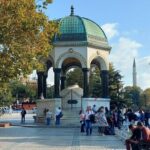
Next comes the Hippodrome, the old civic center where culture, sport, and politics once churned together. This part is outdoors, which is convenient in one way (no museum doors) and annoying in another (weather rules your comfort).
You’ll see a cluster of famous monuments:
- German Fountain of Wilhelm II
- Bronze Serpentine Column
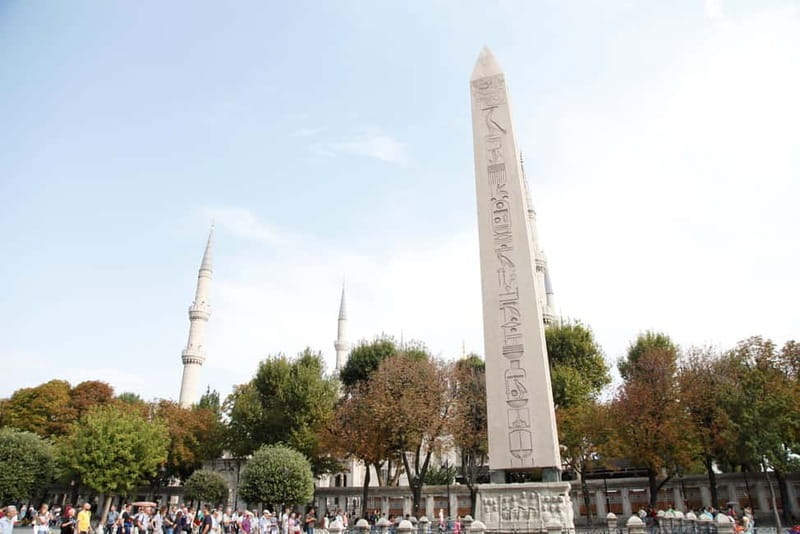
- Obelisk of Theodosius
- Column of Constantine
The real payoff isn’t just ticking off names. It’s noticing that these are scattered reminders of different eras layered on the same historic space. Constantinople kept rebuilding and reusing symbolic objects, and this is where that story becomes visible.
Photo tip: bring a little patience for good angles. The Hippodrome area can be crowded depending on the hour, and you’ll want to step back to get the full shapes of the monuments rather than only close-ups.
Also, because you’re moving on quickly, don’t worry about perfect photos on every stop. Get one or two strong frames per monument, then let the guide’s explanation do the heavy lifting.
Hagia Sophia: the world’s largest church for nearly a millennium (plus the €25 cash ticket)
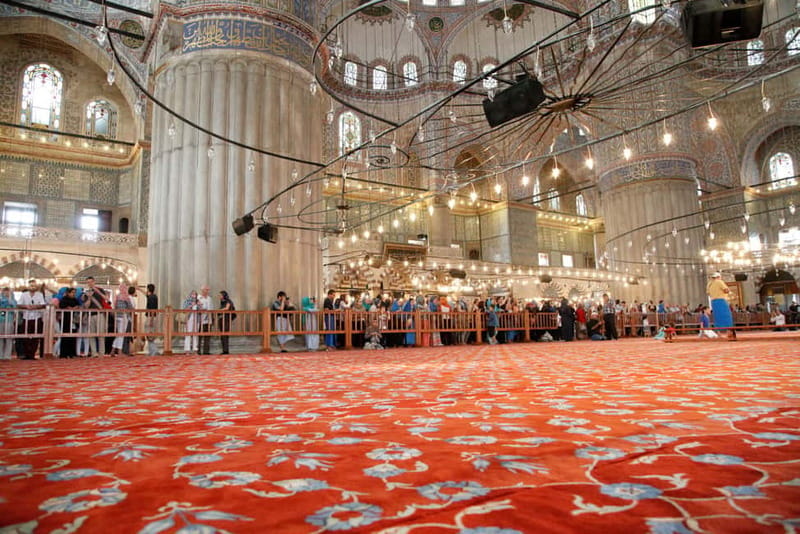
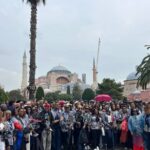
Then it’s off to Hagia Sophia. This is the stop that really makes the tour feel worth it—because it’s hard to describe the scale without being there.
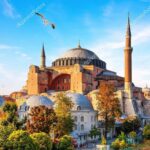
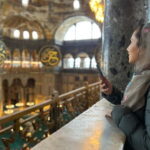
You’ll hear the building’s key timeline: it began as a 6th-century Greek Orthodox church built by Emperor Justinian, then later became a mosque, and eventually a museum. One detail that lands hard is that it stood as the world’s largest church for nearly a millennium. That single fact explains why people talk about the building like it’s more than a monument—it’s a milestone.
Now for the logistics that can make or break your day: the tour includes guided entry, but the Hagia Sophia entrance ticket is not included. The cost is €25, and you must pay in cash.
And yes, there’s some good news and some hard news:
- You get skip-the-ticket-line benefits.
- But security checks are mandatory and can’t be bypassed.
So even if the line for tickets is shorter, you should still expect security to add time. If you show up unprepared or without cash, your 3-hour schedule gets squeezed fast.
One caution from past experiences: I’ve seen cases where people were surprised at the extra €25 cash payment at Hagia Sophia. To avoid that moment of stress, plan ahead before you arrive—bring the cash you’ll need.
Sultanahmet Square and the short shop stop before the bazaar
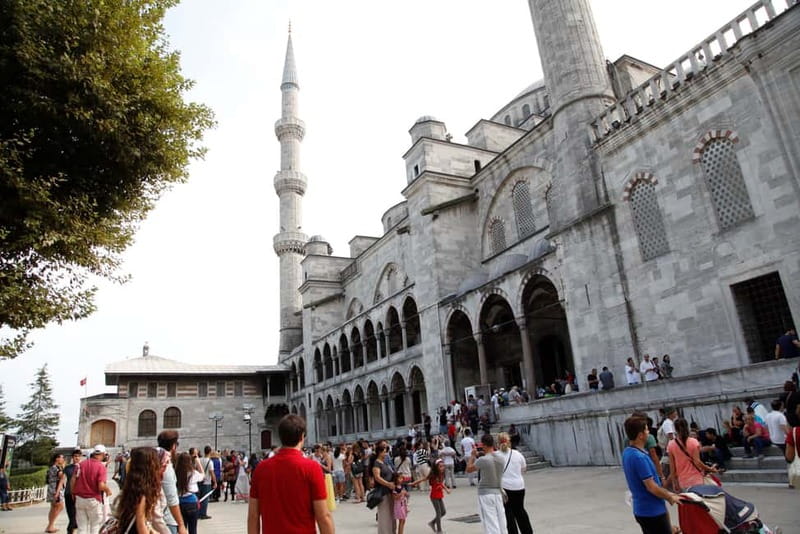
Between major sights, you’ll stop around Sultanahmet Square. Think of it as a transition point where the guide keeps your orientation tight and helps you connect what you saw to where you’re going next.
You’ll also get a brief stop at a local shop before reaching the Grand Bazaar. The idea is practical: it can be a good place to pick up souvenirs and handcrafted goods, and you’ll likely get a quick explanation of what’s worth looking for.
Here’s the balanced note: in some runs, that shop stop can feel more like a sales presentation than a quick marketplace break. In one experience, a tea-and-fashion-show style stop didn’t match the expectation of a pure sightseeing flow. So if you prefer straight monument time, treat this as a short detour, not the main event.

Grand Bazaar: orientation from the main gate, then real browsing
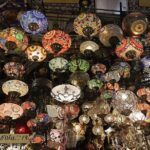
The tour ends at the Grand Bazaar, which is exactly where you want to be for souvenir shopping and people-watching—right after the guided part. You’ll gather in front of the main gate to hear insights about the market’s history, then you get free time to explore at your own pace.
What makes the bazaar workable on a short tour is that you’re not dropped in blindly. You’ll learn a little about how the place is structured first, then you can use your time efficiently.
You’re told the scale right up front: 65 streets and over 4,000 shops. You’ll see everything from carpets and jewelry to spices and ceramics. It’s also where your guide’s job shifts: during the guided orientation you get context, but once you’re free, you get to decide what you actually want to spend time on.
Two practical notes:
- The Grand Bazaar is closed on Sundays and religious holidays, so check your calendar if your trip timing matters.
- The tour ends there, so plan how you’ll get back once browsing is done.
If you’re traveling with a checklist, you’ll probably love this finish. If you just want one perfect souvenir, you might find the sheer number of options overwhelming. Either way, having a guided “start” helps.
Price and value: $20, plus one important extra cost
On paper, the price is attractive: $20 per person for about 3 hours with an English-speaking guide, guided visits to Blue Mosque, Hagia Sophia, and the Hippodrome, plus taxes. If you choose hotel pickup, that’s included too.
But the real question is what you’ll still pay after booking. The big line item is Hagia Sophia:
- Hagia Sophia entrance ticket: €25 cash (not included)
- Food and drinks aren’t included.
So your effective day cost is more like $20 + €25 in cash terms, depending on current exchange rates. The guide-led parts still make sense because you’re seeing two of Istanbul’s headline sites in a short window, with skip-the-line benefits and guided explanations.
If your hotel is in a pickup area, the optional pickup is a comfort factor. That said, pickup is a shared transfer and the minibus or midibus might arrive early or late, since schedules depend on multiple stops. This matters when you’re trying to time your day tightly.
Meeting point and getting started on time (the flag matters)
Your guide will meet you in Sultanahmet Square in front of Buhara 93 Restaurant, holding the Aljazeera Tour logo flag.
This is the kind of detail that can either keep the day smooth or add a frustrating scavenger hunt. One past experience described the meeting point as difficult to find and the guide as hard to track when there wasn’t a clear flag visible. I’d prevent that by arriving a bit early and actively looking for the flag at the named landmark.
If you choose hotel pickup, you’ll need to confirm pickup location and time directly with the local operator because each hotel has a fixed pickup time.
For a 3-hour tour, being late by even 15 minutes can feel like a lot.
Dress code, security, and why you should be ready before you arrive
This tour hits sacred sites, so dress rules are real, not optional. You should expect:
- No short skirts
- No sleeveless shirts
- Bring a scarf to cover your head
- Wear long pants and a long-sleeved shirt if possible
Even with skip-the-ticket-line entry, security checks at both Hagia Sophia and the Blue Mosque are mandatory. That means you should plan for waiting that isn’t about lines—it’s about screening.
If you’re traveling with a light packing style, this is one of those tours where you’ll be glad you brought something that covers your shoulders and legs.
Who should book this tour (and who should consider a different option)
I’d recommend this experience if:
- You want a short, guided overview of Sultanahmet’s top sights.
- You like learning what you’re seeing while staying on schedule.
- You’re okay paying one extra cash fee for Hagia Sophia and you want the rest included.
I’d think twice if:
- You strongly dislike surprises about entrance fees and you don’t carry cash. (Hagia Sophia is €25 cash.)
- You want plenty of quiet time inside major sites. This tour is built for highlights, not long stays.
- You prefer to avoid any shopping or presentation-style detours. The brief shop stop can be a hit or miss depending on what your group experiences.
If you’re unsure, treat the tour as a smart first pass. It’s the kind of visit that can make you want to return on your own later for deeper time.
Should you book? My take
If your priority is seeing the Blue Mosque, Hagia Sophia, and the Hippodrome area in one guided package, this is a solid value—especially at $20—because the guide helps you read the sights instead of just walking past them.
Just don’t forget the key detail that can trip people up: Hagia Sophia costs €25 cash even though the tour is skip-the-line guided. And show up ready for dress requirements and security checks so the short 3-hour window stays intact.
If you can do those two things, you’ll leave with a clear mental map of Sultanahmet and a great start to Grand Bazaar browsing on your own.
FAQ
Do I need to pay an entrance ticket for Hagia Sophia?
Yes. The Hagia Sophia entrance ticket costs €25 and must be paid in cash.
Is the Hagia Sophia ticket line skipped?
You’ll get skip-the-ticket-line service, but security checks are still mandatory.
Does the tour include hotel pickup?
Pickup is optional. If you choose it, hotel pickup is included from centrally located areas listed in the tour details, and you’ll need to confirm the pickup time and location with the operator.
Where do I meet the guide if I’m not using hotel pickup?
Meet your guide in front of Buhara 93 Restaurant in Sultanahmet Square, holding the Aljazeera Tour logo flag.
What sites are included in the guided portion?
The guided visits include Blue Mosque, Hagia Sophia, and the Hippodrome, plus time at Sultanahmet Square and orientation for the Grand Bazaar.
What happens at the Grand Bazaar?
You’ll gather at the main gate for insights about the market, then you get free time to explore and shop at your own pace. The tour ends at the Grand Bazaar.
Is the Grand Bazaar open every day?
No. It is closed on Sundays and religious holidays.
What should I wear for the mosque visits?
Wear appropriate clothing for sacred sites: long pants and a long-sleeved shirt are advised, and you should bring a scarf to cover your head. Short skirts and sleeveless shirts aren’t allowed.
How long is the tour?
The duration is 3 hours.
Are food and drinks included?
No. Food and drinks are not included.