REVIEW · CAIRO
Cairo Collection – Egyptian Museum, Alabaster Mosque & Coptic Cairo
Book on Viator →Operated by Egypt Wonderful Tours · Bookable on Viator
One day, three eras of Cairo. I like how a private guide keeps the day moving across the Egyptian Museum and Coptic Cairo, and I also like the 2-way transfers that start with pickup from your hotel in Cairo or Giza. You’ll pack in ancient royal artifacts, then switch gears to working churches and fortress walls, all in about 8 hours starting at 8:00 am.
There is one catch to plan for: entrance fees. The tour notes say entrance fees are at your own expense, yet the schedule labels admission as included for some stops. Before you go, assume you may pay extra on-site and budget a little buffer so the day stays stress-free.
In This Review
- Key things to know before you go
- Why this Cairo combo actually works
- Pickup and timing: the real advantage of 2-way private transfers
- Egyptian Museum at Tahrir Square: Tutankhamen, golden masks, and the mummies room option
- Coptic Cairo: Babylon Fortress, the Hanging Church area, and Abu Serga
- Inside the Citadel: Muhammad Ali Mosque, known as the Alabaster Mosque
- Citadel of Saladin (Salah El Din): fortress origins and your view of Cairo
- Lunch and budgeting: what the $55 price really covers
- A guide can make or break the day—here’s how to set yourself up
- What to wear and expect at churches and the mosque
- Who this tour suits best
- Should you book Cairo Collection: Egyptian Museum, Alabaster Mosque & Coptic Cairo?
- FAQ
- What is the duration of the tour?
- What time does the tour start?
- Is pickup offered?
- Is this tour private?
- Are mobile tickets included?
- Is lunch included?
- Are entrance fees included?
- What sites do you visit?
- Is there an optional add-on at the museum?
- Can most travelers participate?
- What is the cancellation policy?
Key things to know before you go
- Door-to-door pickup and return from Cairo or Giza saves you time in traffic and at street corners.
- Egyptian Museum time with a guide helps you pick the meaningful highlights fast in a huge building.
- Coptic Cairo focus includes major sites like the Babylon Fortress and the Hanging Church area.
- Alabaster Mosque (Muhammad Ali Mosque) inside the Citadel is the visual payoff for the day.
- Lunch and bottled water are included, so you’re not hunting for food between temples and churches.
Why this Cairo combo actually works
Cairo can overwhelm you fast. The streets are loud, the lines can be long, and the “must-sees” are spread out. What I like about this tour’s format is that it turns a messy day into a logical path: ancient Egypt first, then medieval Cairo’s religious heart, then the Citadel’s famous centerpiece.
You’re not just checking boxes. You’re seeing how different layers of Egyptian life overlap in one city. The Egyptian Museum gives you the big national story through artifacts, from pharaohs to mummies. Then Coptic Cairo shows a different timeline—Christian communities with churches, fortress walls, and living religious spaces. Finally, the Citadel and the Alabaster Mosque add a more recent architectural chapter, all backed by sweeping views.
The value here is pacing and context. A guide is the difference between wandering and understanding what you’re looking at.
You can also read our reviews of more tours and experiences in Cairo.



Pickup and timing: the real advantage of 2-way private transfers
You start at 8:00 am, and pickup is offered from your hotel in Cairo or Giza. That sounds like a small detail until you’re trying to reach downtown traffic at the wrong moment. With private transfers, you can get your bearings early and spend your energy on the sights, not the commute.
The tour runs about 8 hours, which is a practical length for Cairo. Long enough to cover three major zones, short enough that you’re still functional at the end of the day (especially if you want photos, not just snapshots). You’ll also have bottled water and lunch included, which helps you keep a steady rhythm.
One more small benefit: it’s a private experience, so your pace and priorities are easier to manage than a group schedule.
Egyptian Museum at Tahrir Square: Tutankhamen, golden masks, and the mummies room option
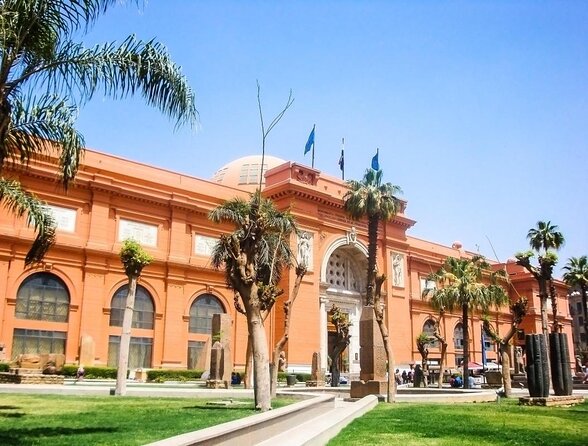
The day begins at the Museum of Egyptian Antiquities on Tahrir Square, a building that can feel like a maze if you go alone. This is exactly where a guide matters. The museum holds more than 250,000 artifacts, and even if you love ancient Egypt, you can’t see everything in one visit. A good guide helps you focus on what tells the clearest story.
You’ll spend about 3 hours at the museum. The highlight people usually want is the connection to Tutankhamen, including a famous golden mask tied to the boy-king’s legacy. That kind of anchor item helps you understand what you’re seeing in surrounding galleries—royal power, burial practice, and the themes Egypt repeated across centuries.
There’s also an optional moment if you want it: a mummies’ room visit is available, but it’s listed as an extra ticket on the spot. If you’re short on time, you can treat this as a choice rather than a must. If you’re curious, it’s a good way to get deeper into the museum’s most immediate wow-factor.
A practical tip: the museum is large and can be visually intense. If you wear it like a checklist, you’ll leave tired and underwhelmed. If you treat it like a story—with a guide pointing out what each object is really saying—you’ll likely feel like you made the most of your limited time.
Coptic Cairo: Babylon Fortress, the Hanging Church area, and Abu Serga
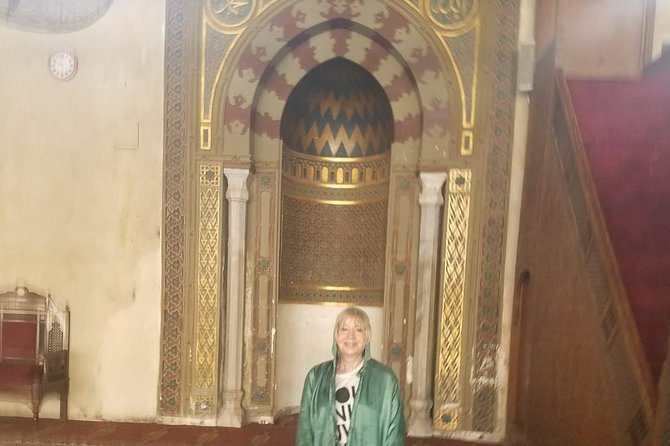
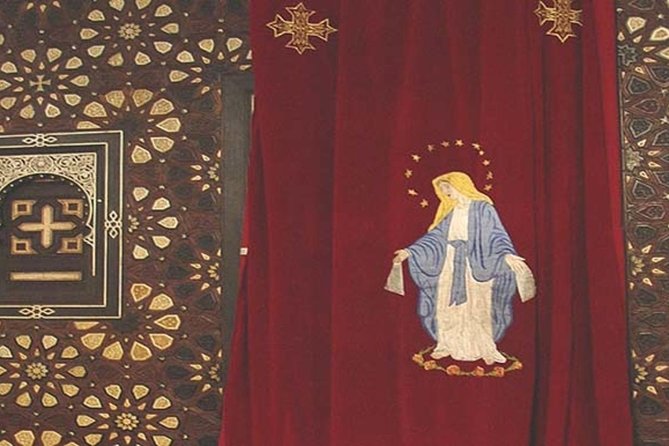
After the museum, the tour shifts into Old Cairo and Coptic Cairo, where you get a very different atmosphere. This part of Cairo is described as a living model of peaceful co-existence among different religious communities, which is a powerful concept to see in person—not just read about.
You’ll spend about 1 hour here, and the key sites include:
- Babylon Fortress
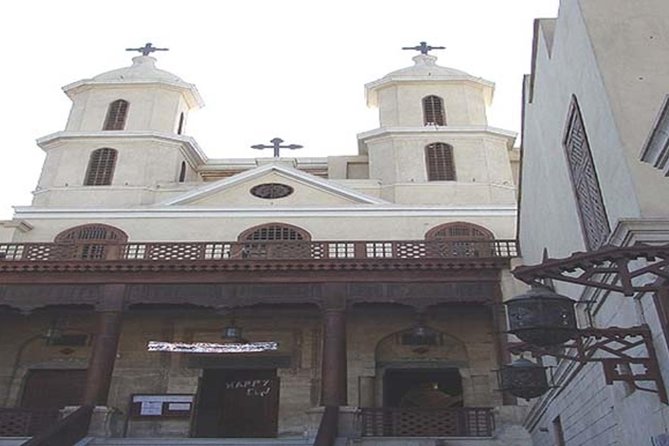
- The Hanging Church
- Other Coptic churches such as Abu Serga Church
- Plus nearby religious landmarks like the Ben Ezra Synagogue and the Mosque of Amr ibn al-‘As
Even in a short visit, you can feel why this area matters. It’s not a “ruins only” landscape. Churches and community life are part of what you’re walking through. The Hanging Church is often the star of the cluster, and being guided through the area helps you connect why it sits where it does and what the surrounding fortress-and-church setting represents.
The potential drawback is also tied to that 1-hour limit. If you want slow reading, long photo sessions, or time to talk to people inside religious spaces, you might feel rushed. The guide can still help you prioritize, but this is a highlights-style stop.
Best mindset: treat this as a high-impact orientation to Coptic Cairo. If you later want a second, slower visit, you’ll know exactly where to return.
Inside the Citadel: Muhammad Ali Mosque, known as the Alabaster Mosque
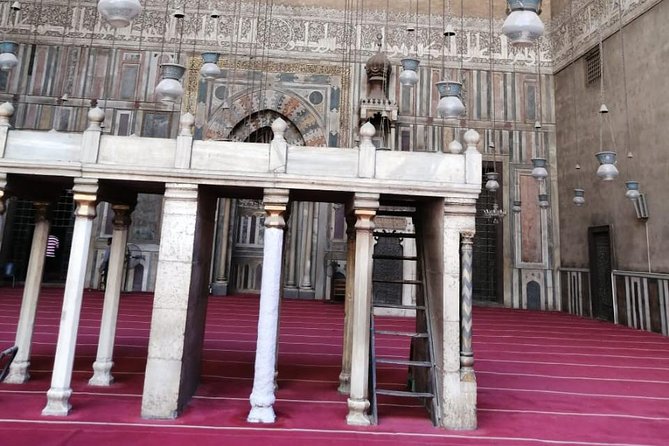
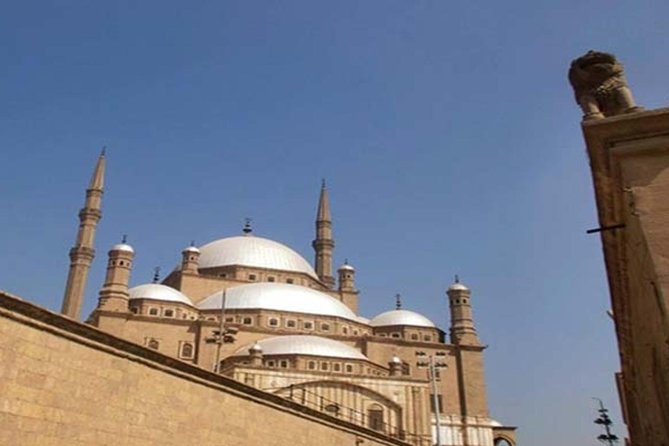
Then you move to the Citadel area and step into one of Cairo’s most recognizable interiors: the Mosque of Muhammad Ali, often called the Alabaster Mosque. The setting is inside the walls of the citadel, and the time here is about 1 hour.
The appeal is visual and architectural. The mosque is known for unimaginable decorations, with lamps and ornaments that create a dense, glittering effect. The tour notes that it was designed by the Turkish architect Yousif Boushnaq, and that it is often said to be similar to the Blue Mosque in Turkey. Whether you think the resemblance is exact or not, the key point is that the style feels unmistakably Ottoman in the way it treats ornament and light.
If you care about architecture, this is the moment that gives the day a strong finish. The inside is the payoff, while the Citadel itself also gives you a wider view of Cairo.




Citadel of Saladin (Salah El Din): fortress origins and your view of Cairo
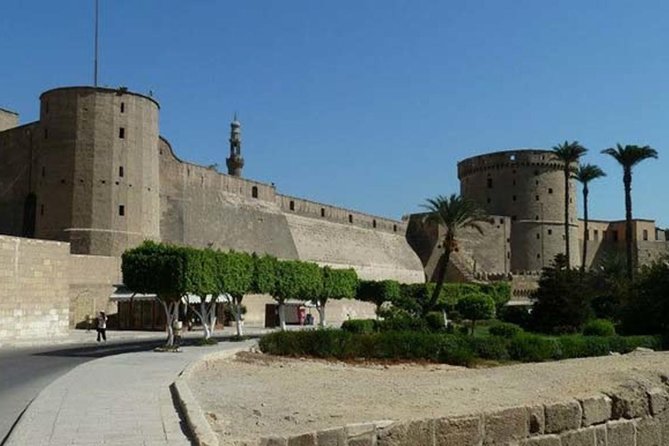
Between the religious sites and the museum, the Citadel works like a “reset” for your brain. It’s built in 1183 AD to defend Cairo from potential attacks of the Crusaders’ armies, which gives the place an old, military reason for existing—then you get the view as a reward for climbing your way through.
You’ll have about 1 hour for the Citadel of Saladin itself, and that time is listed as free (at least for the Citadel visit portion). The main value here is the perspective. From this vantage, Cairo starts to make more sense as a city shaped by history, not just streets and traffic.
One note: views can be weather-dependent. If it’s hazy or too bright, photos may be hit-or-miss. Still, even without perfect light, the change in elevation is often worth it.
Lunch and budgeting: what the $55 price really covers
The price is $55 per person for a day around 8 hours. That can feel like a bargain when you factor in what’s included:
- Lunch at a local Cairo restaurant
- Bottled water
- A guide
- Pickup and return transfers (private)
That’s a lot of “friction removal” for one flat price.
But here’s the budgeting reality: entrance fees are complicated in the written details. The tour’s included section says entrance fees are not included, yet the schedule also marks admission as included for several stops. Since you can’t control what ticket counters charge on the day, you should plan for possible on-site payments.
My practical advice: treat the $55 as covering the guide, lunch, water, and transport—and then bring extra money for museum and religious-site tickets, especially since there’s at least one clearly optional add-on (the mummies’ room ticket).
If you love structure and want your time protected, the value is strong. If you’re the type who enjoys building your own path and skipping some stops, you may find a self-guided day cheaper. The tour’s strongest advantage is not just access—it’s time and context.
A guide can make or break the day—here’s how to set yourself up
A private tour works best when you communicate priorities early. The tour is built around guided navigation and the idea of deterring hustlers, which matters in Cairo. Still, the best results come when you clearly say what you want to see, especially if a site like the Alabaster Mosque is a top must.
If you’re lucky enough to get a guide like Ashour, the day can feel tightly managed—he’s noted for showing you what you can probably cover in one day, handling extra wishes when possible, and keeping the experience focused. That’s the ideal style: confident, organized, and flexible within reason.
How to help your guide succeed:
- Start the day with your top three priorities (museum highlights, Hanging Church area, Alabaster Mosque).
- If you want the mummies’ room, say it early so the guide can plan timing.
- Pay attention to what your guide recommends as “must” versus “nice to have,” especially in Coptic Cairo where time is shorter.
And if something feels off, speak up politely right away. In a private setting, early adjustments are much easier than trying to change course at the end.
What to wear and expect at churches and the mosque
You’ll be visiting both a major mosque and multiple churches in Coptic Cairo. That means you’ll likely need modest clothing. Even when rules aren’t enforced loudly, dressing respectfully keeps things smooth and avoids delays.
Plan for:
- Comfortable walking shoes (museums and historic sites involve a lot of movement)
- Lightweight layers (Cairo can shift from cool mornings to warmer afternoons)
- A calm, patient attitude at religious sites where visiting rules can change by space and moment
Also, photography rules can vary by location. Keep your phone ready, but don’t be surprised if there are areas where you need to pause.
Who this tour suits best
This is a good match if:
- You’re short on time and want a structured day across Cairo’s big “categories” (ancient, medieval Christian sites, and a major mosque).
- You prefer a guide to help you choose what matters most, especially at the Egyptian Museum where the scale is massive.
- You want door-to-door convenience from Cairo or Giza and you’d rather not coordinate transport yourself.
It may not be ideal if:
- You want long, unhurried stays in religious spaces.
- You hate spending money on tickets once you arrive.
- You want a fully customizable route with no fixed flow.
Should you book Cairo Collection: Egyptian Museum, Alabaster Mosque & Coptic Cairo?
I’d book this tour if your goal is a high-impact day with clear sequencing, time protection, and a guide who helps you see the point of each stop. For first-time Cairo visitors, it’s a solid way to connect the dots between pharaohs, fortress-era Christianity, and Ottoman-era architecture.
If you hate uncertainty about tickets, you’ll want to budget extra and confirm entrance-fee expectations before you arrive. And if you have one non-negotiable site—like the Alabaster Mosque—say it at the start so your guide can prioritize it from minute one.
Bottom line: for a private, guided day mixing three Cairo worlds, this is a strong value play—just go in with a realistic ticket budget and clear priorities.
FAQ
What is the duration of the tour?
It runs for about 8 hours.
What time does the tour start?
The start time is 8:00 am.
Is pickup offered?
Yes. Pickup is offered from your hotel in Cairo or Giza, with 2-way private transfers.
Is this tour private?
Yes. It’s a private tour/activity, and only your group participates.
Are mobile tickets included?
The tour includes mobile ticketing.
Is lunch included?
Yes. Lunch at a local Cairo restaurant is included, along with bottled water.
Are entrance fees included?
The tour notes say entrance fees are at your own expense, even though the schedule labels admission for some stops. Plan to pay for tickets on-site.
What sites do you visit?
You’ll visit the Egyptian Museum at Tahrir Square, Coptic Cairo sites such as Babylon Fortress and the Hanging Church area (including churches like Abu Serga Church), and the Mosque of Muhammad Ali (Alabaster Mosque) inside the Citadel area, plus Citadel of Saladin for views.
Is there an optional add-on at the museum?
Yes. Visiting the mummies’ room is described as available with an extra ticket on the spot.
Can most travelers participate?
Most travelers can participate.
What is the cancellation policy?
You can cancel for a full refund up to 24 hours before the experience starts. If you cancel within 24 hours of the start time, you won’t receive a refund.
![Kuala Lumpur: Putrajaya Tour Half Day Tour [Shared/Private] - From Berjaya Times Square to Putrajaya: the 4-hour rhythm](https://5.mosquetravel.com/wp-content/uploads/kuala-lumpur-putrajaya-tour-half-day-tour-shared-private-400x300.jpg)