REVIEW · CAIRO
2-Day Tour Giza pyramids sakkara Egyptian Museum,ALabaster Mosque All inclusive
Book on Viator →Operated by bes Egypt tours - day tours · Bookable on Viator
Cairo in two days feels like a sprint, but it’s a smart one. I like that this tour pairs big-ticket sites at Giza with the quieter story of Saqqara, and I also like the family-friendly flow: hotel pickup, air-conditioned van, bottled water, and lunch each day. One thing to consider: the package says entrance fees are not included, even though the stops mention tickets, so you’ll want to confirm what you’re actually paying for before you arrive.
On my favorite part, the guide makes the past feel usable for kids and teens, not just something to look at. In particular, the Egyptologist guide Madhat comes across as friendly and informative, though his English wasn’t always easy to catch at speed, and he had a hurt leg but still kept the tour moving. If you’re sensitive to walking discomfort, plan to take breaks and go at a calm pace.
In This Review
- Key things you’ll notice right away
- A 2-day Cairo route that actually works (especially with kids)
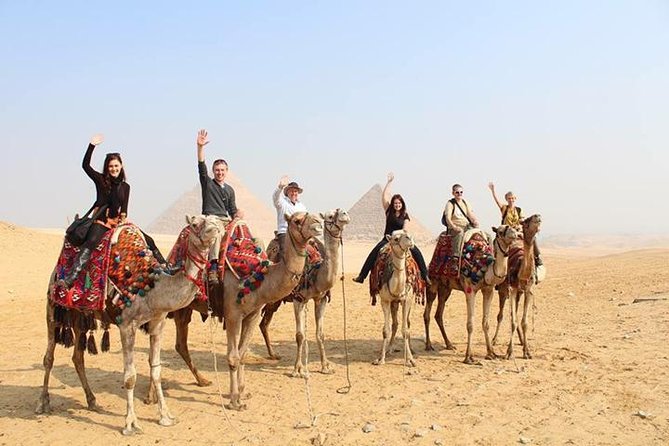
- Getting to Giza: pickup, pacing, and the 30-minute camel plan
- Pyramids of Giza and the Valley Temple: what you’re really seeing
- The Great Sphinx: facing east, and why Khafre gets mentioned
- Saqqara (Sakkara) and Djoser’s Step Pyramid: why it’s a favorite for many
- Egyptian Museum (Museum of Cairo): Tutankhamun, animal mummies, and crowd-smart strategy
- Muhammad Ali Mosque in the Citadel: a Cairo skyline moment
- Khan al-Khalili: shopping without losing the plot
- Price and logistics: what $75 gets you, and what to double-check
- Who this tour fits best
- Should you book this 2-day Cairo package?
- FAQ
- FAQ
- What does the tour include for meals?
- Is hotel pickup and drop-off included?
- Is the camel ride included?
- How long is the tour and what time does it start?
- Do I need to pay entrance fees?
- Is this tour private?
- Who will guide the tour?
- Are there options for vegetarian meals?
- Are tickets provided for entry?
- Is the tour suitable for children?
Key things you’ll notice right away
- Hotel pickup and drop-off means you skip Cairo logistics and start sightseeing fast.
- Camel ride at Giza is time-limited (about 30 minutes), which helps keep the day from running long.
- Saqqara’s deeper timeline gives you Old Kingdom to later eras in one archaeological stop.
- Egyptian Museum focus includes Tutankhamun items plus animal mummies, not just the headline artifacts.
- Old Cairo + Khan al-Khalili wraps the trip with a real-feeling market experience after the history.
A 2-day Cairo route that actually works (especially with kids)
Cairo’s history can feel huge and chaotic. This itinerary helps because it’s built around a simple rhythm: morning travel to the big monuments, guided viewing with clear storytelling, then a lighter “catch your breath” stop later in the day.
For families, that matters. Young kids usually do best when there’s structure and short, repeatable segments. Teens usually want context and a story they can remember. This tour is designed to cover both, moving from pyramids to mummies to Cairo’s older city atmosphere, instead of only doing the famous monuments and calling it a day.
The other practical win is comfort. You get a private setup with an air-conditioned minivan, plus bottled water. That’s not a small thing when you’re out in daylight for long stretches.
You can also read our reviews of more tours and experiences in Cairo.


Getting to Giza: pickup, pacing, and the 30-minute camel plan
The day starts with an 8:00 am pickup from your hotel lobby, so you’re already in motion while the city is still waking up. That first travel window is where tours can make or break the day. Here, having a guide and vehicle ready helps you avoid the usual on-the-ground scramble.
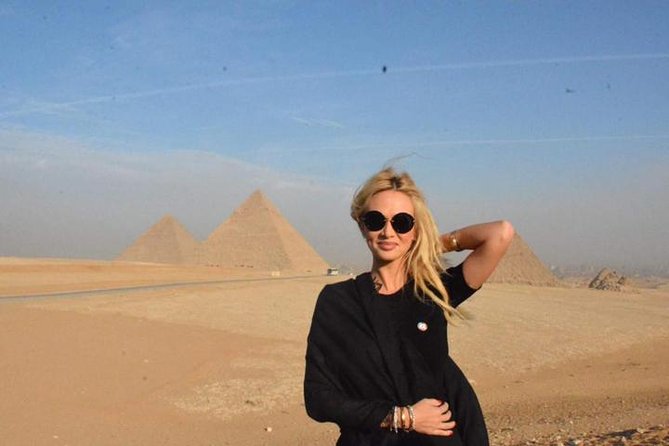
At Giza, your guide has you cover a classic set: major pyramids, a panorama viewing area, the Valley Temple, and the Sphinx. The tour schedule also builds in a camel ride, but it’s capped at about 30 minutes around the pyramids. That limit is helpful. Camel rides can be the most physically uncomfortable part of the day, and shorter time means you’re more likely to keep your energy for photos and walking afterward.
One pacing tip I’d give you: if you’re traveling with kids, set expectations early. You’ll see multiple viewpoints that feel similar from a distance. Ask your guide to point out a specific detail each time—shape changes, orientation, or what you’re looking at—so the sites don’t blend together.
Pyramids of Giza and the Valley Temple: what you’re really seeing
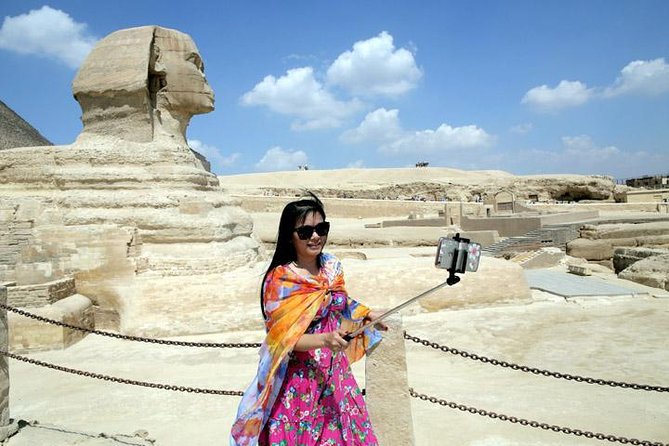
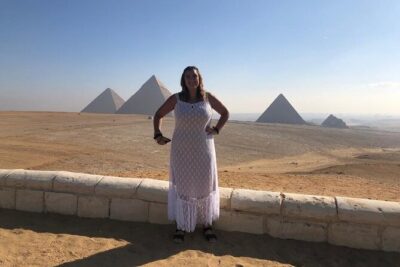
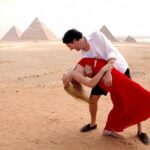
The Pyramids of Giza are the star attraction for a reason, but your experience improves when you know what questions to ask. When you stand near the Great Pyramid of Khufu and look across the plateau, your guide can connect the shapes to how Egyptians built and how the pyramids functioned as royal monuments.
You’ll also have time at a panorama area, which is a good move because it gives you a wider view and helps you understand the layout. Then you’ll connect the dots at the Valley Temple, which is part of the same pyramid complex story rather than a random add-on.
A drawback of Giza, even on a great tour: it’s a busy, open-air site. You’ll want to protect yourself from sun and heat and be ready for uneven walking surfaces. With kids, you’ll get the most enjoyment if you keep breaks short and frequent rather than trying to push through a long stretch.
The Great Sphinx: facing east, and why Khafre gets mentioned
The Great Sphinx is more than a photo stop. Your guide will frame what it is: a reclining limestone statue of a myth creature (lion body, human head) facing from west to east on the Giza Plateau.
One of the details your guide is likely to mention is that the face of the Sphinx is generally believed to represent pharaoh Khafre. That kind of attribution helps because it turns a giant stone figure into a character in a story, not just a landmark.
If you’re wondering what to focus on, try this: look at the Sphinx from a couple of angles and ask your guide to point out what’s hard to see from one viewpoint. The Sphinx is huge, and perspective changes how you interpret it. Also, if you’re traveling with teens, give them the mission to identify something specific you learned earlier—Khafre, east-west orientation, or the idea of myth in royal monuments—so the tour feels connected rather than a list.
Saqqara (Sakkara) and Djoser’s Step Pyramid: why it’s a favorite for many
After Giza, Saqqara can feel like a palate cleanser. It’s still monumental, but the experience is more archaeological and less “everybody lines up for the same shot.”
Saqqara matters because it spans a long stretch of Egyptian history. The site includes burials from before the beginning of the Old Kingdom through to the Greek Period. That’s useful because you’re not just learning about one dynasty. You’re seeing how an area became a lasting sacred landscape.
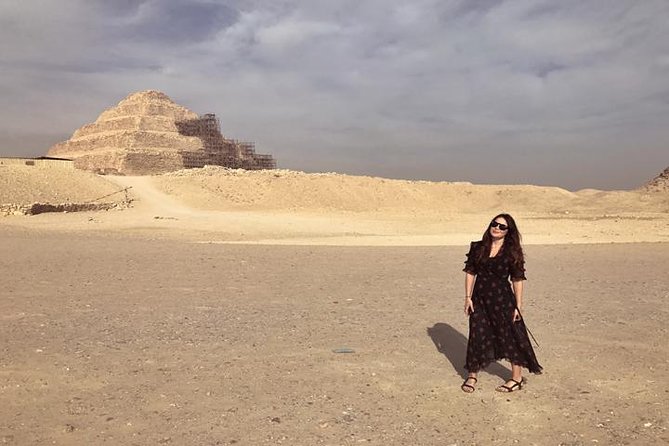
The big highlight is Djoser’s Step Pyramid. You get a sense of why it’s so important historically: it dates to the 3rd dynasty (2667—2448 BC) and is described as the first all-stone complex ever built. The story connects it to later pyramid construction, including architectural innovations that influenced what came after.
For families, Step Pyramid viewing tends to land well. Kids can usually grasp the stepped shape quickly, and teens often enjoy the “how it evolved” angle. It’s a great counterpoint to Giza because it teaches you that Egyptian pyramid-building didn’t start fully formed.


Egyptian Museum (Museum of Cairo): Tutankhamun, animal mummies, and crowd-smart strategy
Day two shifts from outdoor monuments to indoor artifacts. The Museum of Egyptian Antiquities, commonly called the Egyptian Museum, is packed with objects: about 120,000 items exist in the collection, with a representative number on display while the rest sits in storerooms.
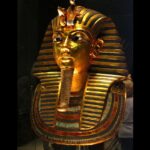
Your visit includes the highlights you actually want to hear about: Tutankhamun’s treasures plus antiquities such as animal mummies. That’s a smart approach for mixed ages. Kids often latch onto the strange-but-real items, and teens usually want the “why these objects matter” context.
A practical note: museums can drain energy fast, even with a guide. The key is moving with purpose. Don’t try to see everything. With this kind of itinerary, you’re better off enjoying the big story points and letting your guide steer you to the artifacts that give the clearest view of Egypt’s past.
Also, if you’re sensitive to crowds, focus on pacing. Look, learn, then step aside briefly when you need a breather. The tour is designed as a guided route, so use that momentum instead of wandering into dead ends.
Muhammad Ali Mosque in the Citadel: a Cairo skyline moment
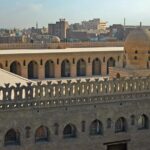
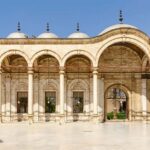
After the museum, you head to the Mosque of Muhammad Ali, located in Cairo’s Citadel. This is one of those stops where your brain shifts gears from ancient Egypt to Ottoman-era Cairo.
The mosque was commissioned by Muhammad Ali Pasha between 1830 and 1848, and it sits on the summit of the Citadel. It’s also described as the largest Ottoman mosque built in the first half of the 19th century, with twin minarets and a silhouette that’s easy to spot from many directions.
One detail that helps the visit feel personal rather than just architectural: the mosque was built in memory of Tusun Pasha, Muhammad Ali’s oldest son, who died in 1816.
If you have teens who think mosques are all the same, ask your guide to point out what makes this one distinct—the twin minarets, the silhouette, and why it’s such a visible landmark. If you’re bringing younger kids, this stop can be a welcome break because the viewpoint and skyline feel rewarding even if they don’t want to read every plaque.
Khan al-Khalili: shopping without losing the plot
Ending with Khan al-Khalili gives you a different kind of Cairo. Instead of another monument with a “time capsule” feeling, you’re in a working souk where you can see souvenirs and everyday commerce.
Your guide will help you explore the bazaar so you’re not just drifting through stalls. This is where bargaining culture and the sheer density of options can overwhelm. Having someone guide the first pass helps you find what you actually want, without getting pulled into a decision spiral.
A practical tip: set one or two goals before you enter—something small and specific for a family member, or a snack stop—then let the rest be fun browsing. That way, your shopping time doesn’t swallow the whole evening.
Price and logistics: what $75 gets you, and what to double-check
At $75 per person for a two-day private tour, the value looks strong—especially if you care about comfort and saved time. You’re getting pickup and drop-off, transport in an air-conditioned minivan, a qualified Egyptologist guide, bottled water, a camel ride, and lunch each day.
The big thing to verify is entrance fees. The tour highlights mention ticketed admissions for stops, but the package details also state that entrance fees are not included. That mismatch can matter if you’re trying to budget tightly. Before you lock in your plan, confirm what tickets are covered for Giza, Saqqara, and the museum, and what you might need to pay on-site.
Also, “private tour” is good for families because you can ask for pacing changes. It’s not just about exclusivity. It’s about fewer schedule surprises.
Who this tour fits best
This is a good match if you:
- want a structured 2-day route across Cairo’s biggest history sites
- travel with both younger kids and teenagers and need explanations that land for different ages
- appreciate hotel pickup and not having to coordinate taxis between far-apart areas
- like guided storytelling, even if you only catch some of the details at first
It may be less ideal if:
- you dislike crowds at indoor sites like the Egyptian Museum
- you need highly predictable walking comfort and long seating breaks (outdoor sites are open and uneven)
- you strongly prefer zero ambiguity about ticket costs and prefer everything fully prepaid (again, confirm the entrance-fee coverage)
Should you book this 2-day Cairo package?
If you want one plan that covers Giza + Saqqara + Egyptian Museum + Old Cairo, this tour is a solid bet. The combination of iconic monuments with the more layered Saqqara story is a smart way to help you understand Egypt’s evolution instead of just collecting highlights.
I’d book it if you’re traveling as a family or in a small group and you’d rather spend your time learning and seeing than negotiating Cairo logistics. Just do one homework step: confirm ticket coverage for each stop so you don’t get surprised mid-trip. With that small check handled, the rest of the itinerary is built for an efficient, memorable two days in Cairo.
FAQ
FAQ
What does the tour include for meals?
Lunch is included each day, and you’ll also get bottled water during the tour.
Is hotel pickup and drop-off included?
Yes. The tour includes hotel pickup and drop-off.
Is the camel ride included?
Yes. A camel ride around the Giza pyramids is included for about 30 minutes.
How long is the tour and what time does it start?
It’s an approximately 2-day tour and starts at 8:00 am.
Do I need to pay entrance fees?
Entrance fees are listed as not included, even though the schedule notes admissions for stops. You should confirm ticket coverage before going.
Is this tour private?
Yes. It’s described as a private tour/activity, meaning only your group participates.
Who will guide the tour?
You’ll have a qualified Egyptologist guide.
Are there options for vegetarian meals?
A vegetarian option is available, and you should advise your requirement at booking.
Are tickets provided for entry?
The tour includes a mobile ticket. Confirmation is received at the time of booking, and you’ll want that info handy for your visits.
Is the tour suitable for children?
Children must be accompanied by an adult, and the tour indicates most travelers can participate.