REVIEW · CAIRO
Private Tour: Alabaster Mosque, Sultan Hassan, Khan el-Khalili
Book on Viator →Operated by South Sinai Travel · Bookable on Viator
Cairo feels less like a checklist when you’re guided through its living landmarks. This private morning route pairs the Alabaster Mosque in Salah el-Din’s Citadel, the Sultan Hassan Mosque and Madrassa, and time in Khan el-Khalili Bazaar, so you see how faith, power, and everyday trade all sit side by side. It’s also built for control: you can adjust how long you stay at each stop.
Two things I like a lot: the chance to go inside the mosques and get a clear, respectful explanation of key basics of Islam, and the fact that you’re not stuck in a loud, rushed crowd. You also get hotel pickup and drop-off by air-conditioned van, plus an Egyptologist guide who can shape the pace to what you want to learn and photograph.
One consideration: the whole tour is about 3 hours, so if you love mosques and want long, slow time inside, you may still feel the schedule is tight. Some people also found certain visits short, so pick this when you’re after an efficient taste of Islamic Cairo rather than a deep, hours-long study.
In This Review
- Key highlights you’ll notice fast
- A 3-hour taste of Islamic Cairo: Alabaster Mosque, Khan el-Khalili, Sultan Hassan
- Private pacing: how your schedule really changes the experience
- Stop 1: Alabaster Mosque in the Citadel of Salah el-Din
- Stop 2: Khan el-Khalili Bazaar and the art of bargaining
- Stop 3: Sultan Hassan Mosque and Madrassa, Mamluk architecture that’s hard to forget
- Optional Papyrus Institute: when buying makes sense (and when to skip)
- Pickup, timing, and comfort: what your morning plan should look like
- Value check: is $100.92 per person worth it?
- Who should book this tour—and who should look elsewhere
- Should you book this private tour?
- FAQ
- What time does the tour start?
- How long is the experience?
- Is this really private or shared with others?
- Does the tour include hotel pickup and air-conditioned transport?
- Are tickets to the mosques included?
- Can I skip the Papyrus Institute stop?
- Can I get a full refund if I cancel?
Key highlights you’ll notice fast

- Inside access at major mosques with explanations that make what you see easier to read
- Private pacing so you can linger at Sultan Hassan or speed up through Khan el-Khalili
- Citadel views from the Alabaster Mosque area, with a grand setting over Cairo
- Real bazaar time for browsing and bargaining, not just a quick photo stop
- Optional Papyrus Institute stop if you want to watch ancient-style craft work and buy items
A 3-hour taste of Islamic Cairo: Alabaster Mosque, Khan el-Khalili, Sultan Hassan
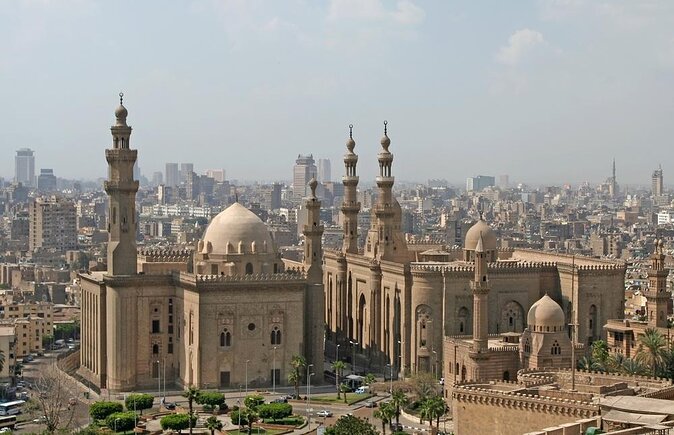
This is one of those tours that helps you understand Cairo beyond pyramids and pharaohs. You’re spending the morning in Islamic Cairo, where architecture tells you about rulers, religious life, and how public space worked.
The Alabaster Mosque, Sultan Hassan, and Khan el-Khalili form a smart trio. You get sacred space at the top of the Citadel, then a cultural-and-commercial stop in the bazaar, then one of the most dramatic Mamluk-era structures in the city.
You can also read our reviews of more tours and experiences in Cairo.



Private pacing: how your schedule really changes the experience
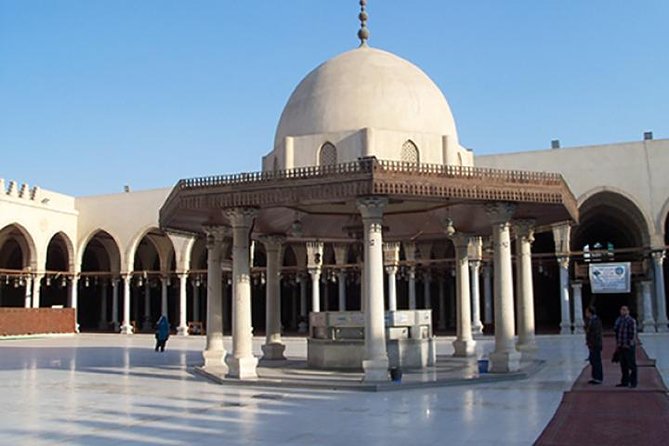
The biggest practical advantage here is that this is private, not a cattle-car group route. That matters because mosques aren’t always the easiest places to move through quickly. A good guide can time your entries, help you understand what you’re looking at, and keep you from feeling trapped by someone else’s pace.
You also choose what you care about. If the Papyrus Institute stop sounds too touristy for your taste, you can tell the guide to skip it. If you want it, you’ll get the chance to see how the craft is made and buy genuine papyrus items.
Stop 1: Alabaster Mosque in the Citadel of Salah el-Din
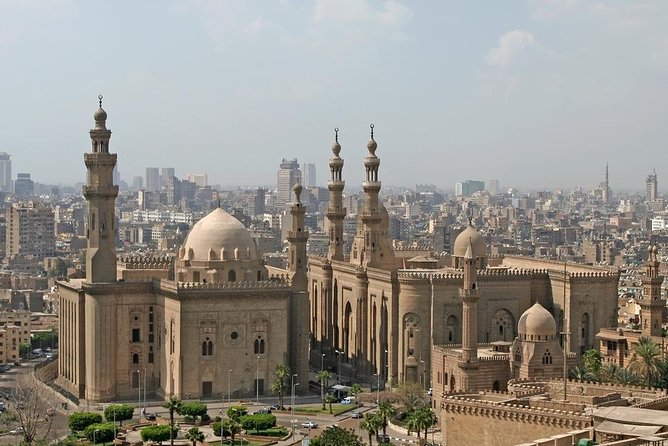
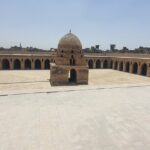
Start at the Citadel of Salah el-Din, where the Alabaster Mosque sits on a limestone hill with Cairo stretching below. This is described as Cairo’s most famous and significant mosque, and it still functions as a place of worship—so the atmosphere is more than just sightseeing.
Inside, your Egyptologist guide introduces core ideas of Islam as you move through the mosque grounds. You’re not asked to pretend you’re part of the faith—you’re guided to understand what you’re seeing and why it matters, including references to common prayers. One review detail that’s worth knowing: some guides arrange for a prayer moment with an imam, which can add a moving, human layer to the architecture.
What to love here:
- You get inside access rather than just a view from outside.
- The setting in the Citadel gives you a sense of Cairo’s scale and how power and faith were placed in the landscape.
A reality check:
- This is an active worship space, so you’ll want to be flexible with how long you can linger in certain areas.
- Because the tour runs about 3 hours total, this is time to absorb highlights, not to do everything slowly.
Stop 2: Khan el-Khalili Bazaar and the art of bargaining
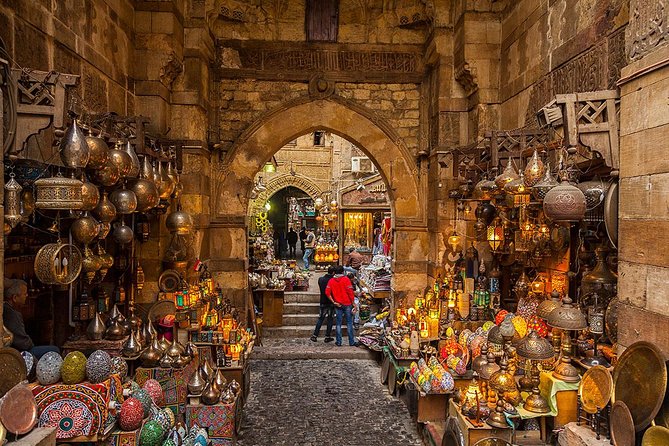
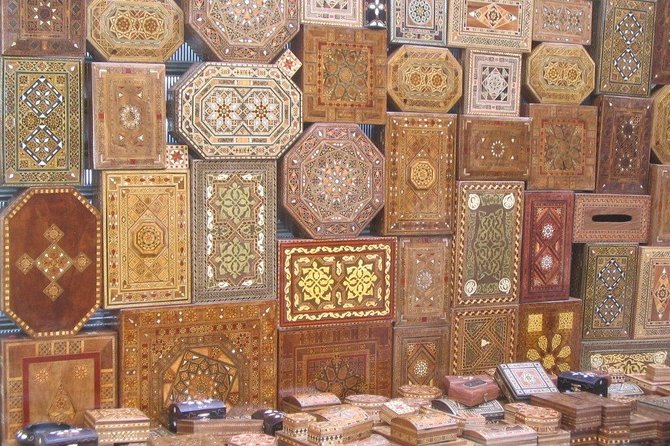
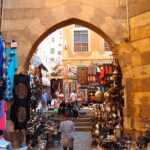
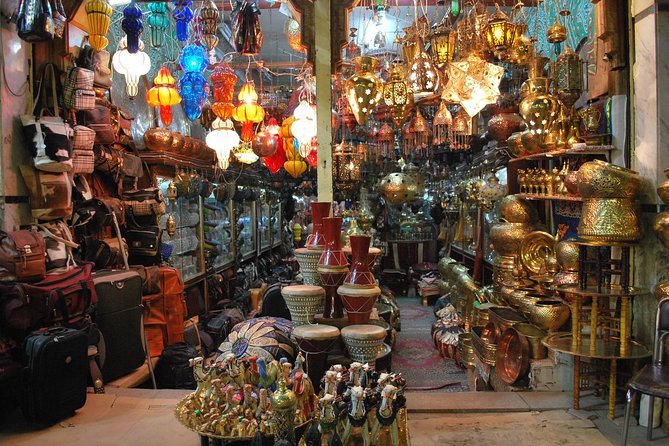
Next comes Khan el-Khalili, Cairo’s famous bazaar maze. The purpose of this stop isn’t just souvenirs. It’s about seeing daily commerce in action—fabric, crafts, small goods, and the constant rhythm of shopkeepers calling out, negotiating, and refilling shelves.
You’ll get free time to stroll through the streets and try bargaining. The key is to treat it like a conversation: decide what you like, ask questions, and keep your sense of humor. If you want genuine mementos, focus on items that look handmade or locally produced rather than rushing into the first shiny display.
One useful note from real experiences: the bazaar does include imported items in addition to local craft. Even so, it’s still worth spending time here for atmosphere and for the few stalls that offer better quality—especially if you walk in ready to spend that hour on browsing rather than hunting a single perfect buy.
How to make this stop work for you:
- Go in with a simple plan: pick one or two categories you want (like spices, paper goods, or small crafts).
- Set a budget in your head before you start bargaining.
Stop 3: Sultan Hassan Mosque and Madrassa, Mamluk architecture that’s hard to forget
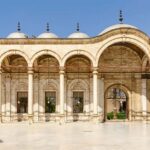
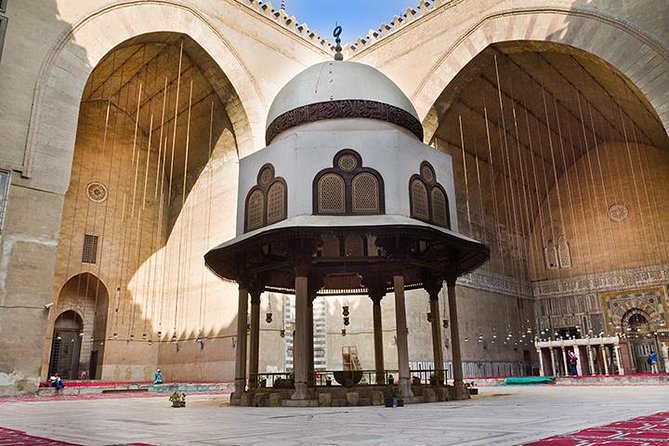
Then you head to Sultan Hassan Mosque and Madrassa, built between 1356 and 1363. This isn’t a small stop. It’s one of the largest mosques in the Islamic world and a standout example of Mamluk architecture.
Here are the scale facts you’ll want in your head as you look up at the structure:
- It’s about 150 meters long (492 feet).
- About 36 meters high (118 feet).
- The highest minaret reaches 68 meters (223 feet).
When a building hits you with that kind of size, the details start making more sense. Your guide points out what makes the architecture feel distinctive, and you’ll understand it better when you connect the design to the era that produced it.
What makes this stop special:
- It’s big, so it gives you that wow factor fast.
- You’re learning while you’re looking, not learning after the fact.
Possible drawback:
- If you’re the type who wants unlimited photo time, the schedule can feel firm. But with a private guide, you’re more likely to get the time you personally care about than you would on a fixed-group tour.



Optional Papyrus Institute: when buying makes sense (and when to skip)
You have the option to include a Papyrus Institute stop. If you’re curious about traditional craft, this can be a nice contrast to stone architecture. You’ll see how ancient-style paper is made and have the chance to purchase genuine papyrus items.
This is the part of the tour where your personal taste really matters. If you like watching crafts and you’re comfortable buying from a workshop that explains what you’re getting, you may enjoy it a lot. If you’d rather spend every minute on the mosques and the bazaar, skip it and keep the whole focus on Islamic Cairo.
My practical advice: if you buy, buy with intention. Choose items you truly want to own or use, not just things that look good in a photo.
Pickup, timing, and comfort: what your morning plan should look like
The tour starts at 9:00 am and runs about 3 hours. You get pickup and drop-off from your hotel area via private air-conditioned minivans, so you’re not spending that valuable morning on navigating streets or waiting at bus stops.
This is the kind of timing that helps if you have a short stay in Cairo. It’s also helpful if you want to avoid the more chaotic parts of the day. You’ll hit Citadel area first (Alabaster Mosque), then Khan el-Khalili, then Sultan Hassan. That order makes sense because it flows from view and worship space to street-level life and back up to a major monument.
Food note: lunch is included only if you select that option. If you don’t, you’ll want a plan for when you’ll eat after the tour ends.
Language note: an English Egyptologist guide is included in the pricing, while other language guides come with a supplement of 1000 L.E. That’s good to know if you’re booking for family members who need another language.
Value check: is $100.92 per person worth it?
At $100.92 per person, this tour sits in the mid-range for Cairo private experiences. The value comes from what’s bundled, not just the sites themselves.
Here’s where your money is going:
- Qualified Egyptologist guide (not just a driver with a phone)
- Private air-conditioned transportation plus hotel pickup and drop-off
- Admission tickets included for the mosque stops
- Free time for shopping in Khan el-Khalili
- The private format, which often means fewer compromises on pace
If you’re comparing this to doing the same route on your own, the math usually favors the guided approach. You’re paying for time saved, interpretation provided, and smooth entry into places that are better with context.
When it might feel less like a bargain:
- If your priority is a long, slow experience inside just one mosque, the 3-hour window can feel short.
- If you dislike shopping-bazaar energy, you may want to reduce how much time you spend there by asking your guide to keep the Khan stop focused.
Who should book this tour—and who should look elsewhere
This works best for you if:
- You want Islamic Cairo landmarks without building a logistics plan from scratch.
- You prefer a guide who can explain what you’re seeing, including basic concepts and prayer references.
- You want a private day that fits within a half-day schedule.
It might not be the best match if:
- You want hours inside architecture sites with no time pressure.
- You’re looking for a museum-style approach with lots of indoor time and fewer street interruptions.
If your travel group includes someone with limited mobility, it can help to communicate needs ahead of time. One example from real experience: a guide was respectful and offered help if a guest struggled with stairs.
Should you book this private tour?
If you want a practical morning route that connects three major Islamic Cairo stops—with inside access, a real guide, and private comfort—this is a strong pick. The price makes more sense when you factor in hotel pickup, air-conditioned transport, and admissions, not just the names of the sites.
My call: book it if you’re excited by architecture and want your questions answered while you’re standing in front of the buildings. Skip or shorten it mentally if you know you need long dwell time; you’ll still get the highlights, but it’s not designed to be a full-day architectural retreat.
FAQ
What time does the tour start?
The tour starts at 9:00 am.
How long is the experience?
The duration is about 3 hours.
Is this really private or shared with others?
It’s a private tour/activity, meaning only your group participates.
Does the tour include hotel pickup and air-conditioned transport?
Yes. The tour includes hotel pickup and drop-off and transportation by private air-conditioned minivans.
Are tickets to the mosques included?
Yes. Admission tickets are included for the Alabaster Mosque stop and for Sultan Hassan Mosque and Madrassa. Khan el-Khalili time is free-entry.
Can I skip the Papyrus Institute stop?
Yes. If you don’t want to include it, you can inform your guide on the day.
Can I get a full refund if I cancel?
You can cancel for a full refund up to 24 hours before the experience start time. If you cancel less than 24 hours before, the amount paid is not refunded.